Wang Ji Ye, Chen Hong, Wang Yin Yin, Wang Xiao Qin, Chen Han Ying, Zhang Mei, Tang Yun, Zhang Bo
Pharmacology department, School of Pharmacy, Shihezi University, Shihezi, 832002, China.
Key Laboratory of Xinjiang Phytomedicine Resource and Utilization, Ministry of Education, Shihezi University, Shihezi, 832002, China.
BMC Syst Biol. 2017 Nov 16;11(1):103. doi: 10.1186/s12918-017-0486-1.
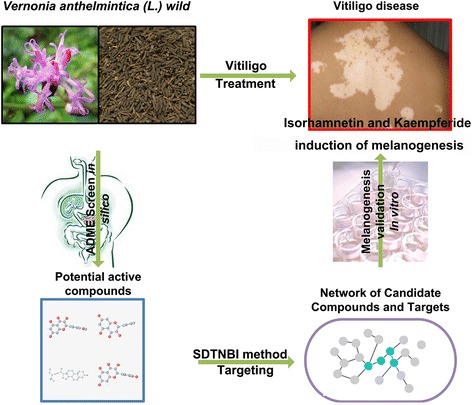
Vitiligo is a long-term skin disease characterized by the loss of pigment in the skin. The current therapeutic approaches are limited. Although the anti-vitiligo mechanisms of Vernonia anthelmintica (L.) remain ambiguous, the herb has been broadly used in Uyghur hospitals to treat vitiligo. The overall objective of the present study aims to identify the potential lead compounds from Vernonia anthelmintica (L.) in the treatment of vitiligo via an oral route as well as the melanogenic mechanisms in the systematic approaches in silico of admetSAR and substructure-drug-target network-based inference (SDTNBI).
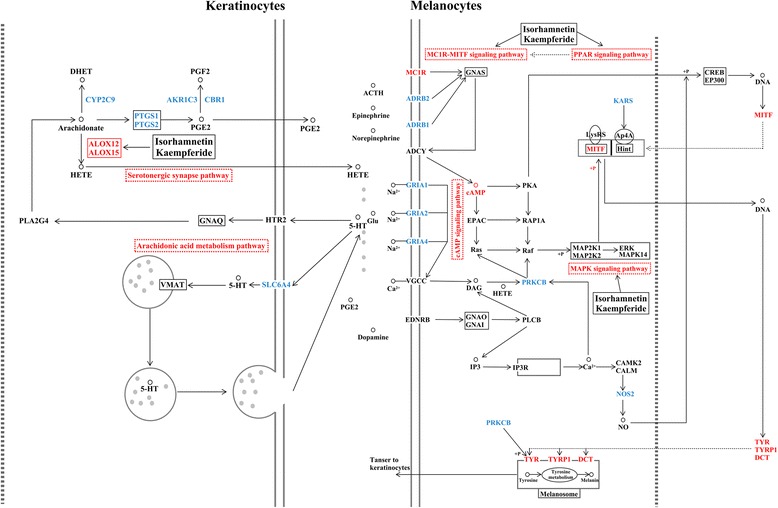
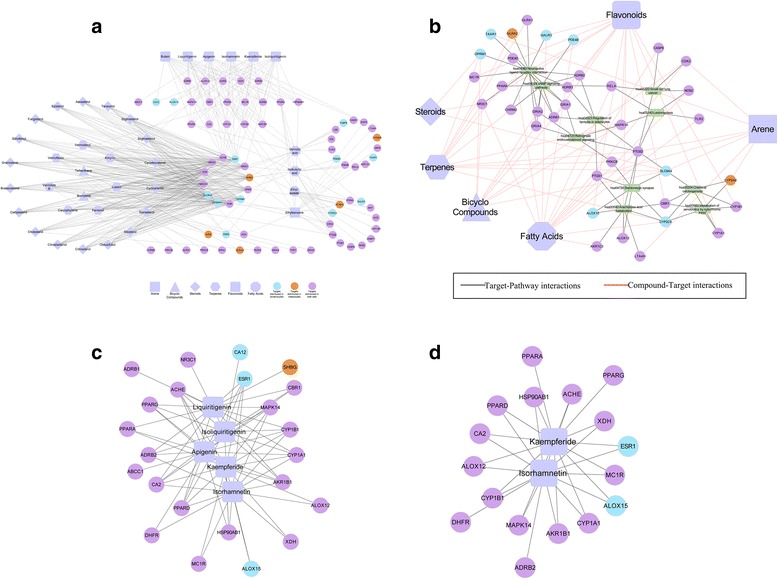
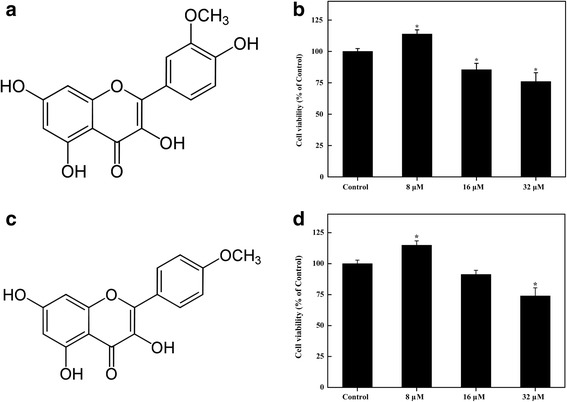
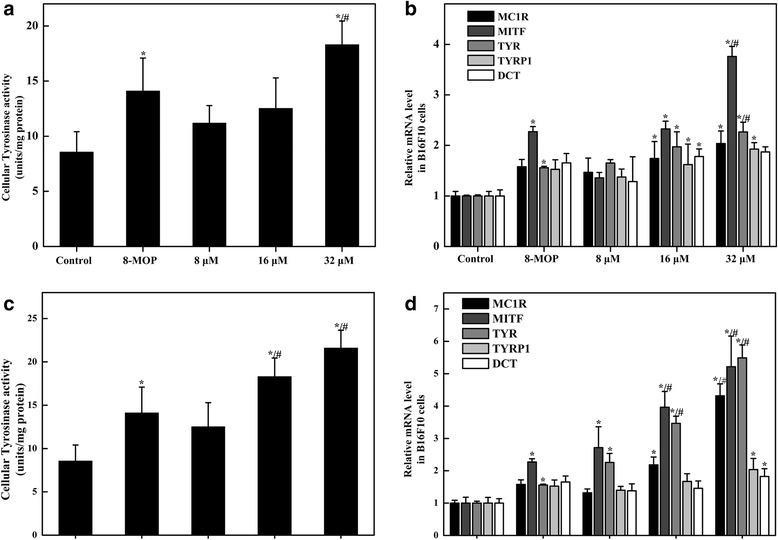
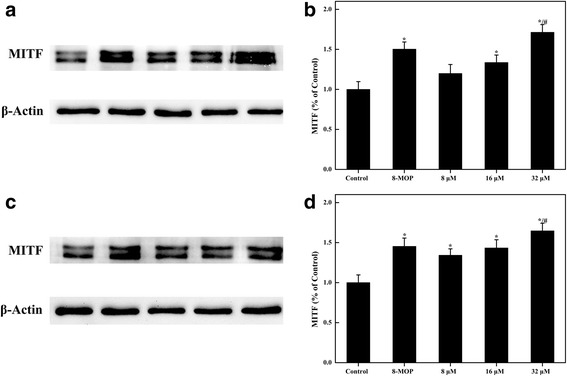
The results showed that the top 5 active compounds with a relatively higher bioavailability that interacted with 23 therapeutic targets were identified in Vernonia anthelmintica (L.) using admetSAR and SDTNBI methods. Among these compounds, Isorhamnetin and Kaempferide, which are methyl-flavonoids, performed 1st and 2nd. Isorhamnetin and Kaempferide significantly increased the expression of melanin-biosynthetic genes (MC1R, MITF, TYR, TYRP1 and DCT) and the tyrosinase activity in B16F10 cells. Isorhamnetin and Kaempferide significantly increased the mRNA-expression of melanin-biosynthetic genes (MC1R, MITF, TYR, TYRP1 and DCT), the protein level of MITF and the tyrosinase activity. Based on the SDTNBI method and experimental verification, Isorhamnetin and Kaempferide effectively increased melanogenesis by targeting the MC1R-MITF signaling pathway, MAPK signaling pathway, PPAR signaling pathway (PPARA, PPARD, PPARG), arachidonic acid metabolism pathway (ALOX12, ALOX15, CBR1) and serotonergic synapses (ALOX12, ALOX15) in the treatment of vitiligo from a network perspective.
We identified the melanogenic activity of the methyl-flavonoids Isorhamnetin and Kaempferide, which were successfully predicted in a network pharmacological analysis of Vernonia anthelmintica (L.) by admetSAR and SDTNBI methods.
白癜风是一种以皮肤色素脱失为特征的慢性皮肤病。目前的治疗方法有限。尽管驱虫斑鸠菊治疗白癜风的机制尚不清楚,但该草药已在维吾尔族医院广泛用于治疗白癜风。本研究的总体目标是通过口服途径从驱虫斑鸠菊中鉴定出治疗白癜风的潜在先导化合物,以及在admetSAR和基于子结构-药物-靶点网络推断(SDTNBI)的系统方法中的黑素生成机制。
结果表明,使用admetSAR和SDTNBI方法在驱虫斑鸠菊中鉴定出了5种生物利用度相对较高且与23个治疗靶点相互作用的活性化合物。在这些化合物中,甲基黄酮类化合物异鼠李素和山柰酚分别排名第一和第二。异鼠李素和山柰酚显著增加了B16F10细胞中黑色素生物合成基因(MC1R、MITF、TYR、TYRP1和DCT)的表达以及酪氨酸酶活性。异鼠李素和山柰酚显著增加了黑色素生物合成基因(MC1R、MITF、TYR、TYRP1和DCT)的mRNA表达、MITF的蛋白水平和酪氨酸酶活性。基于SDTNBI方法和实验验证,异鼠李素和山柰酚从网络角度通过靶向MC1R-MITF信号通路、MAPK信号通路、PPAR信号通路(PPARA、PPARD、PPARG)、花生四烯酸代谢通路(ALOX12、ALOX15、CBR1)和5-羟色胺能突触(ALOX12、ALOX15)有效地增加了白癜风治疗中的黑素生成。
我们鉴定了甲基黄酮类化合物异鼠李素和山柰酚的黑素生成活性,它们在驱虫斑鸠菊的网络药理学分析中通过admetSAR和SDTNBI方法成功预测。