School of Molecular Sciences, Faculty of Science M310, The University of Western Australia, Perth, WA, 6009, Australia.
Centre for Neonatal Research and Education, King Edward Memorial Hospital, Perth, WA, Australia.
BMC Pregnancy Childbirth. 2017 Nov 17;17(1):386. doi: 10.1186/s12884-017-1574-3.
Full breastfeeding is the ultimate aim for preterm infants to ensure they receive the full benefits of human milk however, preterm infants face a number of challenges associated with their immaturity and associated morbidities. In order to facilitate oral feeding, it is essential to have a sound knowledge of the sucking dynamics of the breastfed infant. The aim of this study was to measure and describe the sucking dynamics of the preterm breastfeeding infant.
A prospective cross sectional observational study was carried out at King Edward Memorial Hospital, Perth. 38 mothers and their preterm infants (birth gestation age: 23.6-33.3 weeks; corrected gestation age 32.7 to 39.9 weeks) were recruited. Intra-oral vacuum levels, tongue movement and milk intake for a single breastfeed was measured. Statistical analysis employed linear regression and linear mixed effects models.
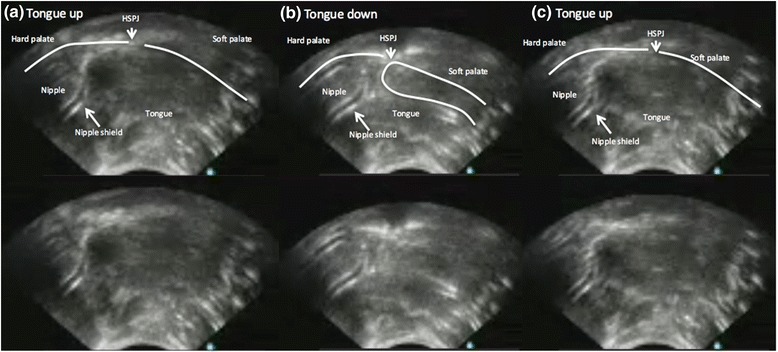
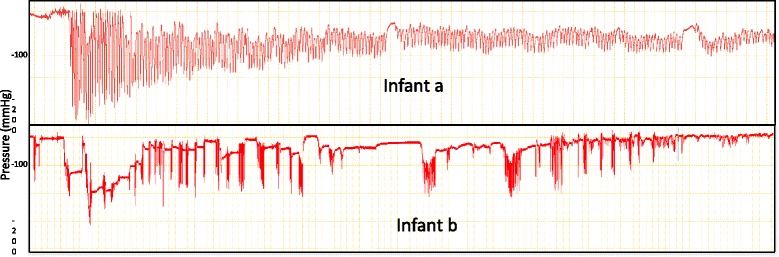
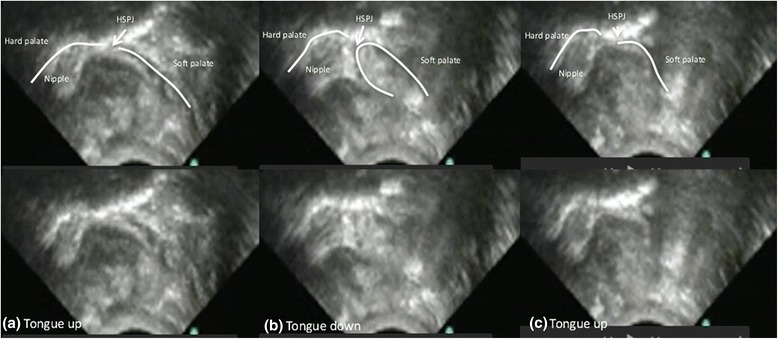
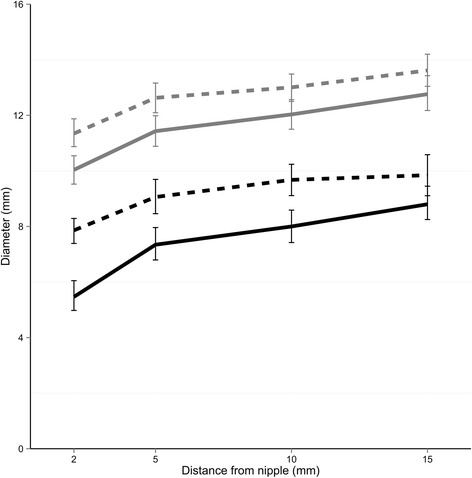
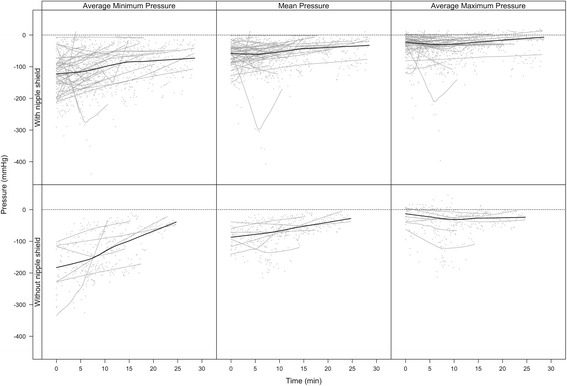
Synchronised ultrasound and intra-oral vacuum measurements show that the preterm infant generates vacuum by lowering their tongue in a parallel fashion, without distortion of the nipple/nipple shield. Baseline (B), mean (M) and (P) peak suck burst vacuums weakened over the course of a feed (B: p = 0.015; M: p = 0.018; P: p = 0.044) and mean and peak vacuums were weaker if the mother fed with a nipple shield (M: p = 0.012; P: p = 0.021). Infant milk intakes were higher when infants sucked for longer (p = 0.002), sucked for a greater proportion of the feed (p = 0.002), or had a greater sucking efficiency (p < 0.001).
Breastfeeding preterm infants generated intra-oral vacuum in the same manner as term infants. Nipple shields were associated with weaker intra-oral vacuums. However, vacuum strengths were not associated with milk intake rather time spent actively sucking was related to milk volumes. Further research is required to elucidate factors that influence preterm infant milk intake during breastfeeding.
全母乳喂养是早产儿的最终目标,以确保他们从母乳中获得充分的益处,但早产儿由于不成熟和相关的合并症,面临着许多挑战。为了促进口腔喂养,必须对母乳喂养婴儿的吮吸动力学有一个清晰的认识。本研究的目的是测量和描述早产儿母乳喂养婴儿的吮吸动力学。
在珀斯的爱德华国王纪念医院进行了一项前瞻性的横断面观察性研究。招募了 38 名母亲及其早产儿(出生胎龄:23.6-33.3 周;校正胎龄 32.7-39.9 周)。测量了单次母乳喂养的口腔内真空水平、舌运动和奶量。统计分析采用线性回归和线性混合效应模型。
同步超声和口腔内真空测量显示,早产儿通过平行降低舌头来产生真空,而不会使乳头/奶嘴变形。在喂养过程中,基线(B)、平均(M)和(P)峰值吸吮爆发真空减弱(B:p=0.015;M:p=0.018;P:p=0.044),如果母亲使用奶嘴,平均和峰值真空减弱(M:p=0.012;P:p=0.021)。如果婴儿吸吮时间更长(p=0.002)、在喂养过程中吸吮比例更大(p=0.002)或吸吮效率更高(p<0.001),婴儿的奶量摄入更高。
母乳喂养早产儿产生的口腔内真空与足月婴儿相同。奶嘴与较弱的口腔内真空有关。然而,真空强度与奶量摄入无关,而是与积极吸吮的时间有关。需要进一步研究以阐明影响早产儿母乳喂养期间奶量摄入的因素。