Department of Health Outcomes and Policy, College of Medicine, University of Florida, 2004 Mowry Road, Gainesville, FL, 32610, USA.
Institute for Choice, School of Marketing, University of South Australia, Adelaide, SA, Australia.
Implement Sci. 2017 Nov 23;12(1):140. doi: 10.1186/s13012-017-0675-8.
One of the key strategies to successful implementation of effective health-related interventions is targeting improvements in stakeholder engagement. The discrete choice experiment (DCE) is a stated preference technique for eliciting individual preferences over hypothetical alternative scenarios that is increasingly being used in health-related applications. DCEs are a dynamic approach to systematically measure health preferences which can be applied in enhancing stakeholder engagement. However, a knowledge gap exists in characterizing the extent to which DCEs are used in implementation science.
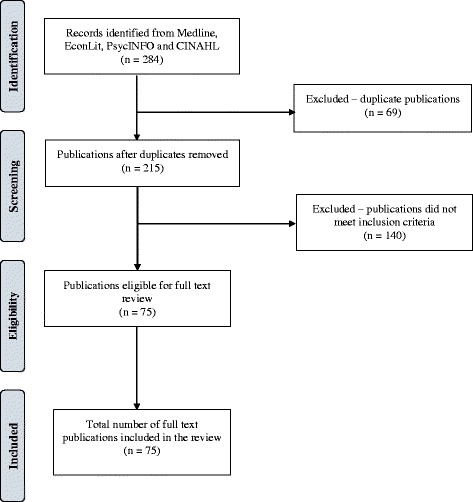
We conducted a systematic literature search (up to December 2016) of the English literature to identify and describe the use of DCEs in engaging stakeholders as an implementation strategy. We searched the following electronic databases: MEDLINE, Econlit, PsychINFO, and the CINAHL using mesh terms. Studies were categorized according to application type, stakeholder(s), healthcare setting, and implementation outcome.
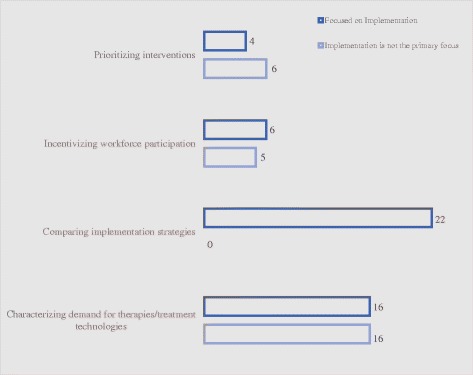
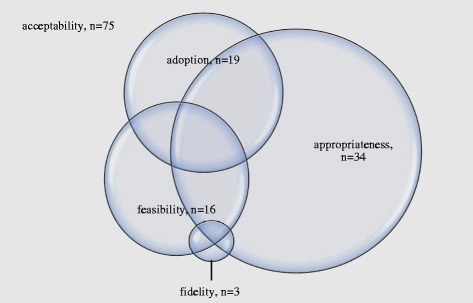
Seventy-five publications were selected for analysis in this systematic review. Studies were categorized by application type: (1) characterizing demand for therapies and treatment technologies (n = 32), (2) comparing implementation strategies (n = 22), (3) incentivizing workforce participation (n = 11), and (4) prioritizing interventions (n = 10). Stakeholders included providers (n = 27), patients (n = 25), caregivers (n = 5), and administrators (n = 2). The remaining studies (n = 16) engaged multiple stakeholders (i.e., combination of patients, caregivers, providers, and/or administrators). The following implementation outcomes were discussed: acceptability (n = 75), appropriateness (n = 34), adoption (n = 19), feasibility (n = 16), and fidelity (n = 3).
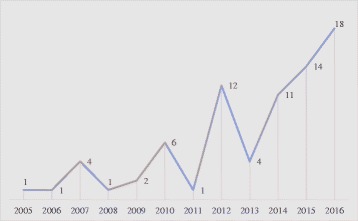
The number of DCE studies engaging stakeholders as an implementation strategy has been increasing over the past decade. As DCEs are more widely used as a healthcare assessment tool, there is a wide range of applications for them in stakeholder engagement. The DCE approach could serve as a tool for engaging stakeholders in implementation science.
成功实施有效的健康干预措施的关键策略之一是针对利益相关者参与度的提高。离散选择实验(DCE)是一种用于引出个人对假设替代方案偏好的陈述偏好技术,它在健康相关应用中越来越多地被使用。DCE 是一种系统地衡量健康偏好的动态方法,可以应用于增强利益相关者的参与度。然而,在描述 DCE 在实施科学中的应用程度方面存在知识差距。
我们对英语文献进行了系统的文献检索(截至 2016 年 12 月),以确定和描述 DCE 在参与利益相关者作为实施策略中的应用。我们使用了以下电子数据库进行搜索:MEDLINE、Econlit、PsychINFO 和 CINAHL 使用了主题词。研究根据应用类型、利益相关者、医疗保健环境和实施结果进行分类。
本系统综述共选取了 75 篇文献进行分析。研究按应用类型分类:(1)描述对疗法和治疗技术的需求(n=32),(2)比较实施策略(n=22),(3)激励劳动力参与(n=11),以及(4)确定干预措施的优先级(n=10)。利益相关者包括提供者(n=27)、患者(n=25)、护理人员(n=5)和管理人员(n=2)。其余的研究(n=16)涉及多个利益相关者(即患者、护理人员、提供者和/或管理人员的组合)。讨论了以下实施结果:可接受性(n=75)、适当性(n=34)、采用(n=19)、可行性(n=16)和保真度(n=3)。
在过去十年中,作为实施策略吸引利益相关者的 DCE 研究数量一直在增加。随着 DCE 作为医疗保健评估工具的应用越来越广泛,它们在利益相关者参与方面有广泛的应用。DCE 方法可以作为利益相关者参与实施科学的工具。