Baker Heart & Diabetes Institute, Melbourne, 3004, Australia.
Dept of Pharmacology and Therapeutics, University of Melbourne, Parkville, 3010, Australia.
Sci Rep. 2017 Nov 30;7(1):16615. doi: 10.1038/s41598-017-16317-1.
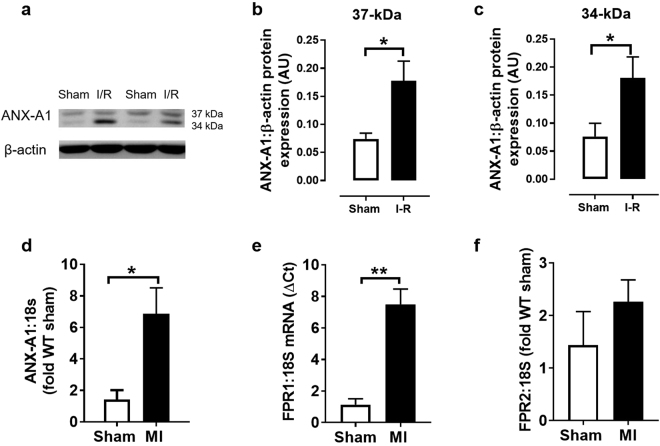
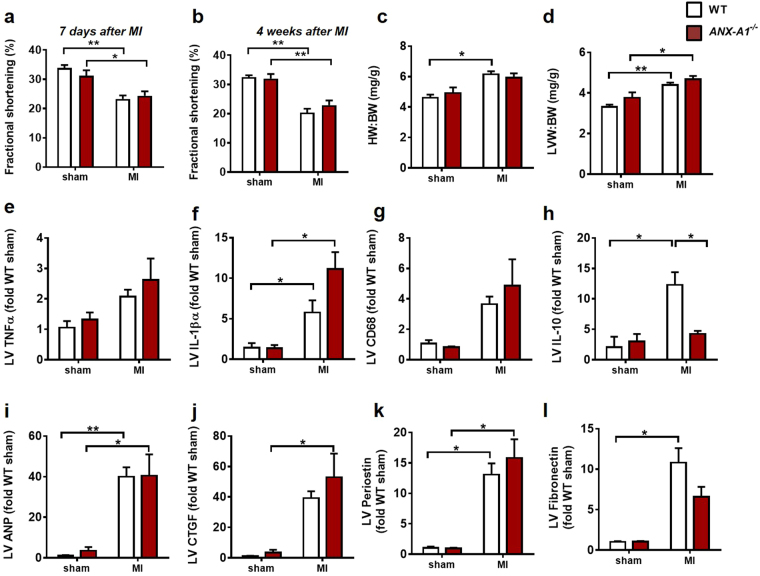
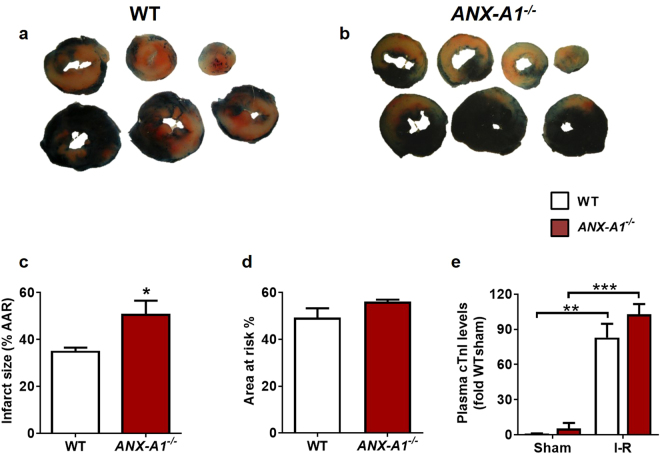
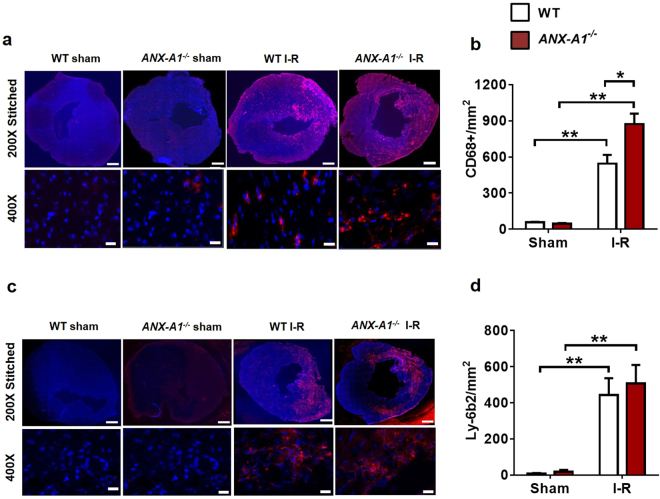
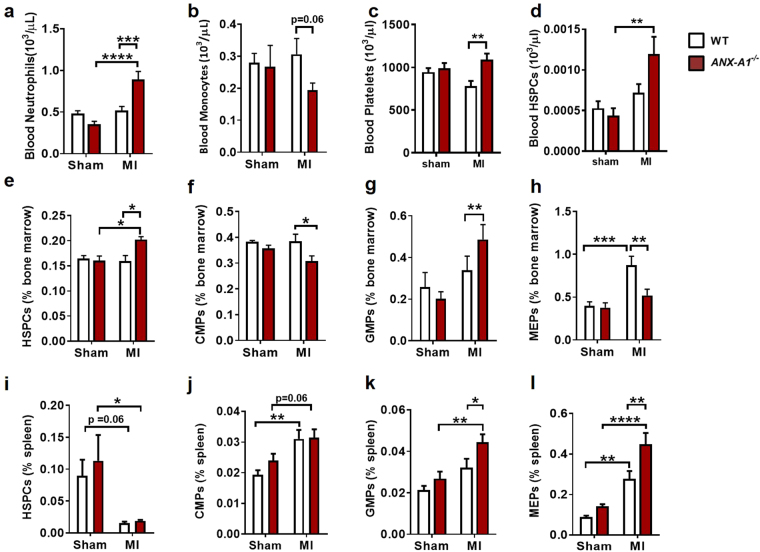
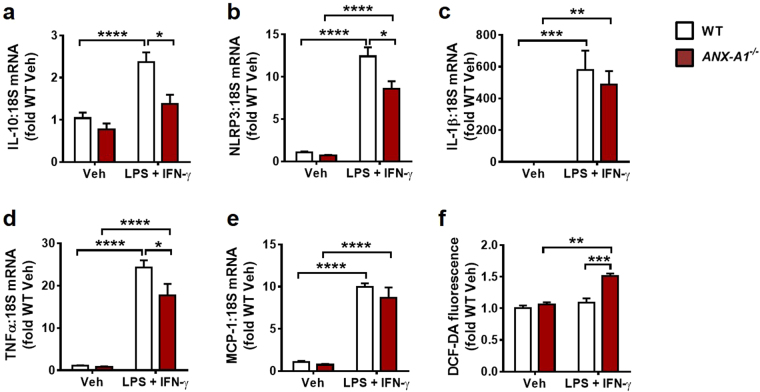
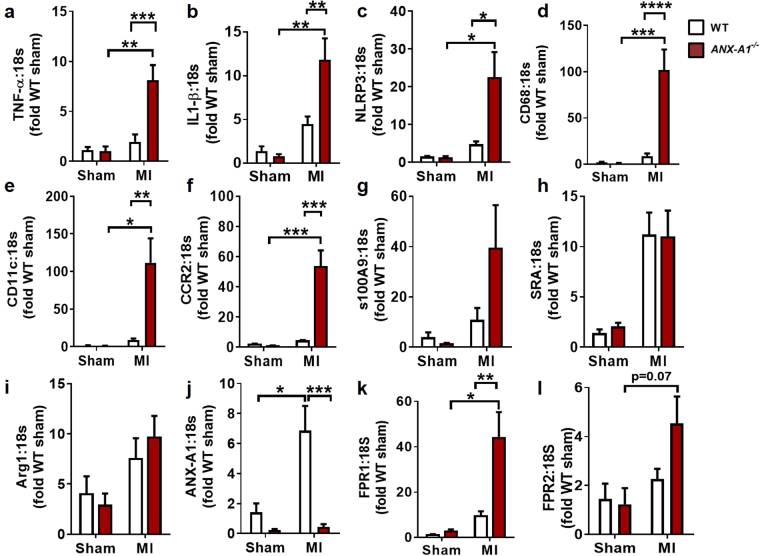
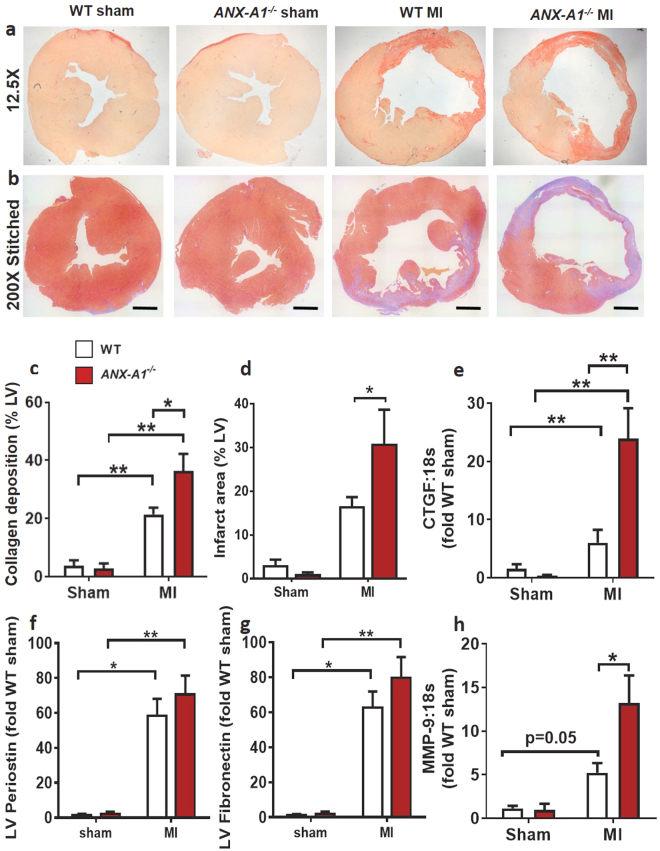
Endogenous anti-inflammatory annexin-A1 (ANX-A1) plays an important role in preserving left ventricular (LV) viability and function after ischaemic insults in vitro, but its long-term cardioprotective actions in vivo are largely unknown. We tested the hypothesis that ANX-A1-deficiency exaggerates inflammation, haematopoietic stem progenitor cell (HSPC) activity and LV remodelling in response to myocardial ischaemia in vivo. Adult ANX - A1 mice subjected to coronary artery occlusion exhibited increased infarct size and LV macrophage content after 24-48 h reperfusion compared with wildtype (WT) counterparts. In addition, ANX - A1 mice exhibited greater expansion of HSPCs and altered pattern of HSPC mobilisation 8 days post-myocardial infarction, with increased circulating neutrophils and platelets, consistent with increased cardiac inflammation as a result of increased myeloid invading injured myocardium in response to MI. Furthermore, ANX - A1 mice exhibited significantly increased expression of LV pro-inflammatory and pro-fibrotic genes and collagen deposition after MI compared to WT counterparts. ANX-A1-deficiency increased cardiac necrosis, inflammation, hypertrophy and fibrosis following MI, accompanied by exaggerated HSPC activity and impaired macrophage phenotype. These findings suggest that endogenous ANX-A1 regulates mobilisation and differentiation of HSPCs. Limiting excessive monocyte/neutrophil production may limit LV damage in vivo. Our findings support further development of novel ANX-A1-based therapies to improve cardiac outcomes after MI.
内源性抗炎 annexin-A1 (ANX-A1) 在体外缺血损伤后对左心室 (LV) 存活和功能具有重要保护作用,但在体内其长期的心脏保护作用尚不清楚。我们假设 ANX-A1 缺乏会加重炎症、造血干细胞祖细胞 (HSPC) 活性和 LV 重构,从而对体内心肌缺血产生影响。与野生型 (WT) 小鼠相比,成年 ANX - A1 小鼠在冠状动脉闭塞后再灌注 24-48 小时,梗死面积和 LV 巨噬细胞含量增加。此外,ANX - A1 小鼠在心肌梗死后 8 天表现出 HSPC 更大的扩增和 HSPC 动员模式的改变,伴有循环中性粒细胞和血小板增加,这与心肌梗死后由于更多的髓样细胞侵入受损心肌导致的心脏炎症增加一致。此外,与 WT 对照组相比,ANX - A1 小鼠在 MI 后 LV 促炎和促纤维化基因的表达和胶原沉积显著增加。与 WT 对照组相比,ANX-A1 缺乏症增加了 MI 后心脏坏死、炎症、肥大和纤维化,同时伴有 HSPC 活性增强和巨噬细胞表型受损。这些发现表明,内源性 ANX-A1 调节 HSPC 的动员和分化。限制过多的单核细胞/中性粒细胞生成可能会限制体内 LV 损伤。我们的研究结果支持进一步开发基于 ANX-A1 的新型治疗方法,以改善 MI 后的心脏预后。