Tan Rachel, Cvetkovski Biljana, Kritikos Vicky, Price David, Yan Kwok, Smith Pete, Bosnic-Anticevich Sinthia
Quality Use of Respiratory Medicines Group, Woolcock Institute, University of Sydney, Sydney, Australia.
Academic Primary Care, University of Aberdeen, Aberdeen, UK.
Asthma Res Pract. 2017 Nov 21;3:8. doi: 10.1186/s40733-017-0036-z. eCollection 2017.
Patients with allergic rhinitis often trivialise their condition, self-manage inappropriately, and would benefit from health care intervention. The primary point of health care contact for these self-managing allergic rhinitis patients is the community pharmacy. With the majority of allergic rhinitis treatments being available for purchase over the counter, without health care professional contact, we know little about how the patients self-manage. This study aims to identify the burden of allergic rhinitis in the community pharmacy and to identify key opportunity for intervention.
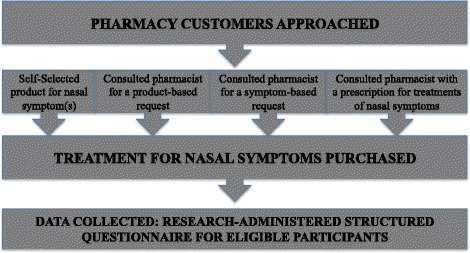
Pharmacy customers, who purchased nasal treatment in a community pharmacy, were approached with a research-administered questionnaire that collected data on medical history, symptoms and products purchased for the treatment of nasal symptoms.
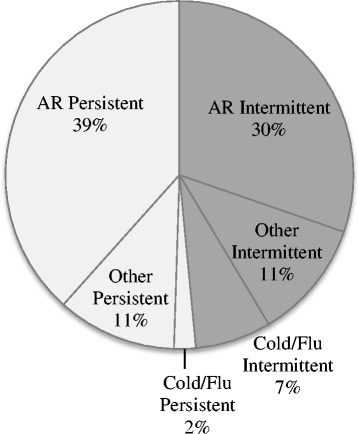
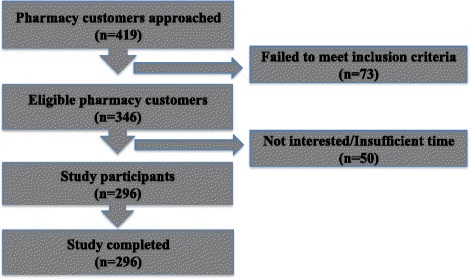
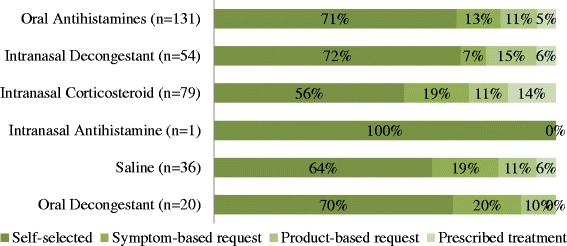
Of the 296 participants, 69.9% self-managed with over-the-counter medications; with 68% experiencing allergic rhinitis symptoms and only 44.3% of this subgroup had a doctor's diagnosis. Nasal congestion (73.6%) was most commonly experienced and oral antihistamines were most commonly purchased (44.3%), indicating a pattern of suboptimal management. A third of participants (36.5%) experienced moderate-severe symptoms, persistently, which impacted on their daily living. Medication selection was mainly based on pharmacy customers' perceptions of medication effectiveness (47.6%).
A majority of participants that self-selected over-the-counter medications have symptoms consistent with allergic rhinitis, with almost half not having received a diagnosis. Medication purchasing patterns suggest that sub-optimal therapeutic decisions made by participants, even when they are experiencing significant symptoms. This study uncovers the hidden burden of allergic rhinitis in the community pharmacy and a missed opportunity to intervene and refer if necessary. Patients need to be guided through appropriate treatment as this study showed that many should be referred to a medical practitioner.
过敏性鼻炎患者常常轻视自己的病情,进行不恰当的自我管理,而医疗保健干预会对他们有益。这些自我管理过敏性鼻炎的患者与医疗保健接触的主要地点是社区药房。由于大多数过敏性鼻炎治疗药物无需医疗保健专业人员接触即可在柜台购买,我们对患者的自我管理方式知之甚少。本研究旨在确定社区药房中过敏性鼻炎的负担,并确定关键的干预机会。
在社区药房购买鼻部治疗药物的药房顾客,会收到一份由研究人员管理的问卷,该问卷收集有关病史、症状以及购买用于治疗鼻部症状的产品的数据。
在296名参与者中,69.9%使用非处方药物进行自我管理;68%有过敏性鼻炎症状,而该亚组中只有44.3%有医生的诊断。鼻塞(73.6%)是最常见的症状,口服抗组胺药是最常购买的药物(44.3%),这表明管理方式欠佳。三分之一的参与者(36.5%)持续出现中度至重度症状,这对他们的日常生活产生了影响。药物选择主要基于药房顾客对药物疗效的认知(47.6%)。
大多数自行选择非处方药物的参与者有与过敏性鼻炎相符的症状,近一半未得到诊断。药物购买模式表明参与者做出了欠佳的治疗决策,即使他们有明显症状。本研究揭示了社区药房中过敏性鼻炎的隐性负担以及错过的干预和必要时转诊的机会。患者需要得到适当治疗的指导,因为本研究表明许多患者应转诊给医生。