McCue Molly E, McCoy Annette M
Equine Genetics and Genomics Laboratory, Veterinary Population Medicine, University of Minnesota, St Paul, MN, United States.
Veterinary Clinical Medicine, University of Illinois Urbana-Champaign, Urbana, IL, United States.
Front Vet Sci. 2017 Nov 16;4:194. doi: 10.3389/fvets.2017.00194. eCollection 2017.
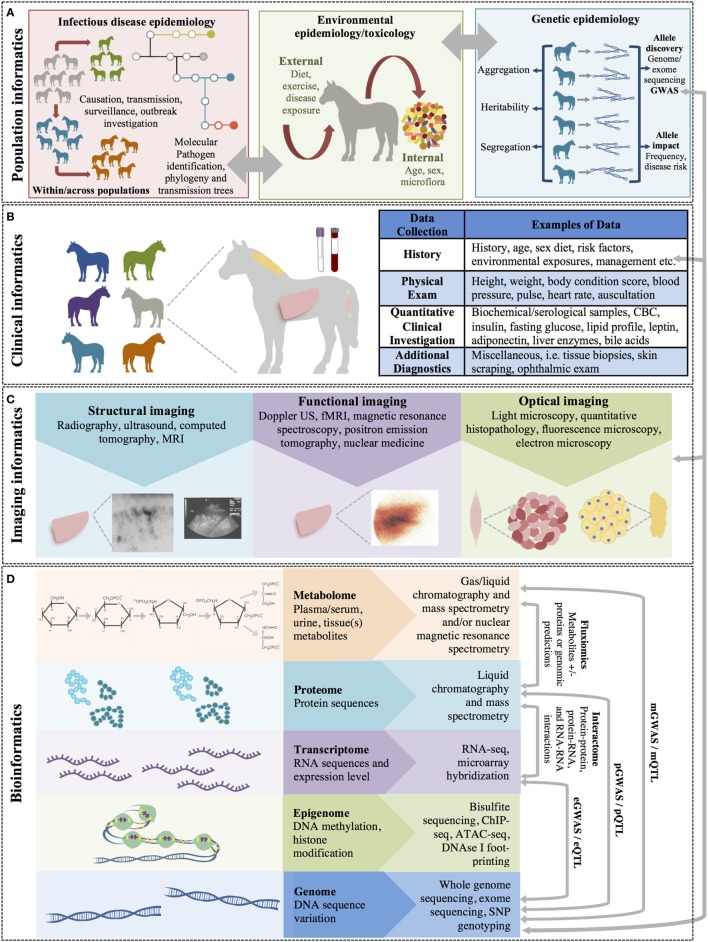
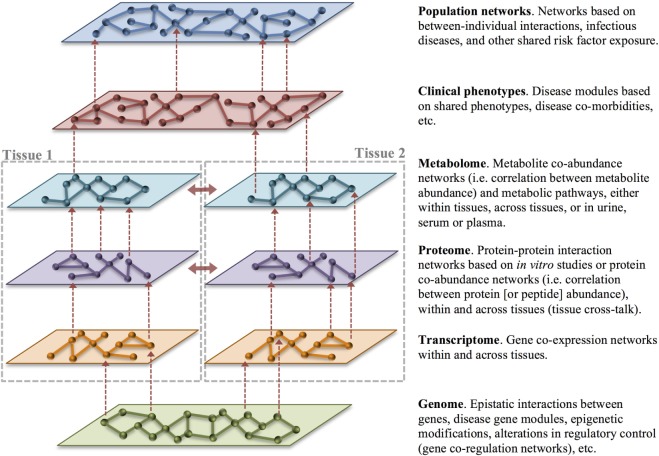
Advances in high-throughput molecular biology and electronic health records (EHR), coupled with increasing computer capabilities have resulted in an increased interest in the use of big data in health care. Big data require collection and analysis of data at an unprecedented scale and represents a paradigm shift in health care, offering (1) the capacity to generate new knowledge more quickly than traditional scientific approaches; (2) unbiased collection and analysis of data; and (3) a holistic understanding of biology and pathophysiology. Big data promises more and medicine for patients with improved accuracy and earlier diagnosis, and therapy tailored to an individual's unique combination of genes, environmental risk, and precise disease phenotype. This promise comes from data collected from numerous sources, ranging from molecules to cells, to tissues, to individuals and populations-and the integration of these data into networks that improve understanding of heath and disease. Big data-driven science should play a role in propelling comparative medicine and "one medicine" (i.e., the shared physiology, pathophysiology, and disease risk factors across species) forward. Merging of data from EHR across institutions will give access to patient data on a scale previously unimaginable, allowing for precise phenotype definition and objective evaluation of risk factors and response to therapy. High-throughput molecular data will give insight into previously unexplored molecular pathophysiology and disease etiology. Investigation and integration of big data from a variety of sources will result in stronger parallels drawn at the molecular level between human and animal disease, allow for predictive modeling of infectious disease and identification of key areas of intervention, and facilitate step-changes in our understanding of disease that can make a substantial impact on animal and human health. However, the use of big data comes with significant challenges. Here we explore the scope of "big data," including its opportunities, its limitations, and what is needed capitalize on big data in one medicine.
高通量分子生物学和电子健康记录(EHR)的进展,再加上计算机能力的不断提高,使得人们对医疗保健领域大数据的应用兴趣日益浓厚。大数据需要以前所未有的规模收集和分析数据,代表了医疗保健领域的范式转变,具有以下优势:(1)比传统科学方法更快地产生新知识的能力;(2)数据的无偏收集和分析;(3)对生物学和病理生理学的整体理解。大数据有望为患者提供更精准、更早诊断的医疗服务,并根据个体独特的基因组合、环境风险和精确的疾病表型量身定制治疗方案。这一前景源于从众多来源收集的数据,从分子到细胞、组织、个体和人群,以及将这些数据整合到网络中,从而增进对健康和疾病的理解。大数据驱动的科学应在推动比较医学和“同一医学”(即跨物种共享的生理学、病理生理学和疾病风险因素)方面发挥作用。跨机构合并电子健康记录中的数据将使人们能够获取规模前所未有的患者数据,从而实现精确的表型定义以及对风险因素和治疗反应的客观评估。高通量分子数据将深入揭示以前未探索的分子病理生理学和疾病病因。对来自各种来源的大数据进行研究和整合,将在人类和动物疾病的分子水平上建立更强的平行关系,实现传染病的预测建模并确定关键干预领域,促进我们对疾病理解的飞跃,从而对动物和人类健康产生重大影响。然而,大数据的应用也带来了重大挑战。在此,我们探讨“大数据”的范畴,包括其机遇、局限性以及在同一医学中利用大数据所需的条件。