School of Geodesy and Geomatics, Wuhan University, Wuhan 430079, China.
Collaborative Innovation Center of Geospatial Technology, Wuhan University, Wuhan 430079, China.
Int J Environ Res Public Health. 2017 Dec 5;14(12):1510. doi: 10.3390/ijerph14121510.
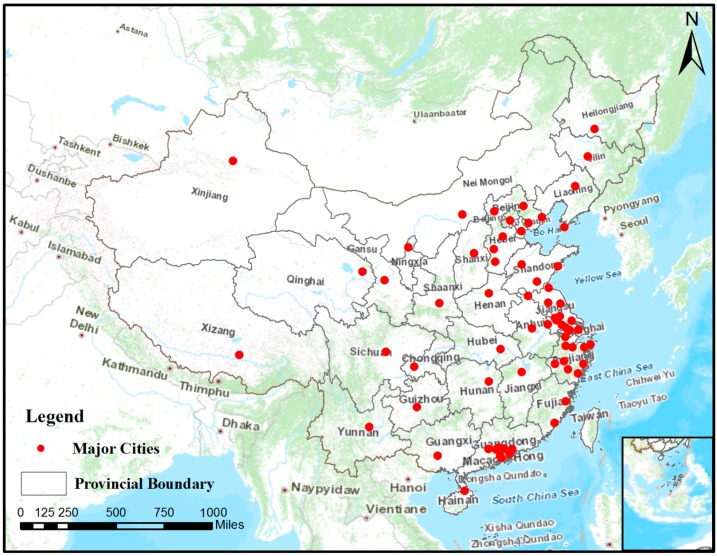
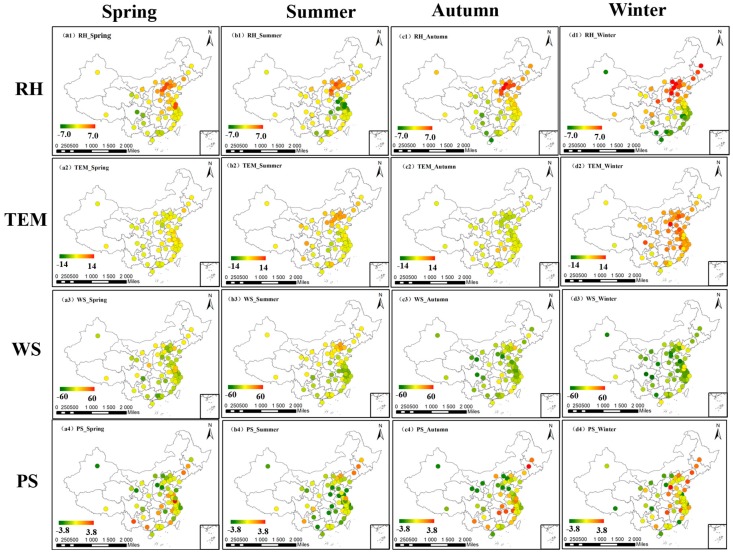
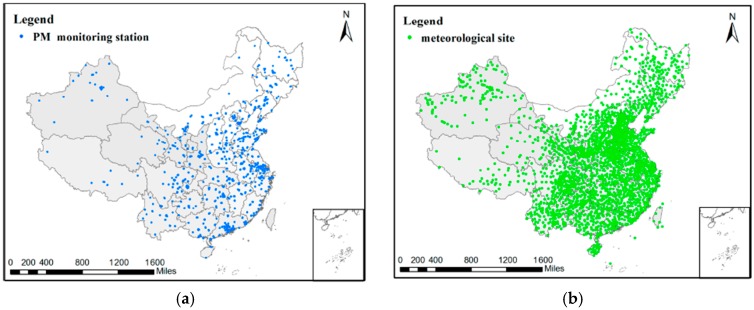
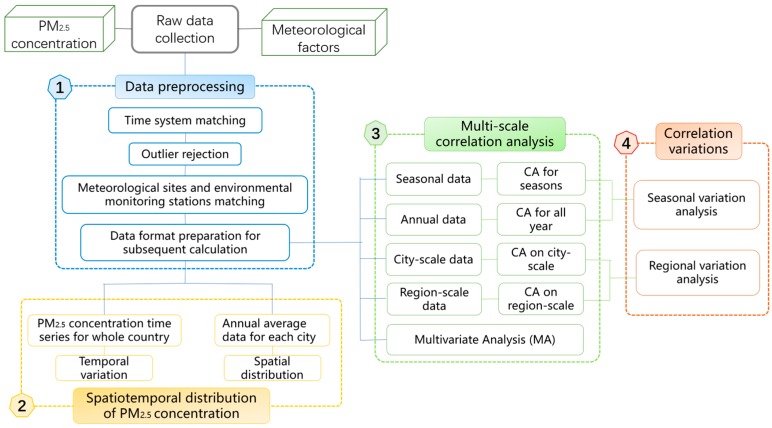
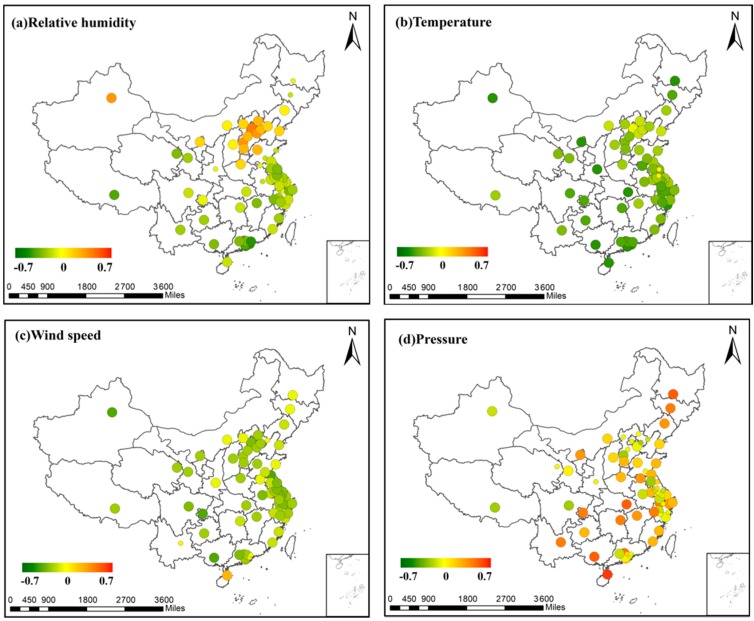
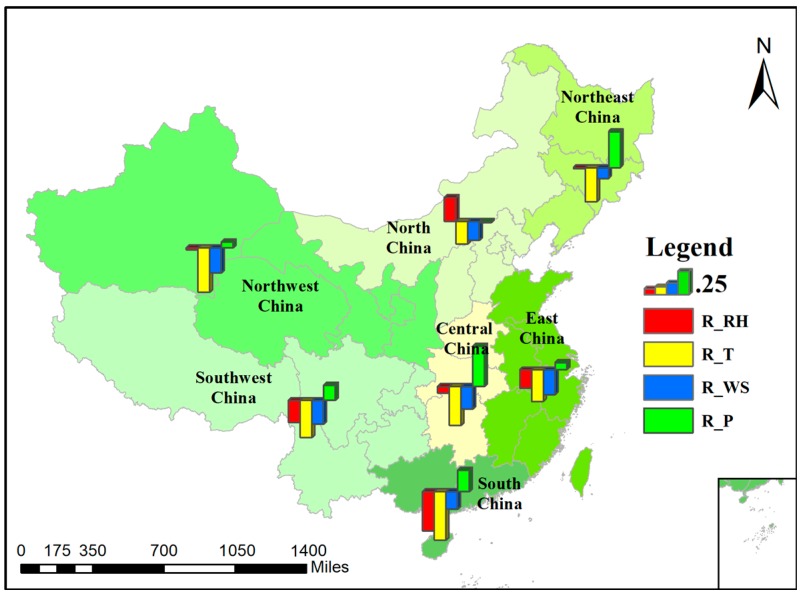
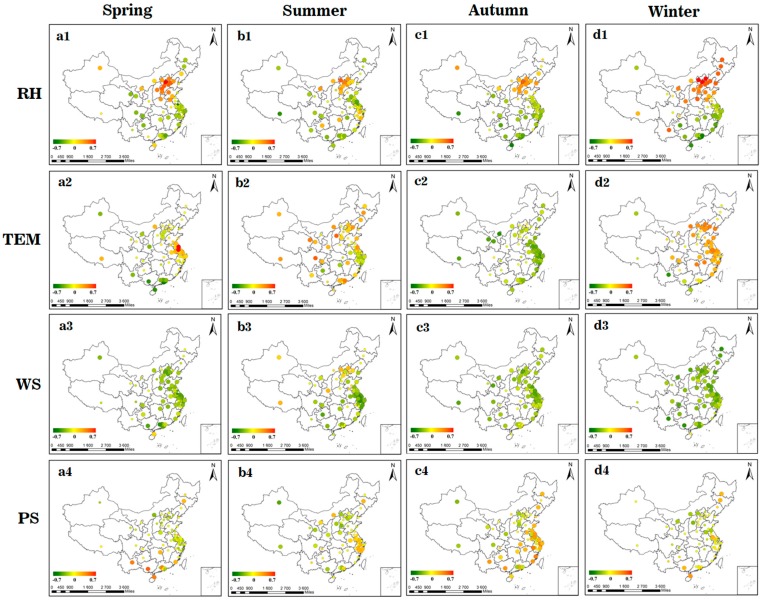
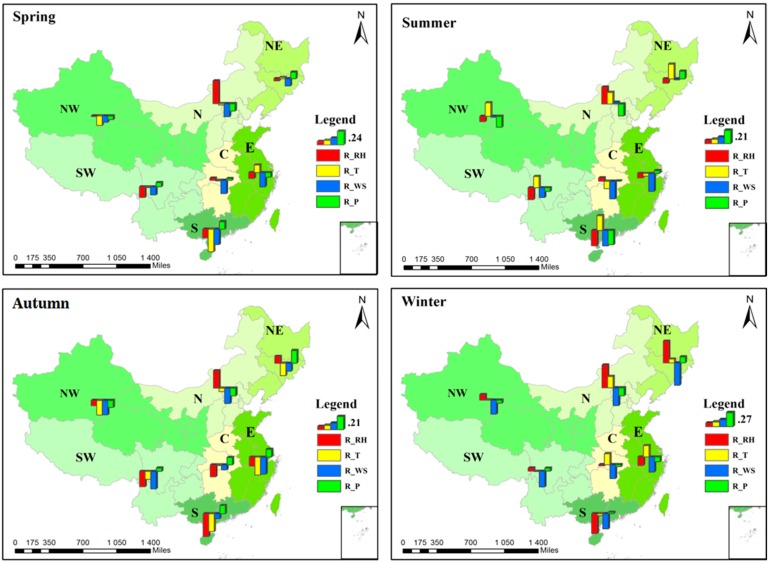
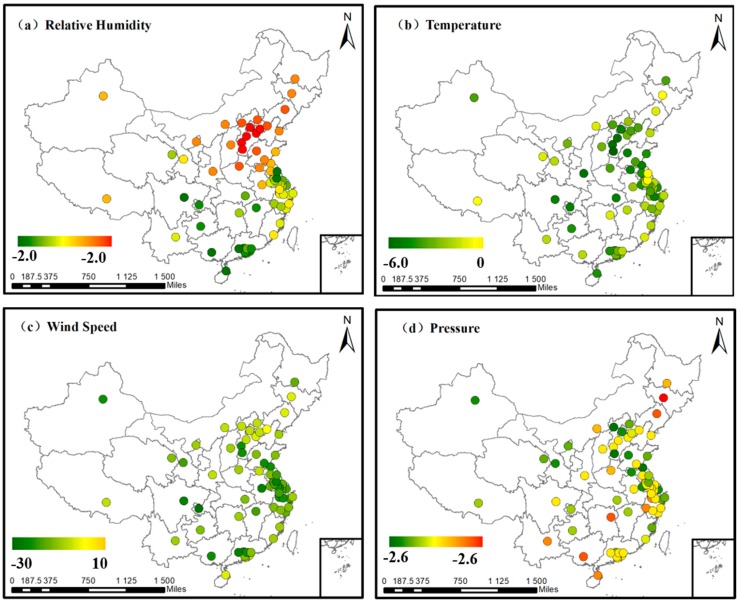
The interactions between PM and meteorological factors play a crucial role in air pollution analysis. However, previous studies that have researched the relationships between PM concentration and meteorological conditions have been mainly confined to a certain city or district, and the correlation over the whole of China remains unclear. Whether spatial and seasonal variations exist deserves further research. In this study, the relationships between PM concentration and meteorological factors were investigated in 68 major cities in China for a continuous period of 22 months from February 2013 to November 2014, at season, year, city, and regional scales, and the spatial and seasonal variations were analyzed. The meteorological factors were relative humidity (RH), temperature (TEM), wind speed (WS), and surface pressure (PS). We found that spatial and seasonal variations of their relationships with PM exist. Spatially, RH is positively correlated with PM concentration in north China and Urumqi, but the relationship turns to negative in other areas of China. WS is negatively correlated with PM everywhere except for Hainan Island. PS has a strong positive relationship with PM concentration in northeast China and mid-south China, and in other areas the correlation is weak. Seasonally, the positive correlation between PM concentration and RH is stronger in winter and spring. TEM has a negative relationship with PM in autumn and the opposite in winter. PS is more positively correlated with PM in autumn than in other seasons. Our study investigated the relationships between PM and meteorological factors in terms of spatial and seasonal variations, and the conclusions about the relationships between PM and meteorological factors are more comprehensive and precise than before. We suggest that the variations could be considered in PM concentration prediction and haze control to improve the prediction accuracy and policy efficiency.
PM 与气象因素之间的相互作用在空气污染分析中起着至关重要的作用。然而,之前研究 PM 浓度与气象条件之间关系的研究主要局限于某个城市或地区,对于整个中国的相关性仍不清楚。是否存在空间和季节性变化值得进一步研究。在这项研究中,我们研究了 2013 年 2 月至 2014 年 11 月期间连续 22 个月中国 68 个主要城市的 PM 浓度与气象因素之间的关系,分别从季节、年度、城市和区域尺度进行了分析,并对空间和季节性变化进行了分析。气象因素包括相对湿度(RH)、温度(TEM)、风速(WS)和地面气压(PS)。我们发现,它们与 PM 之间的关系存在空间和季节性变化。从空间上看,RH 与中国北方和乌鲁木齐的 PM 浓度呈正相关,但在其他地区则呈负相关。WS 与除海南岛以外的所有地区的 PM 均呈负相关。PS 与中国东北和中南部地区的 PM 浓度呈强正相关,而在其他地区相关性较弱。从季节上看,PM 浓度与 RH 的正相关性在冬春季节较强。TEM 与秋季 PM 呈负相关,而冬季则相反。PS 与 PM 的相关性在秋季比其他季节更强。我们从空间和季节性变化方面研究了 PM 与气象因素之间的关系,得出的关于 PM 与气象因素之间关系的结论比以前更全面、更准确。我们建议在 PM 浓度预测和雾霾控制中考虑这些变化,以提高预测精度和政策效率。