Sohaib Muhammad, Kim Cheol-Hong, Kim Jong-Myon
Department of Electrical, Electronics and Computer Engineering, University of Ulsan, Ulsan 44610, Korea.
School of Electronics and Computer Engineering, Chonnam National University, Gwangju 61186, Korea.
Sensors (Basel). 2017 Dec 11;17(12):2876. doi: 10.3390/s17122876.
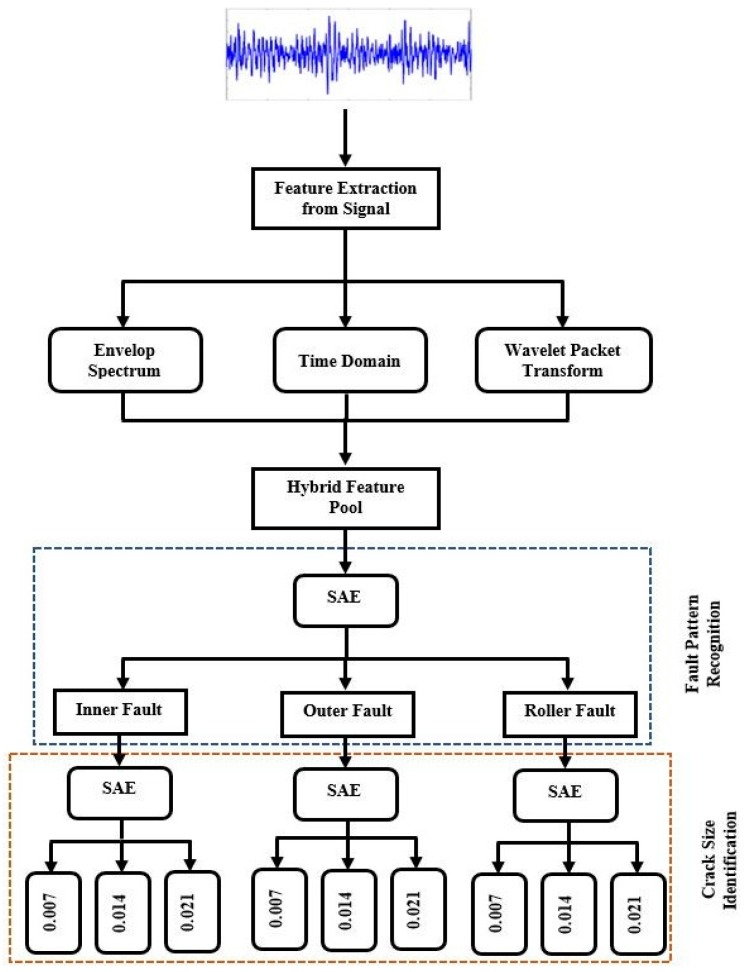
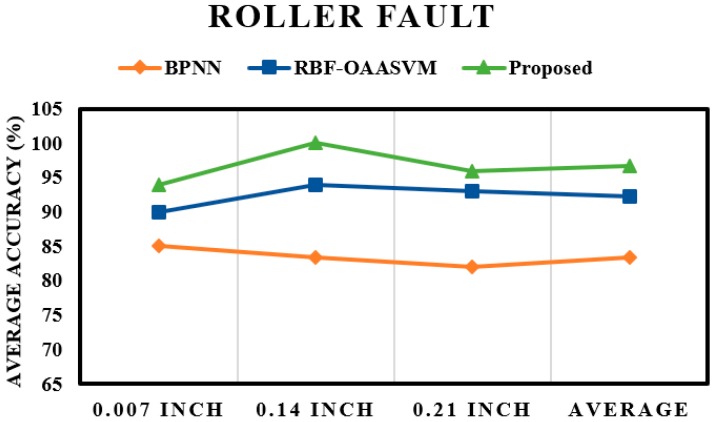
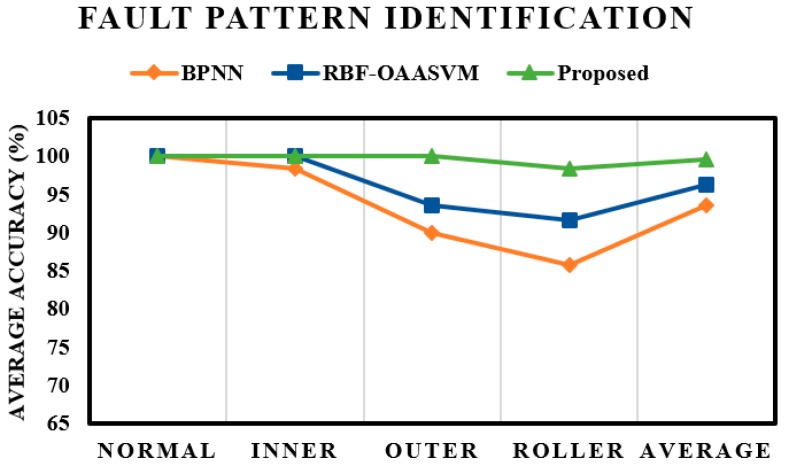
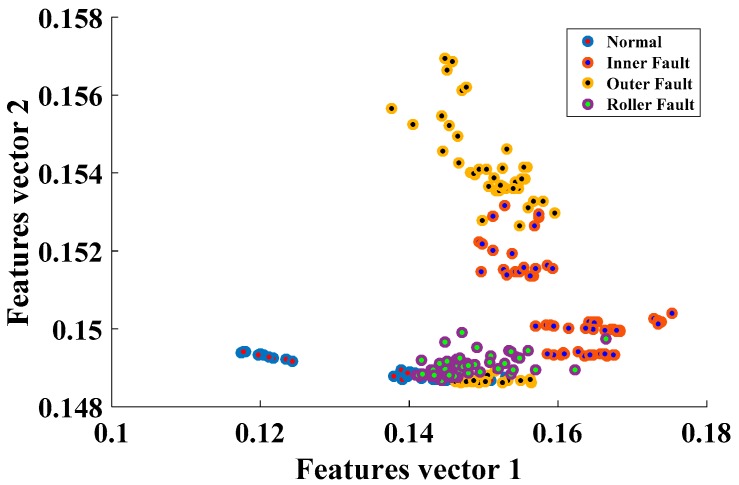
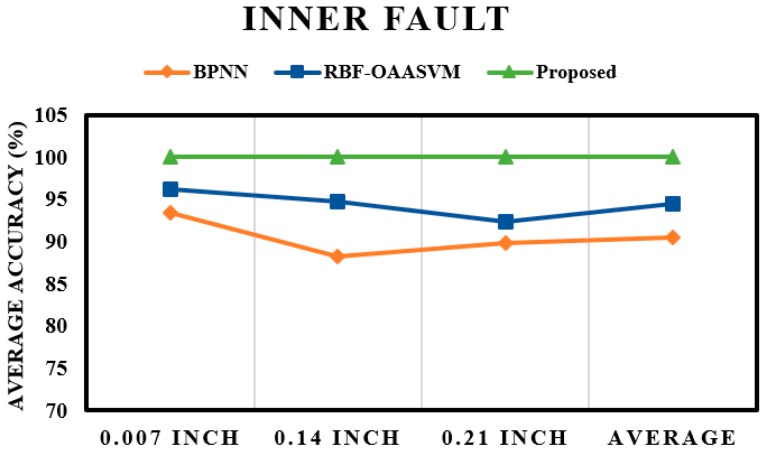
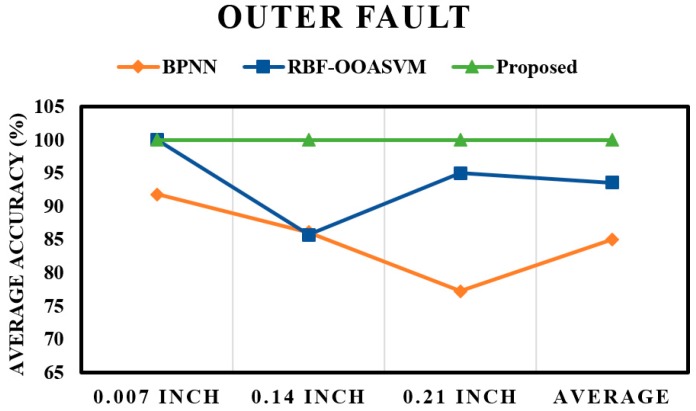
Bearing fault diagnosis is imperative for the maintenance, reliability, and durability of rotary machines. It can reduce economical losses by eliminating unexpected downtime in industry due to failure of rotary machines. Though widely investigated in the past couple of decades, continued advancement is still desirable to improve upon existing fault diagnosis techniques. Vibration acceleration signals collected from machine bearings exhibit nonstationary behavior due to variable working conditions and multiple fault severities. In the current work, a two-layered bearing fault diagnosis scheme is proposed for the identification of fault pattern and crack size for a given fault type. A hybrid feature pool is used in combination with sparse stacked autoencoder (SAE)-based deep neural networks (DNNs) to perform effective diagnosis of bearing faults of multiple severities. The hybrid feature pool can extract more discriminating information from the raw vibration signals, to overcome the nonstationary behavior of the signals caused by multiple crack sizes. More discriminating information helps the subsequent classifier to effectively classify data into the respective classes. The results indicate that the proposed scheme provides satisfactory performance in diagnosing bearing defects of multiple severities. Moreover, the results also demonstrate that the proposed model outperforms other state-of-the-art algorithms, i.e., support vector machines (SVMs) and backpropagation neural networks (BPNNs).
轴承故障诊断对于旋转机械的维护、可靠性和耐久性至关重要。它可以通过消除因旋转机械故障导致的工业意外停机来减少经济损失。尽管在过去几十年中得到了广泛研究,但仍需要不断进步以改进现有的故障诊断技术。由于工作条件变化和多种故障严重程度,从机器轴承收集的振动加速度信号表现出非平稳行为。在当前工作中,提出了一种两层轴承故障诊断方案,用于识别给定故障类型的故障模式和裂纹尺寸。使用混合特征池与基于稀疏堆叠自动编码器(SAE)的深度神经网络(DNN)相结合,以对多种严重程度的轴承故障进行有效诊断。混合特征池可以从原始振动信号中提取更多有区分力的信息,以克服由多种裂纹尺寸引起的信号非平稳行为。更多有区分力的信息有助于后续分类器将数据有效地分类到各自的类别中。结果表明,所提出的方案在诊断多种严重程度的轴承缺陷方面提供了令人满意的性能。此外,结果还表明,所提出的模型优于其他现有最先进的算法,即支持向量机(SVM)和反向传播神经网络(BPNN)。