• 文献检索
  • 文档翻译
  • 深度研究
  • 学术资讯
  • Suppr Zotero 插件Zotero 插件
  • 邀请有礼
  • 套餐&价格
  • 历史记录
应用&插件
Suppr Zotero 插件Zotero 插件浏览器插件Mac 客户端Windows 客户端微信小程序
定价
高级版会员购买积分包购买API积分包
服务
文献检索文档翻译深度研究API 文档MCP 服务
关于我们
关于 Suppr公司介绍联系我们用户协议隐私条款
关注我们

Suppr 超能文献

核心技术专利:CN118964589B侵权必究
粤ICP备2023148730 号-1Suppr @ 2026

文献检索

告别复杂PubMed语法,用中文像聊天一样搜索,搜遍4000万医学文献。AI智能推荐,让科研检索更轻松。

立即免费搜索

文件翻译

保留排版,准确专业,支持PDF/Word/PPT等文件格式,支持 12+语言互译。

免费翻译文档

深度研究

AI帮你快速写综述,25分钟生成高质量综述,智能提取关键信息,辅助科研写作。

立即免费体验

印度尼西亚农村维持无露天排便社区的促成因素:一项横断面研究。

Enabling Factors for Sustaining Open Defecation-Free Communities in Rural Indonesia: A Cross-Sectional Study.

机构信息

UNICEF Indonesia, World Trade Center 6 (10th Floor), Jalan Jenderal Sudirman Kav. 31, Jakarta 12920, Indonesia.

UNICEF Indonesia, Kupang Field Office, Gedung NTT Satu Data, Jl. Polisi Militer No. 2, Kupang 85111, Nusa Tenggara Timur, Indonesia.

出版信息

Int J Environ Res Public Health. 2017 Dec 14;14(12):1572. doi: 10.3390/ijerph14121572.

DOI:10.3390/ijerph14121572
PMID:29240667
原文链接:https://pmc.ncbi.nlm.nih.gov/articles/PMC5750990/
Abstract

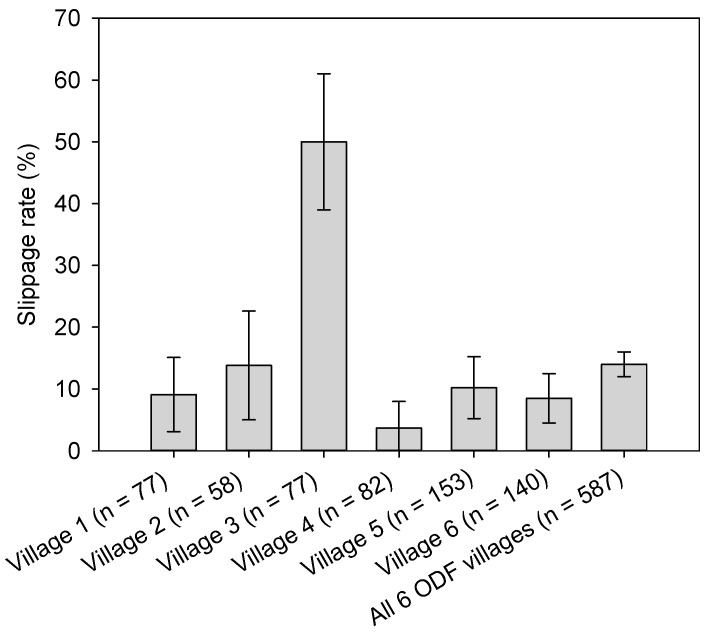
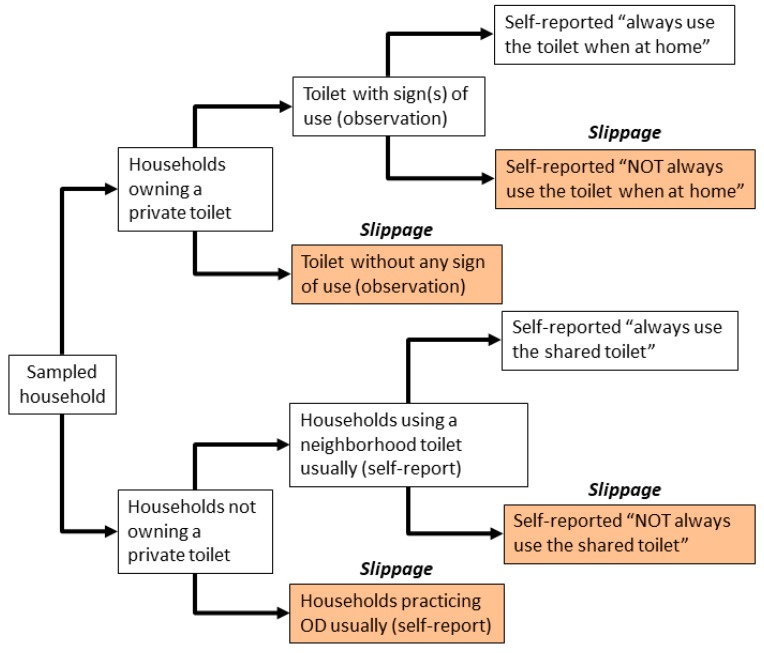
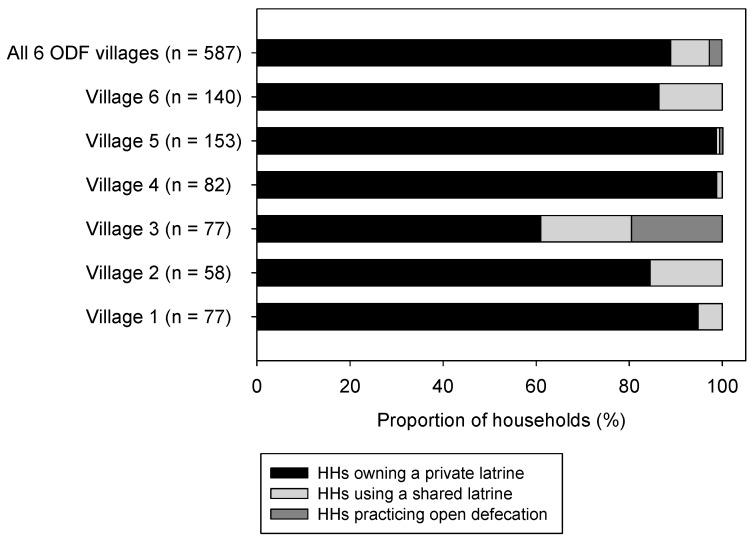
Community Approaches to Total Sanitation (CATS) programmes, like the Sanitasi Total Berbasis Masyarakat (STBM) programme of the Government of Indonesia, have played a significant role in reducing open defecation though still little is known about the sustainability of the outcomes. We assessed the sustainability of verified Open Defecation Free (ODF) villages and explored the association between slippage occurrence and the strength of social norms through a government conducted cross-sectional data collection in rural Indonesia. The study surveyed 587 households and held focus group discussions (FGDs) in six ODF villages two years after the government's ODF verification. Overall, the slippage rate (i.e., a combination of sub-optimal use of a latrine and open defecation at respondent level) was estimated to be 14.5% (95% CI 11.6-17.3). Results of multivariate logistic regression analyses indicated that (1) weaker social norms, as measured by respondents' perceptions around latrine ownership coverage in their community, (2) a lack of all-year round water access, and (3) wealth levels (i.e., not being in the richest quintile), were found to be significantly associated with slippage occurrence. These findings, together with qualitative analysis, concluded that CATS programmes, including a combination of demand creation, removal of perceived constraints through community support mechanisms, and continued encouragement to pursue higher levels of services with post-ODF follow-up, could stabilize social norms and help to sustain longer-term latrine usage in study communities. Further investigation and at a larger scale, would be important to strengthen these findings.

摘要

社区环境卫生整体推动方案(CATS),例如印度尼西亚政府的社区参与环境卫生整体推动方案(STBM),在减少露天排便方面发挥了重要作用,尽管对于成果的可持续性仍知之甚少。我们评估了已验证的无露天排便村庄的可持续性,并通过印度尼西亚农村的政府进行的横断面数据收集,探讨了滑降发生与社会规范强度之间的关联。该研究调查了 587 户家庭,并在政府进行无露天排便验证两年后,在六个无露天排便村庄进行了焦点小组讨论(FGD)。总体而言,滑降率(即受访者层面上厕所使用不理想和露天排便的组合)估计为 14.5%(95%CI 11.6-17.3)。多变量逻辑回归分析的结果表明,(1)较弱的社会规范,如受访者对社区内厕所拥有率的看法,(2)缺乏全年的水供应,以及(3)财富水平(即不属于最富有五分位数),与滑降发生显著相关。这些发现,结合定性分析,得出结论,CATS 方案,包括需求创造的结合、通过社区支持机制消除感知到的限制,以及在无露天排便后继续鼓励追求更高水平的服务,可能稳定社会规范,并有助于维持研究社区的长期厕所使用。进一步的调查和更大规模的调查将有助于加强这些发现。
https://cdn.ncbi.nlm.nih.gov/pmc/blobs/5fbc/5750990/11c815bb4907/ijerph-14-01572-g004.jpg
https://cdn.ncbi.nlm.nih.gov/pmc/blobs/5fbc/5750990/40c6a4385d87/ijerph-14-01572-g001.jpg
https://cdn.ncbi.nlm.nih.gov/pmc/blobs/5fbc/5750990/f69363b2cfa5/ijerph-14-01572-g002.jpg
https://cdn.ncbi.nlm.nih.gov/pmc/blobs/5fbc/5750990/710fcc93d568/ijerph-14-01572-g003.jpg
https://cdn.ncbi.nlm.nih.gov/pmc/blobs/5fbc/5750990/11c815bb4907/ijerph-14-01572-g004.jpg
https://cdn.ncbi.nlm.nih.gov/pmc/blobs/5fbc/5750990/40c6a4385d87/ijerph-14-01572-g001.jpg
https://cdn.ncbi.nlm.nih.gov/pmc/blobs/5fbc/5750990/f69363b2cfa5/ijerph-14-01572-g002.jpg
https://cdn.ncbi.nlm.nih.gov/pmc/blobs/5fbc/5750990/710fcc93d568/ijerph-14-01572-g003.jpg
https://cdn.ncbi.nlm.nih.gov/pmc/blobs/5fbc/5750990/11c815bb4907/ijerph-14-01572-g004.jpg

相似文献

1
Enabling Factors for Sustaining Open Defecation-Free Communities in Rural Indonesia: A Cross-Sectional Study.印度尼西亚农村维持无露天排便社区的促成因素:一项横断面研究。
Int J Environ Res Public Health. 2017 Dec 14;14(12):1572. doi: 10.3390/ijerph14121572.
2
Can open-defecation free (ODF) communities be sustained? A cross-sectional study in rural Ghana.能否维持无露天排便(ODF)社区?加纳农村的一项横断面研究。
PLoS One. 2022 Jan 7;17(1):e0261674. doi: 10.1371/journal.pone.0261674. eCollection 2022.
3
Assessment of community led total sanitation and hygiene approach on improvement of latrine utilization in Laelay Maichew District, North Ethiopia. A comparative cross-sectional study.评估社区主导的全面环境卫生方法对改善埃塞俄比亚北部拉利贝拉马乔克地区厕所利用的影响:一项比较性横断面研究。
PLoS One. 2018 Sep 7;13(9):e0203458. doi: 10.1371/journal.pone.0203458. eCollection 2018.
4
The role of psychological factors in predicting latrine ownership and consistent latrine use in rural Ethiopia: a cross-sectional study.心理因素在预测埃塞俄比亚农村地区厕所拥有率和持续使用厕所方面的作用:一项横断面研究。
BMC Public Health. 2018 Feb 8;18(1):229. doi: 10.1186/s12889-018-5143-0.
5
Open defecation practice among households with latrines in rural communities of Ararso District, Somali Region, Eastern Ethiopia.埃塞俄比亚东部索马里地区阿腊尔索区农村社区有厕所的家庭中的露天排便习惯。
Front Public Health. 2024 May 1;12:1394351. doi: 10.3389/fpubh.2024.1394351. eCollection 2024.
6
The Role of Perceived Social Norms in Rural Sanitation: An Explorative Study from Infrastructure-Restricted Settings of South Ethiopia.感知社会规范在农村卫生设施中的作用:来自埃塞俄比亚南部基础设施受限地区的探索性研究。
Int J Environ Res Public Health. 2017 Jul 17;14(7):794. doi: 10.3390/ijerph14070794.
7
Latrine coverage and its utilisation in a rural village of Eastern Nepal: a community-based cross-sectional study.尼泊尔东部一个乡村的厕所覆盖率及其使用情况:一项基于社区的横断面研究。
BMC Res Notes. 2017 Jun 12;10(1):209. doi: 10.1186/s13104-017-2539-3.
8
Assessing patterns and determinants of latrine use in rural settings: A longitudinal study in Odisha, India.评估农村地区厕所使用模式及决定因素:印度奥里萨邦的一项纵向研究
Int J Hyg Environ Health. 2017 Jul;220(5):906-915. doi: 10.1016/j.ijheh.2017.05.004. Epub 2017 May 12.
9
Latent variable modeling to develop a robust proxy for sensitive behaviors: application to latrine use behavior and its association with sanitation access in a middle-income country.潜在变量建模开发敏感行为的稳健代理:在一个中等收入国家,应用于厕所使用行为及其与卫生设施获取的关联。
BMC Public Health. 2019 Jan 19;19(1):90. doi: 10.1186/s12889-018-6373-x.
10
Review of the slippage factors from open defecation-free (ODF) status towards open defecation (OD) after the Community-Led Total Sanitation (CLTS) approach implementation.回顾社区主导的全面卫生(CLTS)方法实施后,从无露天排便(ODF)状态向露天排便(OD)转变的滑动因素。
Int J Hyg Environ Health. 2023 May;250:114160. doi: 10.1016/j.ijheh.2023.114160. Epub 2023 Mar 21.

引用本文的文献

1
Household ownership of latrines does not ensure use: a scoping review.家庭拥有厕所并不确保会使用:一项范围综述
BMJ Public Health. 2025 Aug 14;3(2):e001527. doi: 10.1136/bmjph-2024-001527. eCollection 2025.
2
Socio-economic factors associated with open defecation among agricultural households: a cross-sectional study in Haiti.农业家庭中与露天排便相关的社会经济因素:海地的一项横断面研究
BMJ Public Health. 2023 Sep 19;1(1):e000082. doi: 10.1136/bmjph-2023-000082. eCollection 2023 Nov.
3
Contextual and psychosocial factors predicting sanitation behaviours in rural Indonesia.

本文引用的文献

1
Equity implications for sanitation from recent health and nutrition evidence.从最近的健康和营养证据看卫生设施的公平性影响。
Int J Equity Health. 2017 Dec 6;16(1):211. doi: 10.1186/s12939-017-0709-5.
2
An individual-level meta-analysis assessing the impact of community-level sanitation access on child stunting, anemia, and diarrhea: Evidence from DHS and MICS surveys.一项评估社区层面卫生设施获取情况对儿童发育迟缓、贫血和腹泻影响的个体层面荟萃分析:来自人口与健康调查(DHS)和多指标类集调查(MICS)的证据
PLoS Negl Trop Dis. 2017 Jun 8;11(6):e0005591. doi: 10.1371/journal.pntd.0005591. eCollection 2017 Jun.
3
Assessing patterns and determinants of latrine use in rural settings: A longitudinal study in Odisha, India.
预测印度尼西亚农村地区卫生行为的背景因素和社会心理因素。
BMC Public Health. 2025 Feb 17;25(1):633. doi: 10.1186/s12889-025-21893-3.
4
Successful open defecation-free intervention in low- and middle-income countries: a qualitative synthesis systematic review protocol.低收入和中等收入国家成功的无露天排便干预措施:一项定性综合系统评价方案
BMJ Open. 2025 Jan 29;15(1):e091478. doi: 10.1136/bmjopen-2024-091478.
5
Latrine Utilization and Associated Factors Among Rural Households in Southwest Ethiopia: Risk, Attitude, Norms, Ability, and Self-Regulation Behavioral Model.埃塞俄比亚西南部农村家庭的厕所使用情况及相关因素:风险、态度、规范、能力和自我调节行为模型
Environ Health Insights. 2023 Mar 31;17:11786302231163956. doi: 10.1177/11786302231163956. eCollection 2023.
6
Assessing Sustainability Factors for Rural Household Sanitation Coverage in Bhutan, Kenya, Nepal, and Zambia: A Qualitative Analysis.评估不丹、肯尼亚、尼泊尔和赞比亚农村家庭卫生覆盖的可持续性因素:定性分析。
Glob Health Sci Pract. 2022 Dec 21;10(6). doi: 10.9745/GHSP-D-21-00724.
7
Socio-economic and demographic factors influencing open defecation in Haiti: a cross-sectional study.社会经济和人口因素对海地露天排便的影响:一项横断面研究。
BMC Public Health. 2022 Nov 23;22(1):2156. doi: 10.1186/s12889-022-14619-2.
8
Assessing the Sustainability of an Integrated Rural Sanitation and Hygiene Approach: A Repeated Cross-Sectional Evaluation in 10 Countries.评估农村环境卫生综合措施的可持续性:10 个国家的重复横断面评估。
Glob Health Sci Pract. 2022 Aug 30;10(4). doi: 10.9745/GHSP-D-21-00564.
9
The Impact of Pro-Poor Sanitation Subsidies in Open Defecation-Free Communities: A Randomized, Controlled Trial in Rural Ghana.《贫困导向卫生设施补贴对无露天排便社区的影响:加纳农村地区的一项随机对照试验》。
Environ Health Perspect. 2022 Jun;130(6):67004. doi: 10.1289/EHP10443. Epub 2022 Jun 8.
10
Can open-defecation free (ODF) communities be sustained? A cross-sectional study in rural Ghana.能否维持无露天排便(ODF)社区?加纳农村的一项横断面研究。
PLoS One. 2022 Jan 7;17(1):e0261674. doi: 10.1371/journal.pone.0261674. eCollection 2022.
评估农村地区厕所使用模式及决定因素:印度奥里萨邦的一项纵向研究
Int J Hyg Environ Health. 2017 Jul;220(5):906-915. doi: 10.1016/j.ijheh.2017.05.004. Epub 2017 May 12.
4
Sustainability of community-led total sanitation outcomes: Evidence from Ethiopia and Ghana.社区主导的全面卫生成果的可持续性:来自埃塞俄比亚和加纳的证据。
Int J Hyg Environ Health. 2017 May;220(3):551-557. doi: 10.1016/j.ijheh.2017.02.011. Epub 2017 May 9.
5
Community-Level Sanitation Coverage More Strongly Associated with Child Growth and Household Drinking Water Quality than Access to a Private Toilet in Rural Mali.在马里农村地区,社区层面的卫生设施覆盖率与儿童生长发育及家庭饮用水质量的关联,比是否拥有私人厕所更为紧密。
Environ Sci Technol. 2017 Jun 20;51(12):7219-7227. doi: 10.1021/acs.est.7b00178. Epub 2017 Jun 1.
6
Exposure-response relationship of neighbourhood sanitation and children's diarrhoea.社区卫生与儿童腹泻的暴露-反应关系。
Trop Med Int Health. 2017 Jul;22(7):857-865. doi: 10.1111/tmi.12886. Epub 2017 May 29.
7
Is Using a Latrine "A Strange Thing To Do"? A Mixed-Methods Study of Sanitation Preference and Behaviors in Rural Ethiopia.使用厕所是“一件奇怪的事”吗?埃塞俄比亚农村地区卫生设施偏好与行为的混合方法研究。
Am J Trop Med Hyg. 2017 Jan 11;96(1):65-73. doi: 10.4269/ajtmh.16-0541. Epub 2016 Nov 14.
8
The impact of sanitation interventions on latrine coverage and latrine use: A systematic review and meta-analysis.卫生干预措施对厕所覆盖率和厕所使用情况的影响:一项系统评价与荟萃分析
Int J Hyg Environ Health. 2017 Apr;220(2 Pt B):329-340. doi: 10.1016/j.ijheh.2016.10.001. Epub 2016 Oct 11.
9
Determinants of stunting in Indonesian children: evidence from a cross-sectional survey indicate a prominent role for the water, sanitation and hygiene sector in stunting reduction.印度尼西亚儿童发育迟缓的决定因素:一项横断面调查的证据表明,水、环境卫生和个人卫生部门在减少发育迟缓方面发挥着重要作用。
BMC Public Health. 2016 Jul 29;16:669. doi: 10.1186/s12889-016-3339-8.
10
Assessing Latrine Use in Rural India: A Cross-Sectional Study Comparing Reported Use and Passive Latrine Use Monitors.评估印度农村地区的厕所使用情况:一项比较报告使用情况和被动式厕所使用监测器的横断面研究。
Am J Trop Med Hyg. 2016 Sep 7;95(3):720-727. doi: 10.4269/ajtmh.16-0102. Epub 2016 Jul 25.