Bailon-Moscoso Natalia, Tinitana Fani, Martínez-Espinosa Ruth, Jaramillo-Velez Andrea, Palacio-Arpi Alejandra, Aguilar-Hernandez Jessica, Romero-Benavides Juan Carlos
Departamento de Ciencias de la Salud, Universidad Técnica Particular de Loja, Loja, Ecuador.
Departamento de Ciencias Biológicas, Universidad Técnica Particular de Loja, Loja, Ecuador.
BMC Complement Altern Med. 2017 Dec 19;17(1):539. doi: 10.1186/s12906-017-2048-x.
"Horchata" is an herbal mixture infusion consumed in Southern Ecuador; 66% of its plants are anti-inflammatory medicinal plant, and 51% are analgesics. Anti-inflammatory substances can prevent carcinogenesis mediated by cytotoxic effects and can prevent DNA damage. The aim of this study was to evaluate the cytotoxicity and apoptotic/antigenotoxic effects of horchata as well as its mechanism.
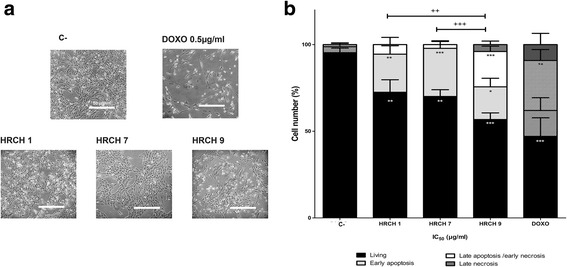
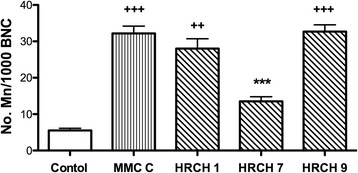
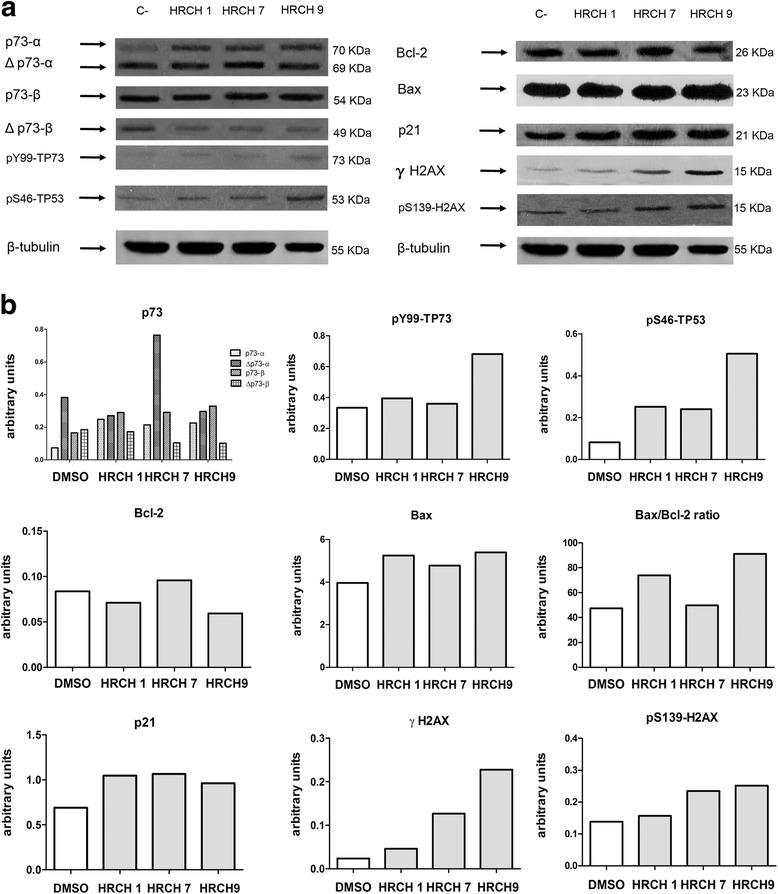
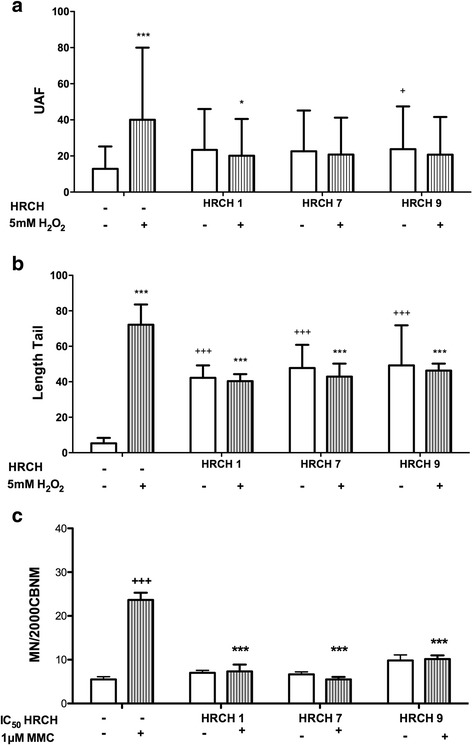
Nine different varieties of horchata were prepared in the traditional way and then freeze-dried. Phytochemical screening tested for the presence of secondary metabolites using standard procedures and antioxidant activities. The cytotoxic activity was evaluated on cerebral astrocytoma (D-384), prostate cancer (PC-3), breast cancer (MCF-7), colon cancer (RKO), lung cancer (A-549), immortalized Chinese hamster ovary cells (CHO-K1), and human peripheral blood lymphocytes via a MTS assay. The pro-apoptotic effects were evaluated with Anexin V/Propidium Iodide and western blot of Bax, Bcl-2, TP53, and TP73. Induction and reduction of ROS were assessed by fluorimetry. Genotoxic and antigenotoxic effects were evaluated with a comet assay and micronuclei on binucleated cells.
Five of nine horchatas had cytotoxic effects against D-384 while not affecting normal cells. These horchatas induce cell death by apoptosis modulated by p53/p73. In CHO-K1 cells, the horchatas decrease the damage induced by hydrogen peroxide and Mitomycin C measured in the comet and micronucleus assay respectively.
The IC range of effective horchatas in D-384 was 41 to 122 μg·mL. This effect may be related to its use in traditional medicine (brain tonic). On the other hand, immortalized Chinese hamster ovary cells (CHO-K1) and lymphocytes did not show a cytotoxic effect. The most potent horchata induced apoptosis via a p53/p73-mediated mechanism. The horchatas present antigenotoxic properties, which may be related to the antioxidant capacity. Future studies on horchata components are necessary to understand the interactions and beneficial properties.
“奥尔查塔”是厄瓜多尔南部饮用的一种草药混合浸剂;其植物中66%是具有抗炎作用的药用植物,51%是具有止痛作用的植物。抗炎物质可预防由细胞毒性作用介导的致癌作用,并可防止DNA损伤。本研究的目的是评估奥尔查塔的细胞毒性、凋亡/抗基因毒性作用及其机制。
采用传统方法制备9种不同品种的奥尔查塔,然后冷冻干燥。使用标准程序对次生代谢产物的存在进行植物化学筛选并检测抗氧化活性。通过MTS试验评估对脑星形细胞瘤(D-384)、前列腺癌(PC-3)、乳腺癌(MCF-7)、结肠癌(RKO)、肺癌(A-549)、永生化中国仓鼠卵巢细胞(CHO-K1)和人外周血淋巴细胞的细胞毒性活性。用膜联蛋白V/碘化丙啶和Bax、Bcl-2、TP53和TP73的蛋白质免疫印迹法评估促凋亡作用。通过荧光法评估活性氧的诱导和减少。用彗星试验和双核细胞微核试验评估基因毒性和抗基因毒性作用。
9种奥尔查塔中有5种对D-384具有细胞毒性作用,而不影响正常细胞。这些奥尔查塔通过p53/p73调节的凋亡诱导细胞死亡。在CHO-K1细胞中,奥尔查塔分别降低了彗星试验和微核试验中过氧化氢和丝裂霉素C诱导的损伤。
有效奥尔查塔对D-384的IC范围为41至122μg·mL。这种作用可能与其在传统医学(补脑)中的应用有关。另一方面,永生化中国仓鼠卵巢细胞(CHO-K1)和淋巴细胞未显示细胞毒性作用。最有效的奥尔查塔通过p53/p73介导的机制诱导凋亡。奥尔查塔具有抗基因毒性特性,这可能与其抗氧化能力有关。有必要对奥尔查塔的成分进行进一步研究,以了解其相互作用和有益特性。