School of Biological Sciences, University of Bristol, Bristol, UK.
Vitacress Herbs, Chichester, West Sussex, UK.
Sci Rep. 2017 Dec 19;7(1):17758. doi: 10.1038/s41598-017-18073-8.
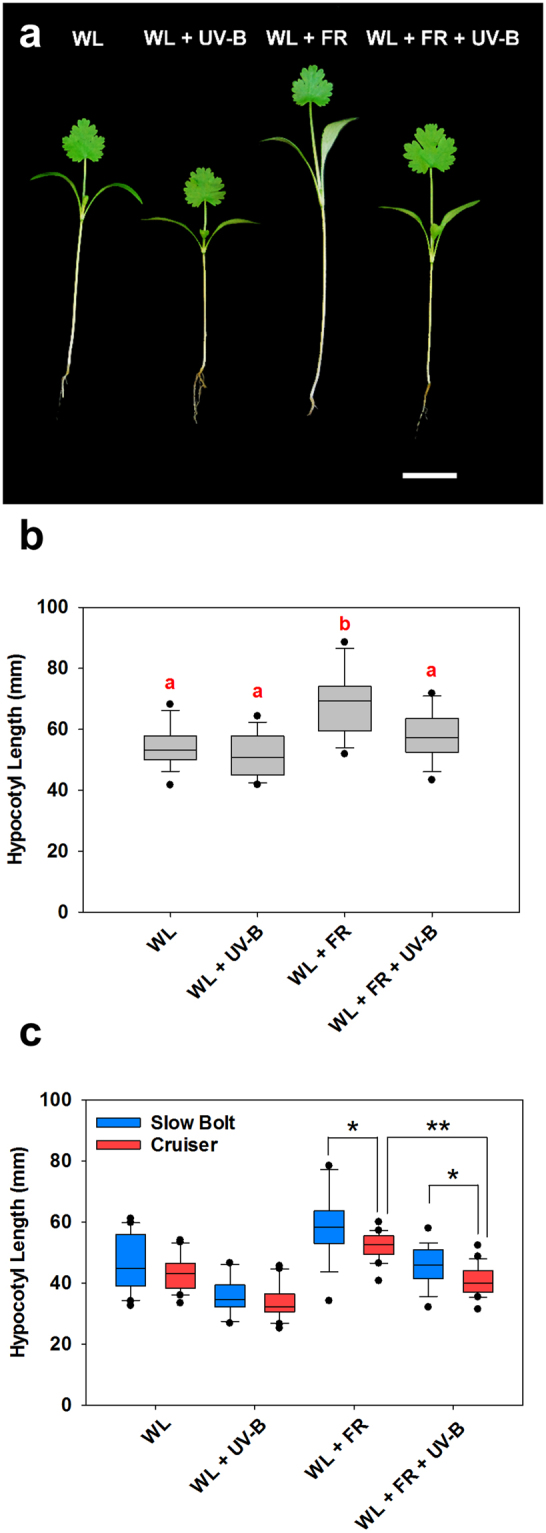
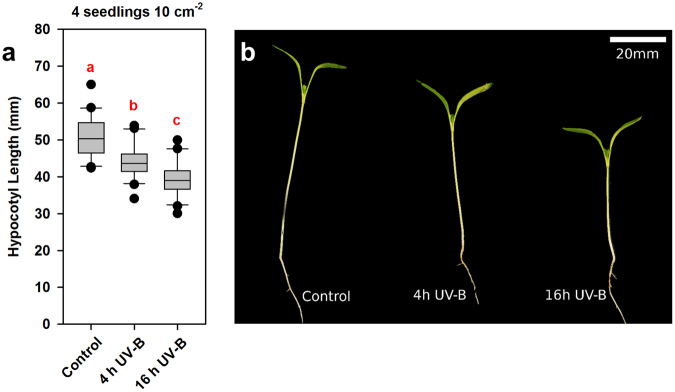
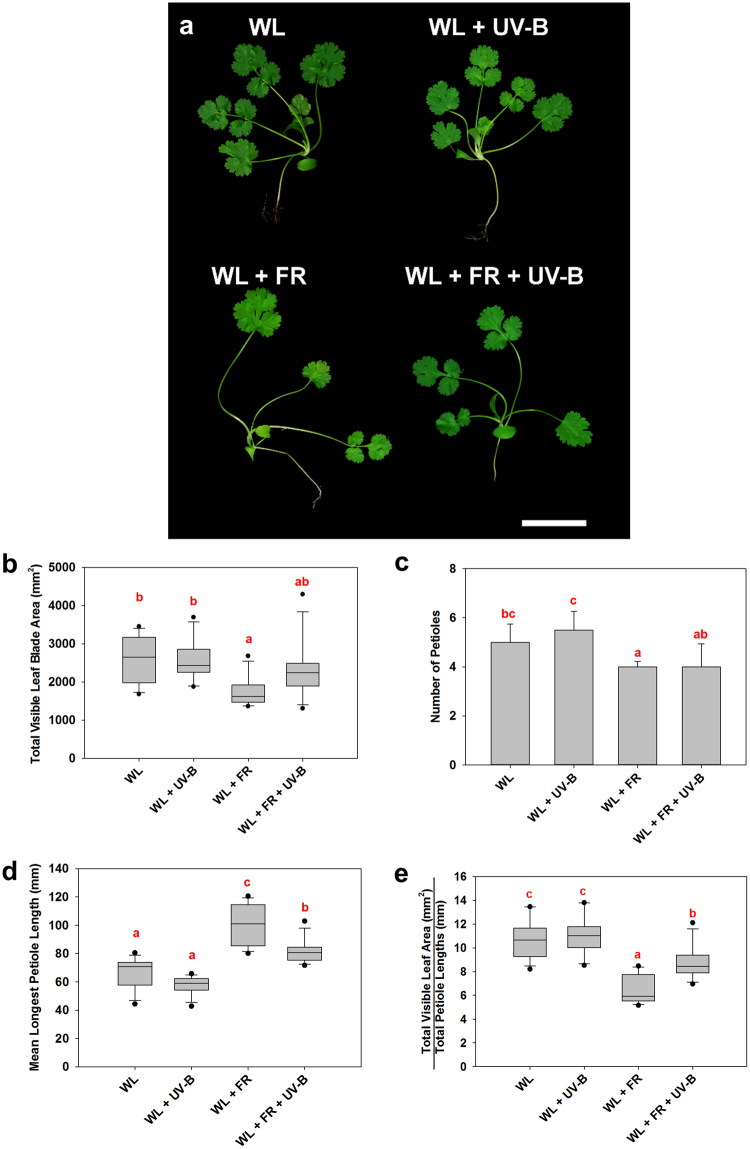
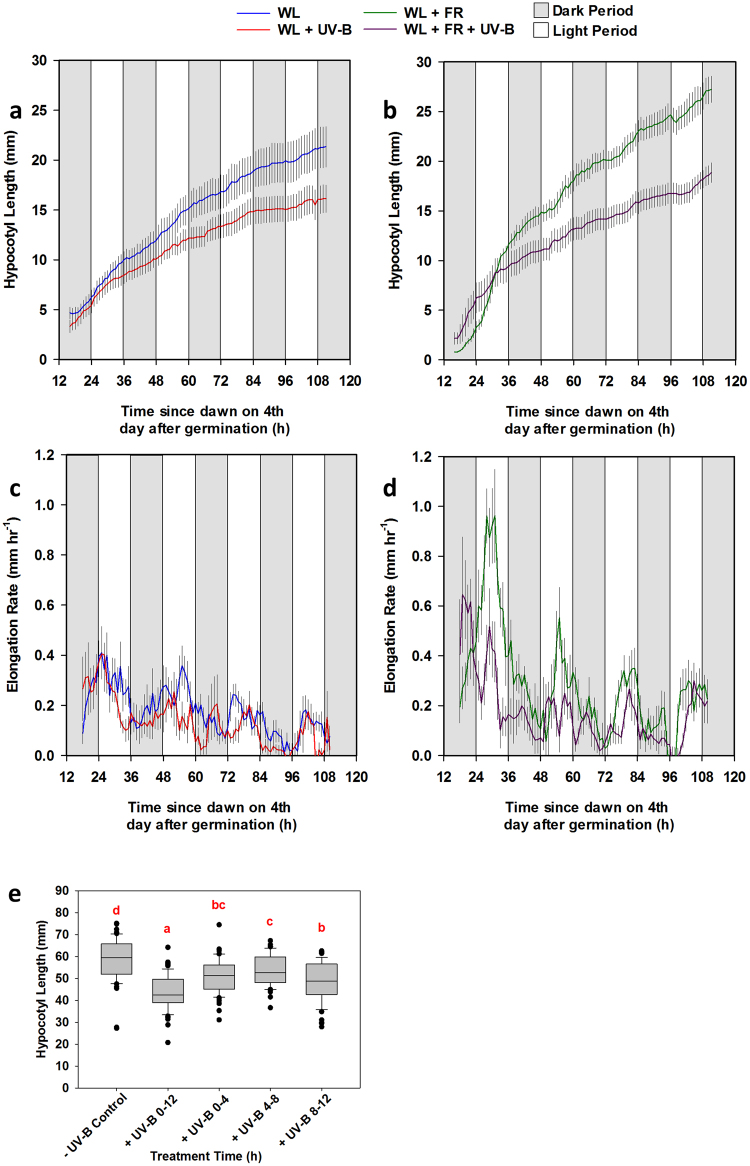
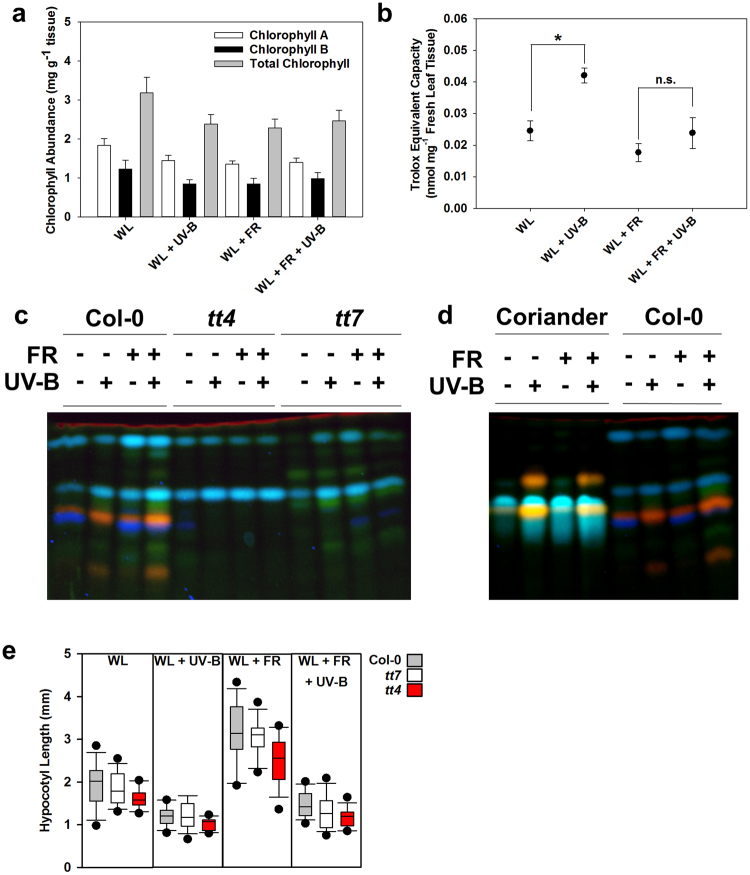
Despite controlling a diverse array of regulatory processes in plants, UV-B wavelengths (280-315 nm) are attenuated by common greenhouse materials such as glass and polycarbonate and are therefore depleted in many commercial growing environments. In this study, we analysed the architecture, pigment accumulation and antioxidant capacity of coriander (Coriandrum sativum, also known as cilantro) plants grown with and without supplementary UV-B (1.5 µmol m s). We demonstrate that UV-B limits stem elongation responses to neighbour proximity perception (shade avoidance), promoting a more compact plant architecture. In addition, UV-B increased leaf quercetin content and total antioxidant capacity. Arabidopsis thaliana mutants deficient in flavonoid biosynthesis were not impaired in shade avoidance inhibition, suggesting that UV-B-induced flavonoid synthesis is not a component of this response. Our results indicate that UV-B supplementation may provide a method to manipulate the architecture, flavour and nutritional content of potted herbs whilst reducing the deleterious impacts of dense planting on product quality.
尽管紫外线-B 波长(280-315nm)可以控制植物中多种调节过程,但它们会被常见的温室材料(如玻璃和聚碳酸酯)衰减,因此在许多商业种植环境中都会被消耗殆尽。在这项研究中,我们分析了补充和不补充紫外线-B(1.5µmol m s)条件下芫荽(也称为香菜)植株的结构、色素积累和抗氧化能力。我们证明,紫外线-B 限制了茎对邻近距离感知(避荫)的伸长反应,促进了更紧凑的植物结构。此外,紫外线-B 增加了叶片槲皮素含量和总抗氧化能力。类黄酮生物合成缺陷的拟南芥突变体在避荫抑制方面没有受到损害,这表明紫外线-B 诱导的类黄酮合成不是这种反应的组成部分。我们的研究结果表明,补充紫外线-B 可能是一种操纵盆栽草药结构、风味和营养成分的方法,同时减少密集种植对产品质量的有害影响。