Ma Elizabeth, Ingram Katherine H, Milne Ginger L, Garvey W Timothy
Department of Nutrition Sciences, University of Alabama at Birmingham, Birmingham, Alabama 35294.
Department of Exercise Science and Sport Management, Kennesaw State University, Kennesaw, Georgia 30144.
J Endocr Soc. 2017 Apr 7;1(5):436-448. doi: 10.1210/js.2017-00006. eCollection 2017 May 1.
F2-isoprostanes (F2-isoPs) are biomarkers for oxidative stress in humans and have been shown to be elevated in obesity, cardiovascular disease, and diabetes. Therefore, F2-isoPs are often implicated in oxidative stress contributing to insulin resistance, although this has not been rigorously examined.
To determine whether urinary F2-isoPs are predictive of insulin sensitivity and other clinical metabolic parameters.
Sedentary, weight-stable, nondiabetic adults equilibrated on a standard isocaloric diet.
Insulin sensitivity via hyperinsulinemic-euglycemic clamp, urinary F2-isoPs by gas chromatography-mass spectrometry, and body composition by dual-energy x-ray absorptiometry.
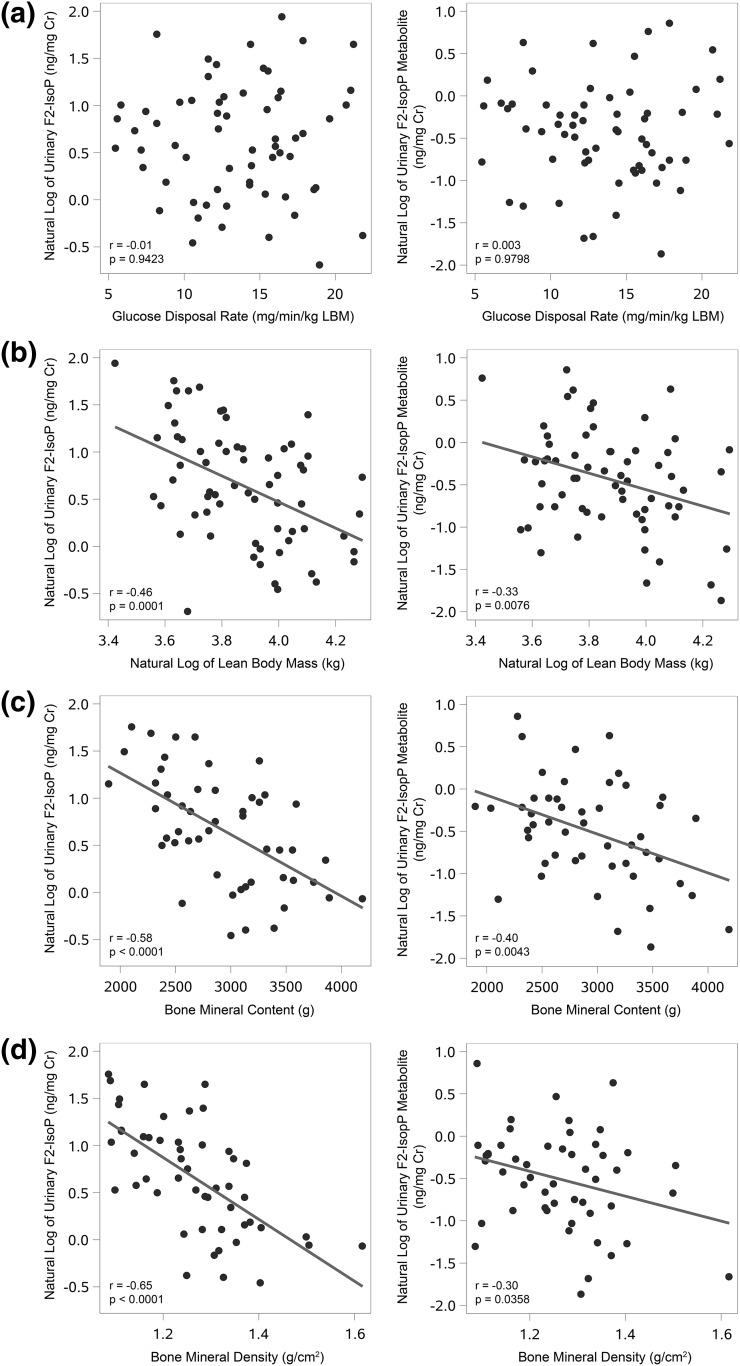
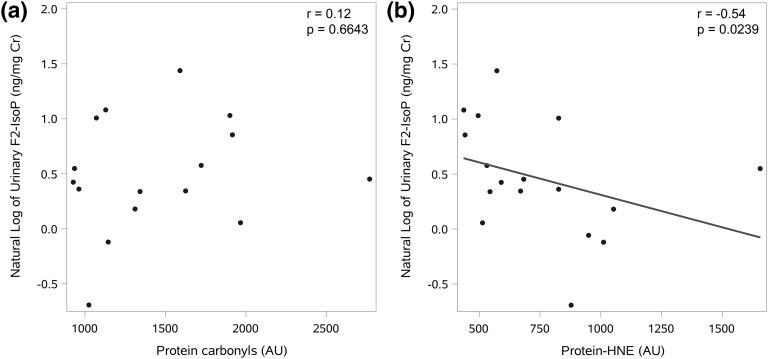
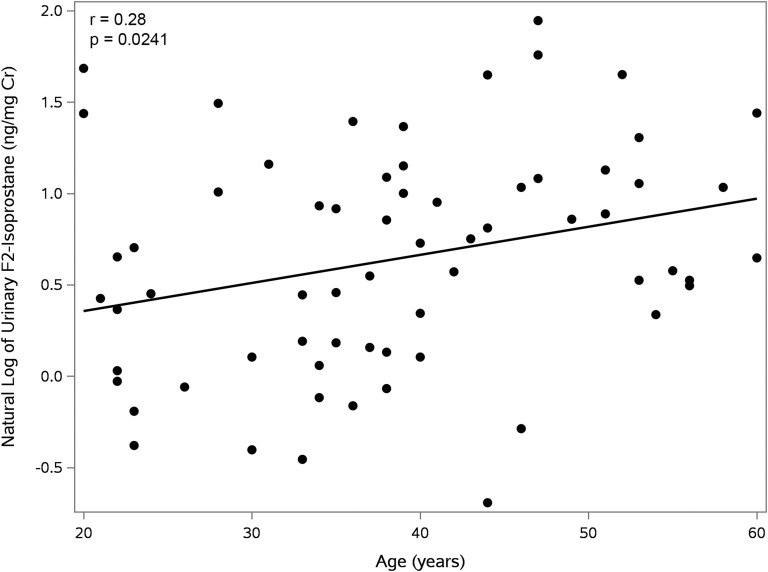
No correlation was found between 15-F-IsoP nor its major metabolite, 2,3-dinor-5,6-dihydro-15-F-IsoP, with insulin sensitivity, even after adjusting for age, race, sex, BMI, and smoking status. 15-F-IsoP was also not associated with body fat. However, there was a strong negative correlation between 15-F-IsoP and lean body mass (LBM; r = -0.46, = 0.0001), bone mineral content (BMC; r = -0.58, < 0.0001), bone mineral density (BMD; r = -0.65, < 0.0001), and skeletal muscle protein 4-hydroxynonenal (4-HNE; r = -0.54, = 0.0239), another marker of oxidative stress. 15-F-IsoP was also positively associated with circulating triglycerides and total cholesterol, and increased as a function of age.
Urinary 15-F-IsoP and its major metabolite are not associated with insulin sensitivity, suggesting the lipid peroxidation process that produces F2-isoPs does not reflect oxidative stress reactions operative in insulin resistance. However, urinary F2-isoPs were negatively correlated with LBM, BMC, BMD, and muscle 4-HNE. Because lean and bone mass decline as a function of biological aging, F2-isoPs may reflect the oxidative stress operative in the aging process.
F2 -异前列腺素(F2-isoPs)是人体氧化应激的生物标志物,在肥胖、心血管疾病和糖尿病中水平升高。因此,F2-isoPs常被认为与导致胰岛素抵抗的氧化应激有关,尽管这一点尚未得到严格验证。
确定尿F2-isoPs是否可预测胰岛素敏感性及其他临床代谢参数。
久坐、体重稳定、非糖尿病的成年人,采用标准等热量饮食。
通过高胰岛素-正常血糖钳夹技术测定胰岛素敏感性,采用气相色谱-质谱法测定尿F2-isoPs,采用双能X线吸收法测定身体成分。
即使在调整年龄、种族、性别、体重指数和吸烟状况后,15-F-异前列腺素及其主要代谢产物2,3-二去甲-5,6-二氢-15-F-异前列腺素与胰岛素敏感性之间均未发现相关性。15-F-异前列腺素也与体脂无关。然而,15-F-异前列腺素与瘦体重(LBM;r = -0.46,P = 0.0001)、骨矿物质含量(BMC;r = -0.58,P < 0.0001)、骨矿物质密度(BMD;r = -0.65,P < 0.0001)以及骨骼肌蛋白4-羟基壬烯醛(4-HNE;r = -0.54,P = 0.0239,氧化应激的另一个标志物)之间存在很强的负相关。15-F-异前列腺素还与循环甘油三酯和总胆固醇呈正相关,并随年龄增长而增加。
尿15-F-异前列腺素及其主要代谢产物与胰岛素敏感性无关,这表明产生F2-isoPs的脂质过氧化过程并不能反映胰岛素抵抗中起作用的氧化应激反应。然而,尿F2-isoPs与LBM、BMC、BMD和肌肉4-HNE呈负相关。由于瘦体重和骨量会随着生物衰老而下降,F2-isoPs可能反映了衰老过程中起作用的氧化应激。