Crommen Silke, Simon Marie-Christine
Department of Nutrition and Food Sciences, Nutritional Physiology, University of Bonn, 53115 Bonn, Germany.
The Wallenberg Laboratory, Department of Molecular and Clinical Medicine, University of Gothenburg, 41345 Gothenburg, Sweden.
Genes (Basel). 2017 Dec 29;9(1):10. doi: 10.3390/genes9010010.
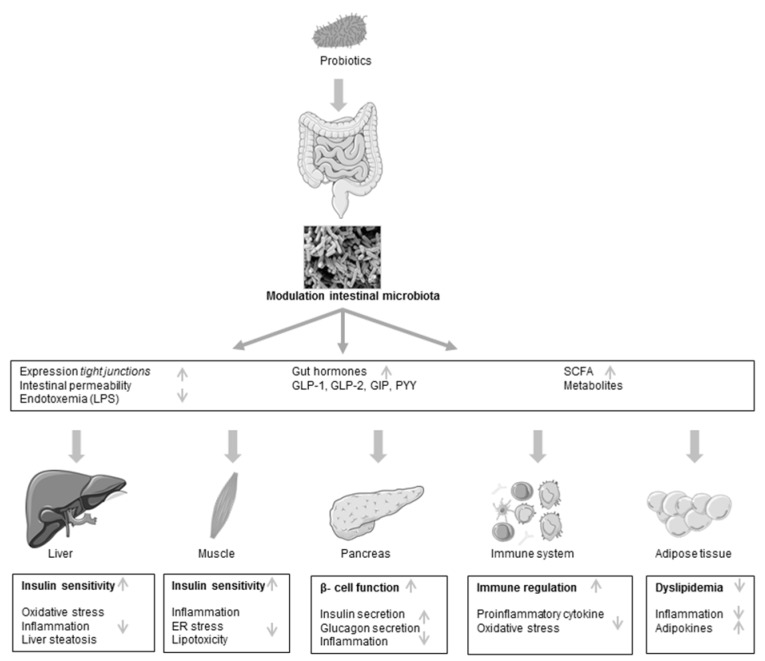
Type 2 diabetes is a combined disease, resulting from a hyperglycemia and peripheral and hepatic insulin resistance. Recent data suggest that the gut microbiota is involved in diabetes development, altering metabolic processes including glucose and fatty acid metabolism. Thus, type 2 diabetes patients show a microbial dysbiosis, with reduced butyrate-producing bacteria and elevated potential pathogens compared to metabolically healthy individuals. Furthermore, probiotics are a known tool to modulate the microbiota, having a therapeutic potential. Current literature will be discussed to elucidate the complex interaction of gut microbiota, intestinal permeability and inflammation leading to peripheral and hepatic insulin resistance. Therefore, this review aims to generate a deeper understanding of the underlying mechanism of potential microbial strains, which can be used as probiotics.
2型糖尿病是一种综合性疾病,由高血糖以及外周和肝脏胰岛素抵抗引起。最近的数据表明,肠道微生物群参与糖尿病的发展,改变包括葡萄糖和脂肪酸代谢在内的代谢过程。因此,与代谢健康的个体相比,2型糖尿病患者表现出微生物群落失调,产生丁酸盐的细菌减少,潜在病原体增加。此外,益生菌是一种已知的调节微生物群的工具,具有治疗潜力。本文将讨论当前的文献,以阐明肠道微生物群、肠道通透性和炎症之间导致外周和肝脏胰岛素抵抗的复杂相互作用。因此,本综述旨在更深入地了解潜在微生物菌株的潜在机制,这些菌株可用作益生菌。