Rathbun Colin M, Porterfield William B, Jones Krysten A, Sagoe Marian J, Reyes Monique R, Hua Christine T, Prescher Jennifer A
Department of Chemistry, Department of Molecular Biology & Biochemistry, and Department of Pharmaceutical Sciences, University of California, Irvine Irvine, California 92697, United States.
ACS Cent Sci. 2017 Dec 27;3(12):1254-1261. doi: 10.1021/acscentsci.7b00394. Epub 2017 Nov 15.
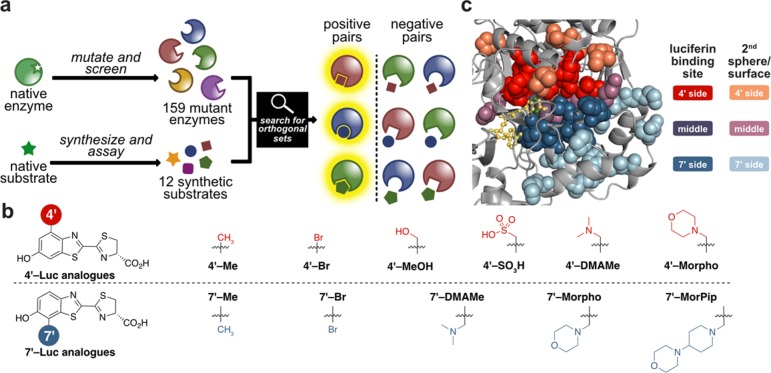
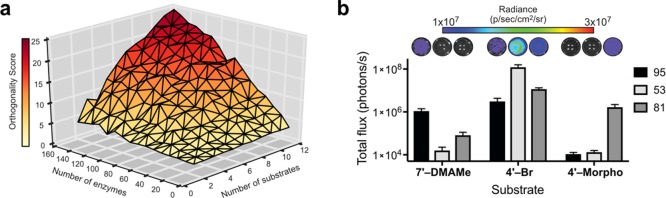
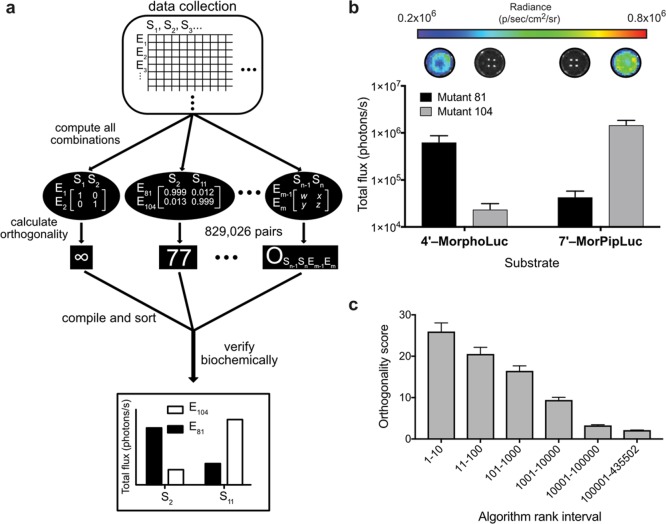
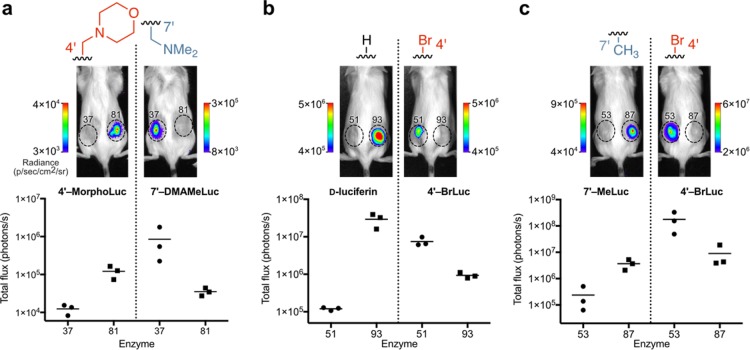
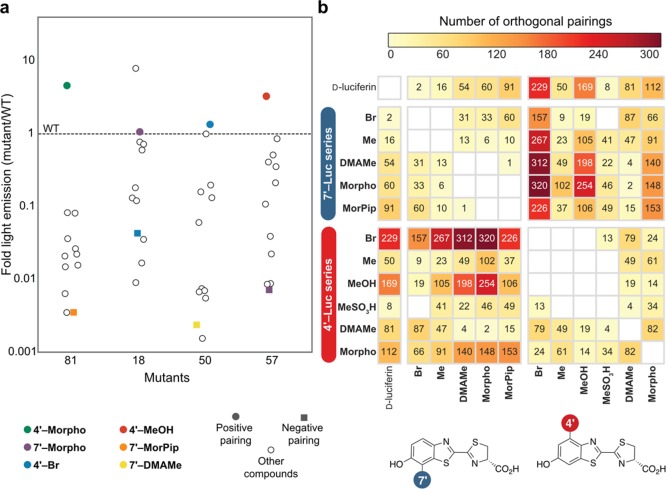
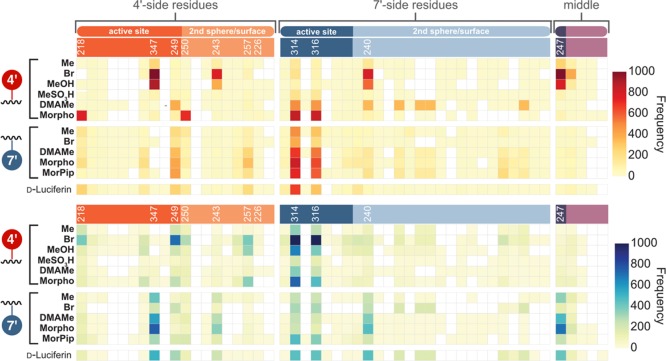
Bioluminescence imaging with luciferase enzymes and luciferin small molecules is a well-established technique for tracking cells and other biological features in rodent models. Despite its popularity, bioluminescence has long been hindered by a lack of distinguishable probes. Here we present a method to rapidly identify new substrate-selective luciferases for multicomponent imaging. Our strategy relies on parallel screening of luciferin analogues with panels of mutant enzymes. The compiled data set is then analyzed to uncover mutually orthogonal sets. Using this approach, we screened 159 mutant enzymes with 12 luciferins. Thousands of orthogonal pairs were revealed with sufficient selectivity for use in biological environments. Over 100 pairs were validated , and three were applied in cell and animal models. The parallel screening method is both generalizable and scalable and will streamline the search for larger collections of orthogonal probes.
利用荧光素酶和荧光素小分子进行生物发光成像,是一种在啮齿动物模型中追踪细胞和其他生物学特征的成熟技术。尽管其广受欢迎,但长期以来,生物发光一直受到缺乏可区分探针的阻碍。在此,我们提出一种快速识别用于多组分成像的新型底物选择性荧光素酶的方法。我们的策略依赖于用一系列突变酶对荧光素类似物进行平行筛选。然后对汇编的数据集进行分析,以发现相互正交的组合。使用这种方法,我们用12种荧光素筛选了159种突变酶。发现了数千对具有足够选择性、可用于生物环境的正交对。超过100对得到了验证,其中三对应用于细胞和动物模型。这种平行筛选方法具有通用性和可扩展性,将简化对更大正交探针库的搜索。