Department of Biomedical Engineering, Hanyang University, Seoul 04673, Korea.
Center for Bionics, Korea Institute of Science and Technology, Seoul 02792, Korea.
Sensors (Basel). 2018 Jan 1;18(1):102. doi: 10.3390/s18010102.
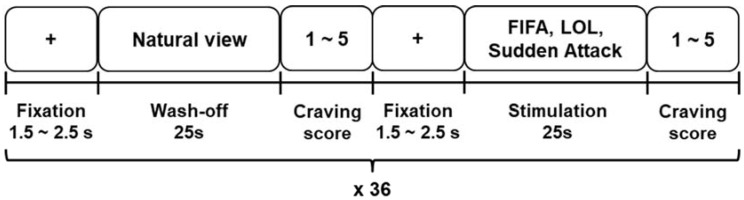
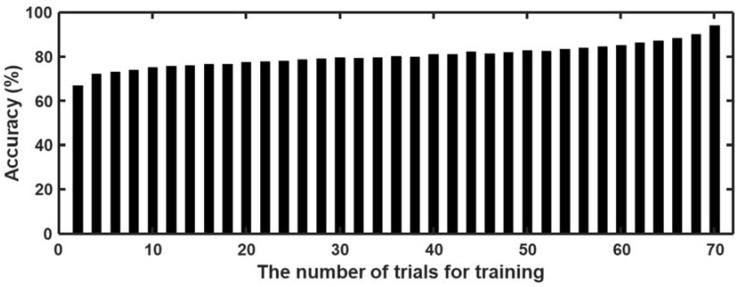
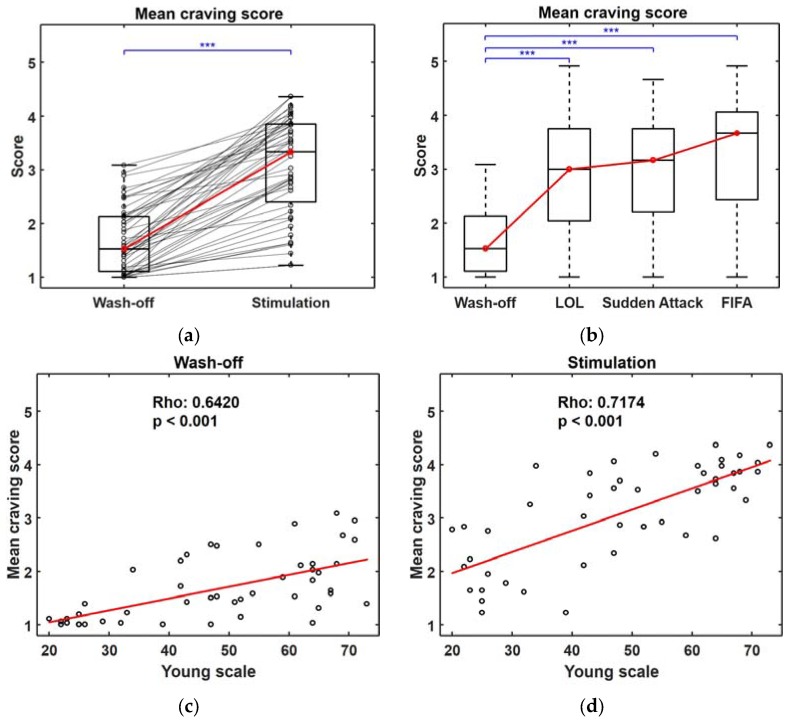
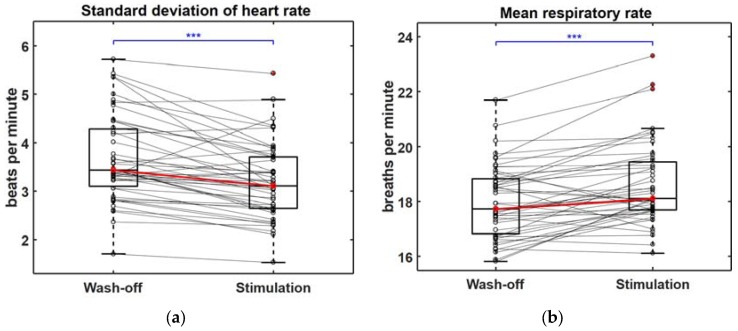
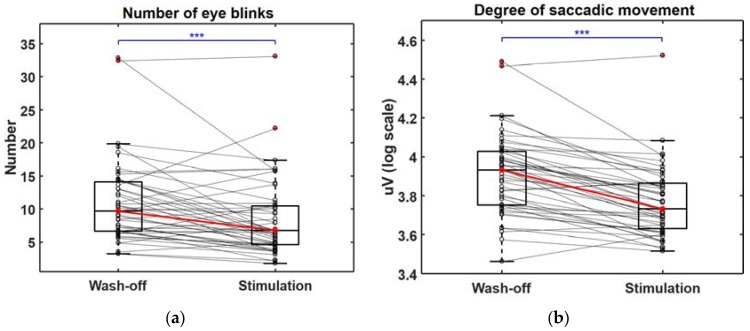
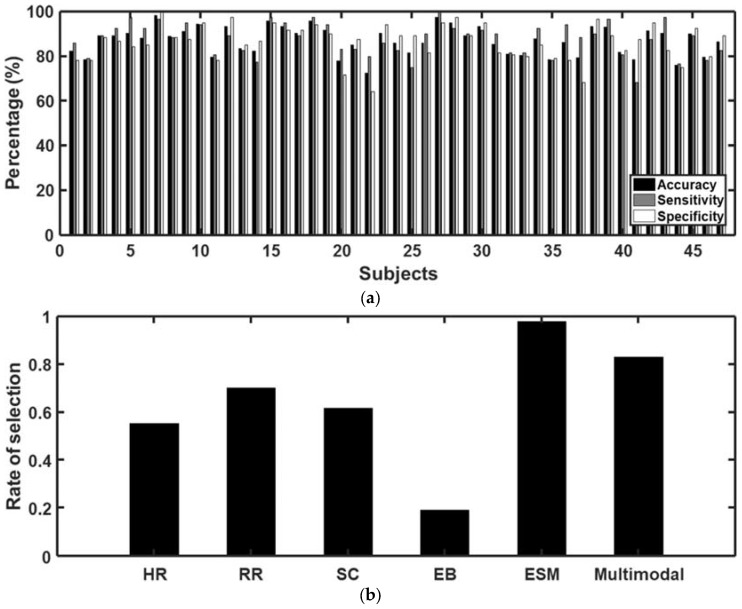
The increase in the number of adolescents with internet gaming disorder (IGD), a type of behavioral addiction is becoming an issue of public concern. Teaching adolescents to suppress their craving for gaming in daily life situations is one of the core strategies for treating IGD. Recent studies have demonstrated that computer-aided treatment methods, such as neurofeedback therapy, are effective in relieving the symptoms of a variety of addictions. When a computer-aided treatment strategy is applied to the treatment of IGD, detecting whether an individual is currently experiencing a craving for gaming is important. We aroused a craving for gaming in 57 adolescents with mild to severe IGD using numerous short video clips showing gameplay videos of three addictive games. At the same time, a variety of biosignals were recorded including photoplethysmogram, galvanic skin response, and electrooculogram measurements. After observing the changes in these biosignals during the craving state, we classified each individual participant's craving/non-craving states using a support vector machine. When video clips edited to arouse a craving for gaming were played, significant decreases in the standard deviation of the heart rate, the number of eye blinks, and saccadic eye movements were observed, along with a significant increase in the mean respiratory rate. Based on these results, we were able to classify whether an individual participant felt a craving for gaming with an average accuracy of 87.04%. This is the first study that has attempted to detect a craving for gaming in an individual with IGD using multimodal biosignal measurements. Moreover, this is the first that showed that an electrooculogram could provide useful biosignal markers for detecting a craving for gaming.
中文译文:
青少年网络游戏障碍(IGD)患者人数的增加,这种行为成瘾正成为公众关注的问题。教导青少年在日常生活情境中抑制对游戏的渴望是治疗 IGD 的核心策略之一。最近的研究表明,计算机辅助治疗方法,如神经反馈疗法,在缓解各种成瘾症状方面非常有效。当计算机辅助治疗策略应用于治疗 IGD 时,检测个体当前是否对游戏产生渴望是很重要的。我们使用三个令人上瘾的游戏的视频剪辑来唤起 57 名患有轻度至重度 IGD 的青少年对游戏的渴望。同时,记录了多种生物信号,包括光体积描记图、皮肤电反应和眼电图测量。观察到这些生物信号在渴望状态下的变化后,我们使用支持向量机对每个个体参与者的渴望/非渴望状态进行分类。当播放编辑以唤起对游戏的渴望的视频剪辑时,观察到心率的标准差、眨眼次数和扫视运动显著减少,而平均呼吸率显著增加。基于这些结果,我们能够以 87.04%的平均准确率来分类个体参与者是否感到对游戏的渴望。这是第一项使用多模态生物信号测量来检测个体 IGD 对游戏渴望的研究。此外,这是第一项表明眼电图可以为检测对游戏的渴望提供有用的生物信号标记的研究。