Saw Swee Hock School of Public Health, National University of Singapore and National University Health System, Singapore.
Department of Surgery, Yong Loo Lin School of Medicine, National University of Singapore and National University Health System, Singapore.
Am J Epidemiol. 2018 Jan 1;187(1):135-143. doi: 10.1093/aje/kwx201.
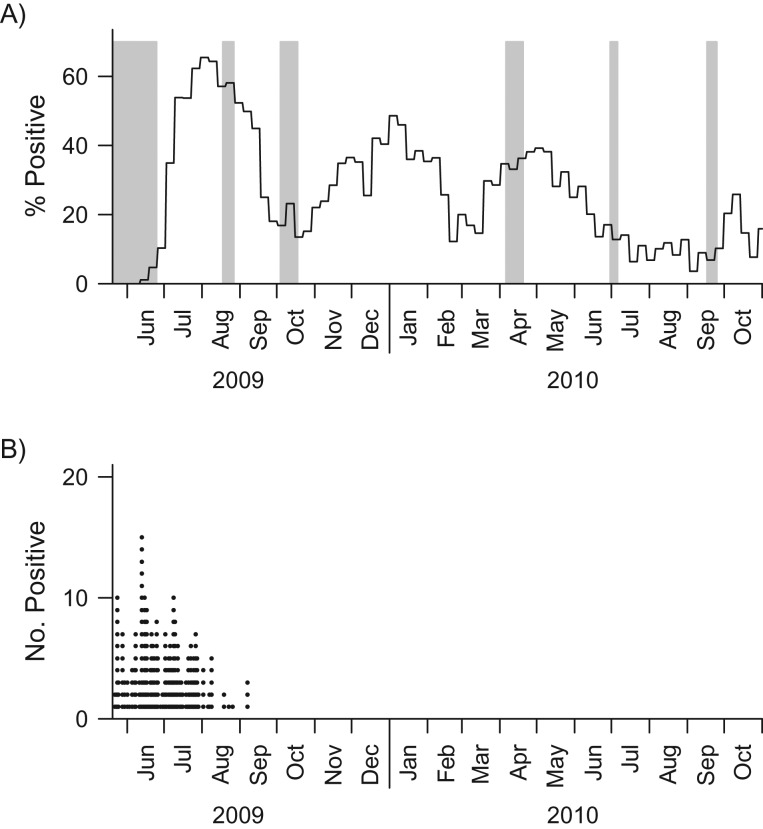
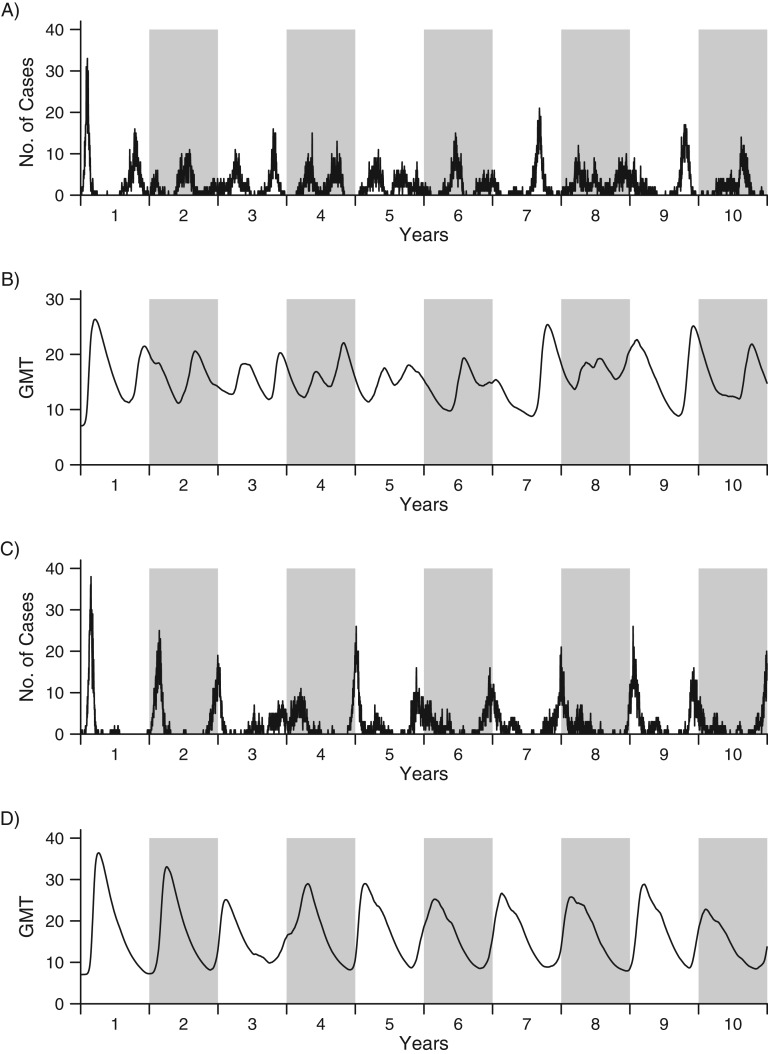
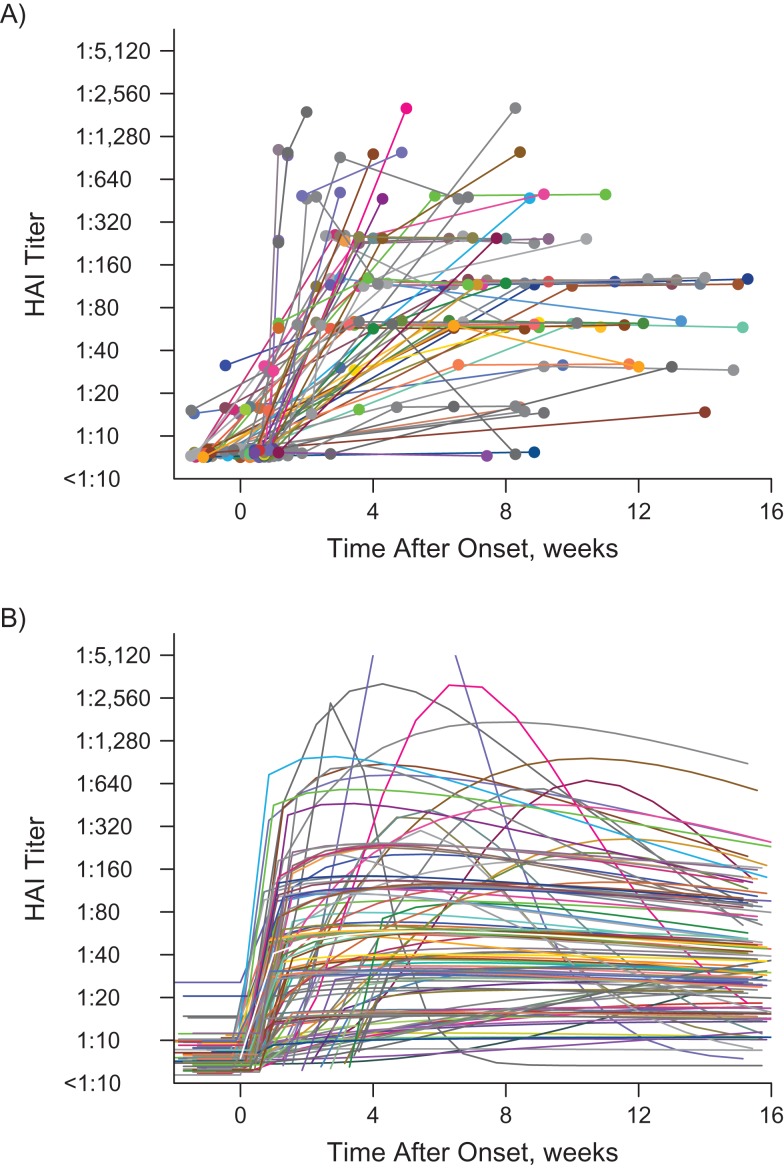
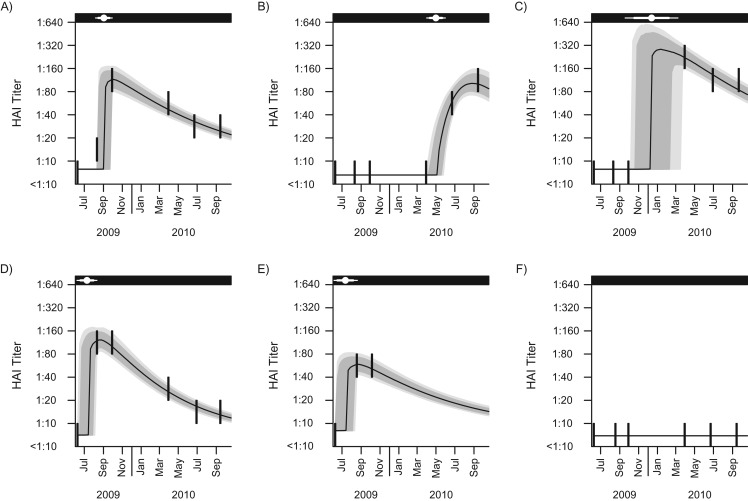
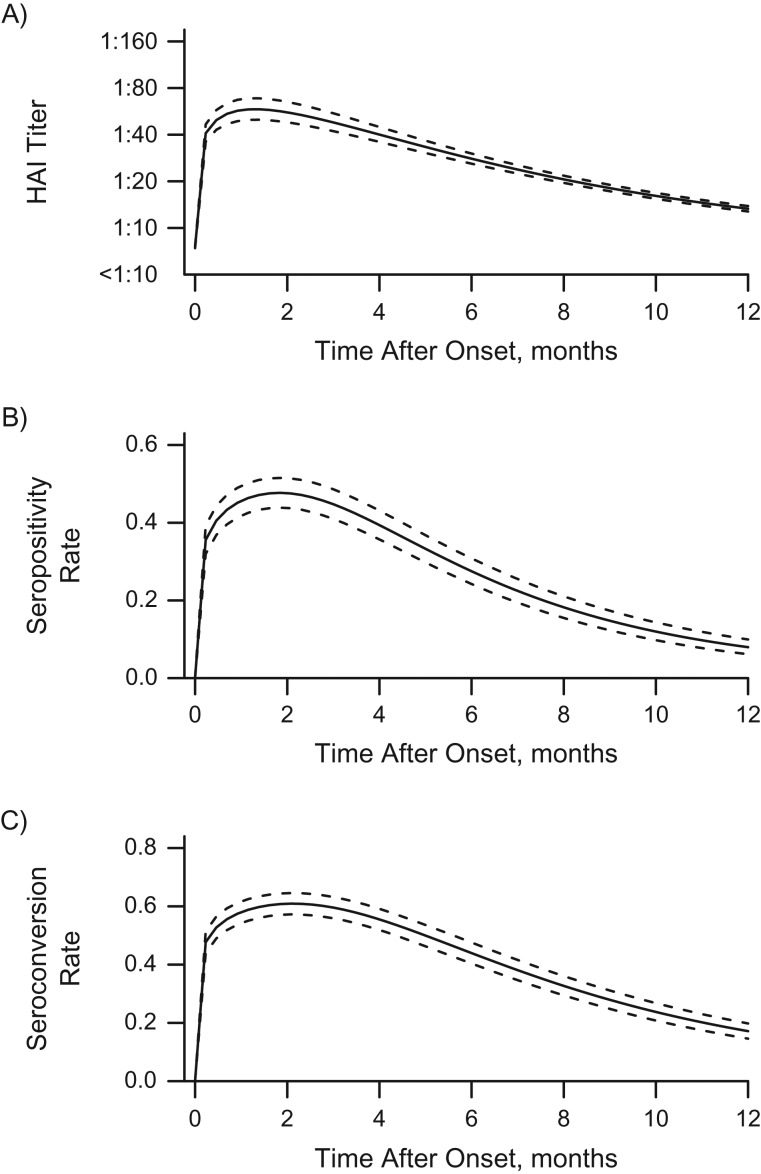
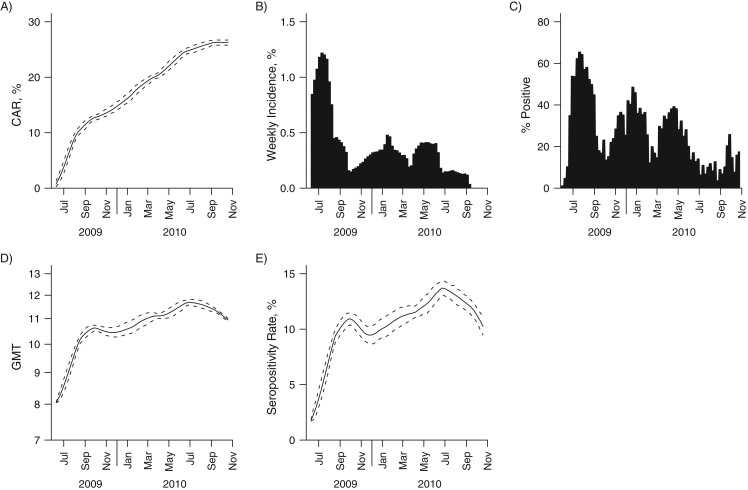
Seasonal influenza epidemics occur year-round in the tropics, complicating the planning of vaccination programs. We built an individual-level longitudinal model of baseline antibody levels, time of infection, and the subsequent rise and decay of antibodies postinfection using influenza A(H1N1)pdm09 data from 2 sources in Singapore: 1) a noncommunity cohort with real-time polymerase chain reaction-confirmed infections and at least 1 serological sample collected from each participant between May and October 2009 (n = 118) and 2) a community cohort with up to 6 serological samples collected between May 2009 and October 2010 (n = 760). The model was hierarchical, to account for interval censoring and interindividual variation. Model parameters were estimated via a reversible jump Markov chain Monte Carlo algorithm using custom-designed R (https://www.r-project.org/) and C++ (https://isocpp.org/) code. After infection, antibody levels peaked at 4-7 weeks, with a half-life of 26.5 weeks, followed by a slower decrease up to 1 year to approximately preinfection levels. After the third wave, the seropositivity rate and the population-level antibody titer dropped to the same level as they were at the end of the first pandemic wave. The results of this analysis are consistent with the hypothesis that the population-level effect of individuals' waxing and waning antibodies influences influenza seasonality in the tropics.
季节性流感在热带地区全年流行,这使得疫苗接种计划的规划变得复杂。我们使用来自新加坡的 2 个数据源的甲型 H1N1pdm09 数据,建立了一个基于个体的纵向基线抗体水平、感染时间以及感染后抗体上升和下降的模型:1)实时聚合酶链反应确认感染的非社区队列,并且每个参与者至少在 2009 年 5 月至 10 月之间收集了 1 份血清样本(n = 118);2)社区队列,最多在 2009 年 5 月至 2010 年 10 月之间收集了 6 份血清样本(n = 760)。该模型是分层的,以考虑区间 censoring 和个体间的变异。通过使用定制的 R(https://www.r-project.org/)和 C++(https://isocpp.org/)代码的可逆跳跃马尔可夫链蒙特卡罗算法估计模型参数。感染后,抗体水平在 4-7 周时达到峰值,半衰期为 26.5 周,然后以较慢的速度下降,直到 1 年左右恢复到感染前的水平。在第三波之后,血清阳性率和人群抗体滴度下降到与第一波大流行结束时相同的水平。这项分析的结果与假设一致,即个体抗体的增减对人群水平的影响影响了热带地区的流感季节性。