Carter Chris J, France James, Crean StJohn, Singhrao Sim K
Polygenic Pathways, Hastings, United Kingdom.
Dementia and Neurodegenerative Diseases Research Group, Faculty of Clinical and Biomedical Sciences, School of Dentistry, University of Central Lancashire, Preston, United Kingdom.
Front Aging Neurosci. 2017 Dec 12;9:408. doi: 10.3389/fnagi.2017.00408. eCollection 2017.
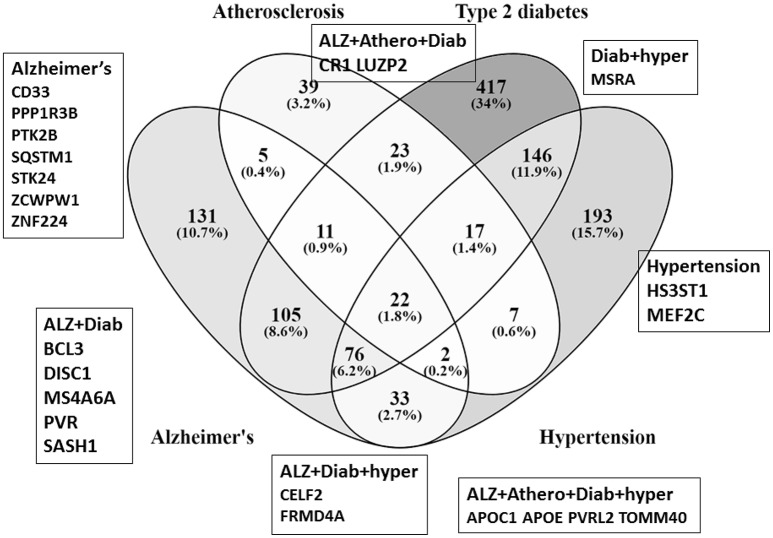
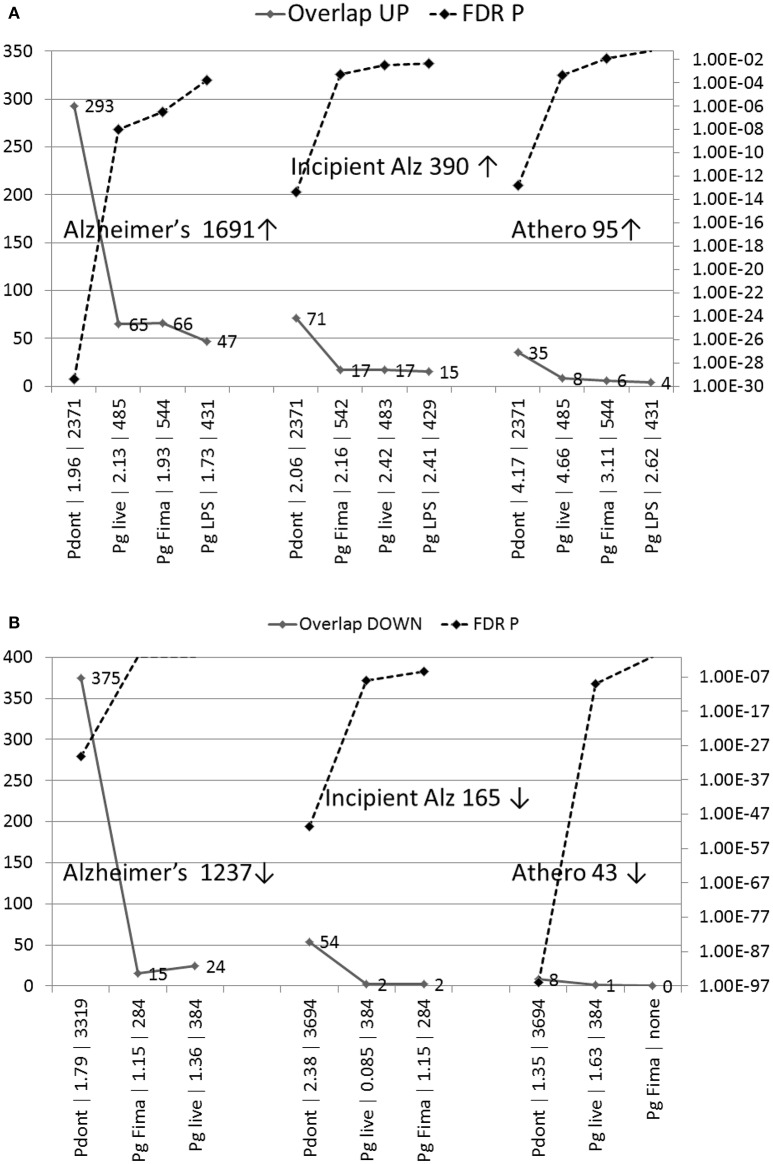
Periodontal disease is of established etiology in which polymicrobial synergistic ecology has become dysbiotic under the influence of . Following breakdown of the host's protective oral tissue barriers, migrates to developing inflammatory pathologies that associate with Alzheimer's disease (AD). Periodontal disease is a risk factor for cardiovascular disorders (CVD), type II diabetes mellitus (T2DM), AD and other chronic diseases, whilst T2DM exacerbates periodontitis. This study analyzed the relationship between the /host interactome and the genes identified in genome-wide association studies (GWAS) for the aforementioned conditions using data from GWASdb ( < 1E-03) and, in some cases, from the NCBI/EBI GWAS database ( < 1E-05). Gene expression data from periodontitis or microarray was compared to microarray datasets from the AD hippocampus and/or from carotid artery plaques. The results demonstrated that the host genes of the interactome were significantly enriched in genes deposited in GWASdb genes related to cognitive disorders, AD and dementia, and its co-morbid conditions T2DM, obesity, and CVD. The /host interactome was also enriched in GWAS genes from the more stringent NCBI-EBI database for AD, atherosclerosis and T2DM. The misregulated genes in periodontitis tissue or infected macrophages also matched those in the AD hippocampus or atherosclerotic plaques. Together, these data suggest important gene/environment interactions between and susceptibility genes or gene expression changes in conditions where periodontal disease is a contributory factor.
牙周病病因明确,在多种因素影响下,其微生物协同生态已变得失调。宿主保护性口腔组织屏障破坏后, 迁移至与阿尔茨海默病(AD)相关的炎症病变部位。牙周病是心血管疾病(CVD)、II型糖尿病(T2DM)、AD和其他慢性疾病的危险因素,而T2DM会加重牙周炎。本研究使用来自GWASdb(<1E - 03)的数据,在某些情况下还使用来自NCBI/EBI全基因组关联研究(GWAS)数据库(<1E - 05)的数据,分析了/宿主相互作用组与上述疾病在全基因组关联研究中鉴定的基因之间的关系。将牙周炎或 微阵列的基因表达数据与AD海马体和/或颈动脉斑块的微阵列数据集进行比较。结果表明,相互作用组的宿主基因在GWASdb中与认知障碍、AD和痴呆以及其共病T2DM、肥胖和CVD相关的基因中显著富集。/宿主相互作用组在更严格的NCBI - EBI数据库中与AD、动脉粥样硬化和T2DM相关的GWAS基因中也有富集。牙周炎组织或 感染巨噬细胞中失调的基因也与AD海马体或动脉粥样硬化斑块中的基因匹配。总之,这些数据表明在牙周病是一个促成因素的情况下, 与易感基因之间存在重要的基因/环境相互作用或基因表达变化。