Department of Nephrology, Ruijin Hospital, Shanghai Jiao Tong University School of Medicine, Shanghai 200025, P.R. China.
Mol Med Rep. 2018 Mar;17(3):4490-4498. doi: 10.3892/mmr.2018.8433. Epub 2018 Jan 16.
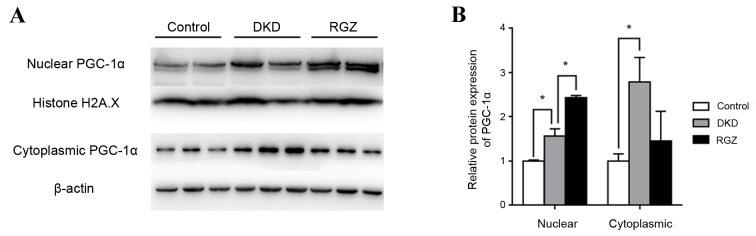
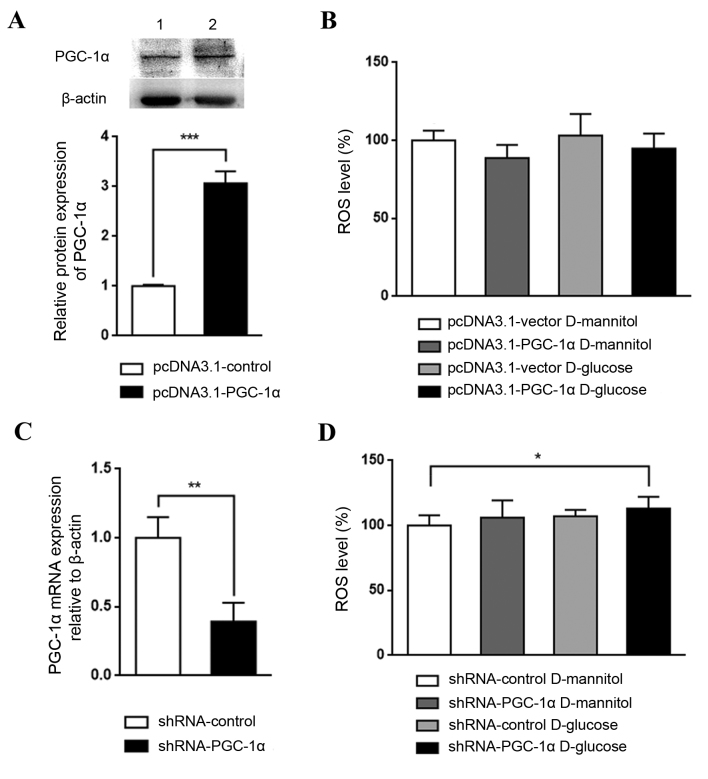
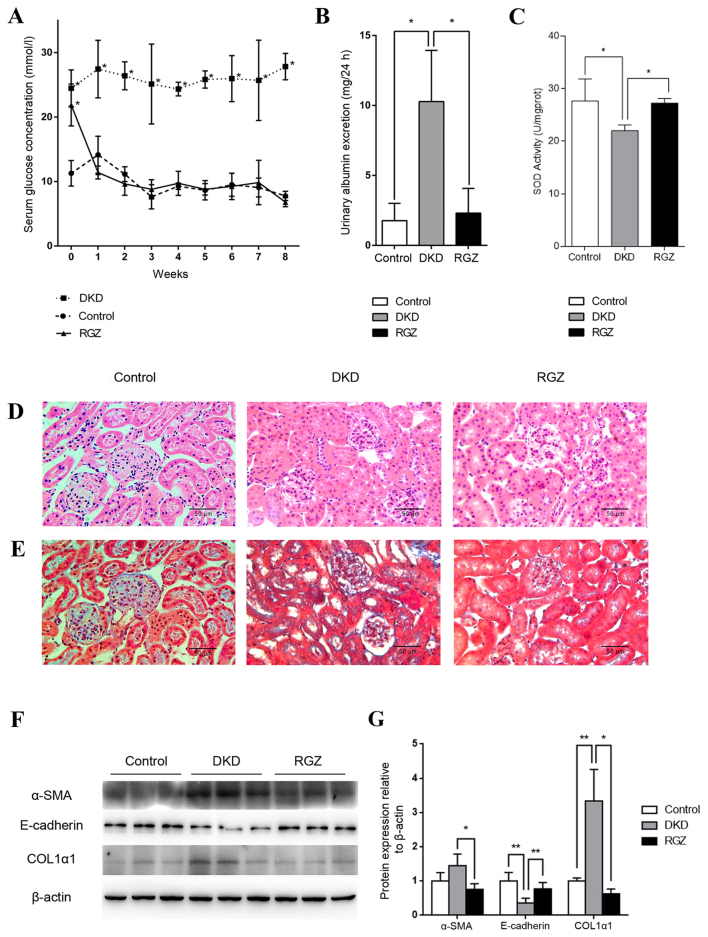
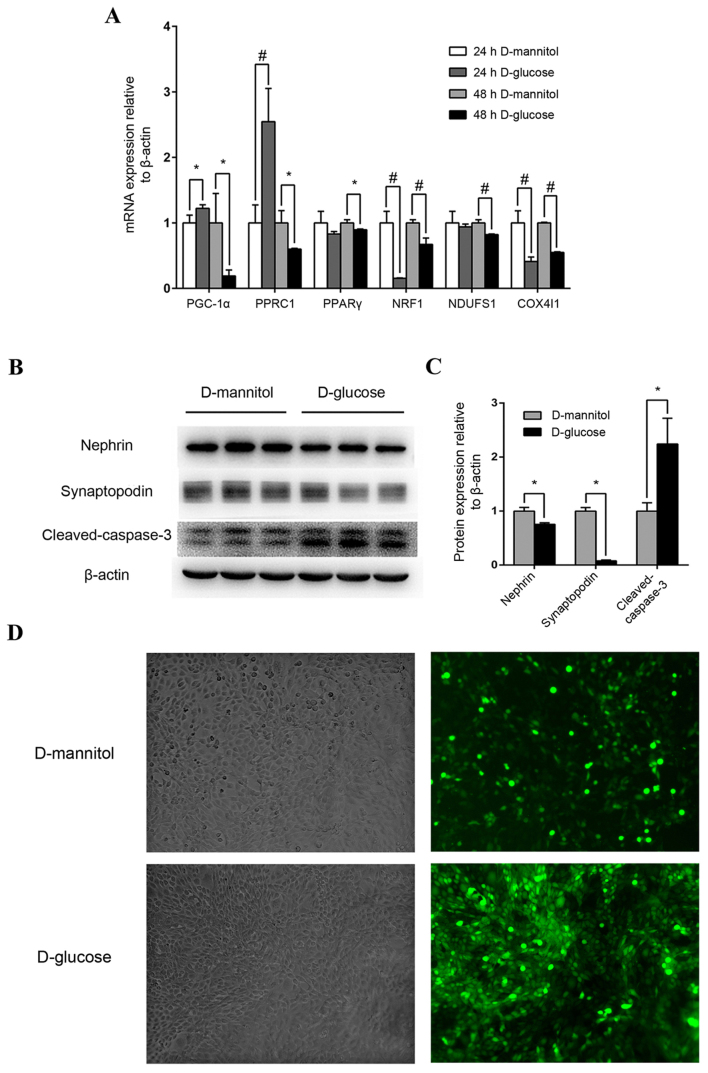
The production of reactive oxygen species (ROS) is a common phenomenon in podocyte impairment, which leads to the irreversible progression of chronic kidney diseases, such as diabetic kidney disease (DKD). Previous research has indicated that peroxisome proliferator‑activated receptor γ (PPARγ) coactivator‑1α (PGC‑1α) participates in mitochondrial biogenesis and energy metabolism in certain mitochondria‑enriched cells, including myocardial and skeletal muscle cells. Therefore, we hypothesized that PGC‑1α may be a protective nuclear factor against energy and oxidative stress in DKD. To investigate this hypothesis, db/db diabetic mice were used to establish a DKD model and the PPARγ agonist rosiglitazone was employed to induce PGC‑1α expression in vivo. Additionally, immortalized mouse podocytes and SV40 MES 13 renal mesangial cells were utilized for in vitro experiments. The expression levels of PGC‑1α and genes associated with kidney and cell injury were determined by western blotting or reverse transcription-quantitative polymerase chain reaction and intracellular ROS levels were assessed by 2',7'-dichlorodihydrofluorescein diacetate. The results of the present study demonstrated that endogenous PGC‑1α expression exhibited protective effects against oxidative stress, glomerulosclerosis and tubulointerstitial fibrosis in experimental DKD. These results indicated a potential role of PGC‑1α in the amelioration of key pathophysiological features of DKD and provided evidence for PGC‑1α as a potential therapeutic target in DKD.
活性氧(ROS)的产生是足细胞损伤的常见现象,这会导致慢性肾脏病(如糖尿病肾病,DKD)的不可逆进展。先前的研究表明,过氧化物酶体增殖物激活受体γ(PPARγ)共激活因子 1α(PGC-1α)参与某些富含线粒体的细胞(包括心肌和骨骼肌细胞)中的线粒体生物发生和能量代谢。因此,我们假设 PGC-1α 可能是 DKD 中针对能量和氧化应激的保护性核因子。为了验证这一假设,本研究使用 db/db 糖尿病小鼠建立 DKD 模型,并在体内使用 PPARγ 激动剂罗格列酮诱导 PGC-1α 的表达。此外,还使用永生化的小鼠足细胞和 SV40 MES 13 肾系膜细胞进行了体外实验。通过 Western blot 或逆转录-定量聚合酶链反应测定 PGC-1α 和与肾脏及细胞损伤相关的基因的表达水平,并通过 2',7'-二氯二氢荧光素二乙酸酯评估细胞内 ROS 水平。本研究的结果表明,内源性 PGC-1α 的表达对实验性 DKD 中的氧化应激、肾小球硬化和肾小管间质纤维化具有保护作用。这些结果表明 PGC-1α 在改善 DKD 的关键病理生理特征方面具有潜在作用,并为 PGC-1α 作为 DKD 的潜在治疗靶点提供了证据。