Singh Vijay Kumar, Ellur Ranjith Kumar, Singh Ashok Kumar, Nagarajan M, Singh Brahma Deo, Singh Nagendra Kumar
ICAR-National Research Centre on Plant Biotechnology, Pusa Campus, New Delhi, 110012, India.
School of Biotechnology, Banaras Hindu University, Varanasi, 221005, India.
Rice (N Y). 2018 Jan 22;11(1):8. doi: 10.1186/s12284-017-0195-9.
Rice is a major source of food, particularly for the growing Asian population; hence, the utilization of genes for enhancing its yield potential is important for ensuring food security. Earlier, we have mapped a major quantitative trait loci (QTL) for the grain number per panicle, qGN4.1, using biparental recombinant inbred line (RIL) populations involving a new plant type Indica rice genotype Pusa 1266. Later, three independent studies have confirmed the presence of a major QTL for spikelet number by three different names (SPIKE, GPS and LSCHL4) in the same chromosomal region, and have implicated the overexpression of Nal1 gene as the causal factor for high spikelet number. However, the effect of qGN4.1 in different rice genetic backgrounds and expression levels of the underlying candidate genes is not known.
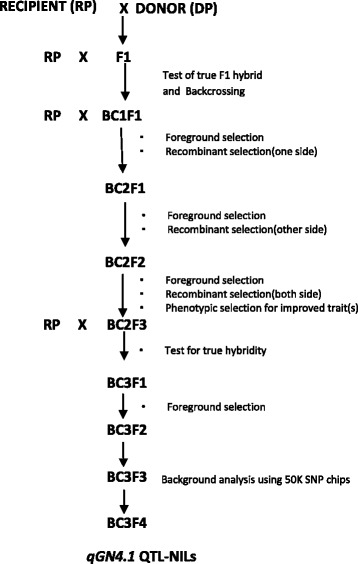
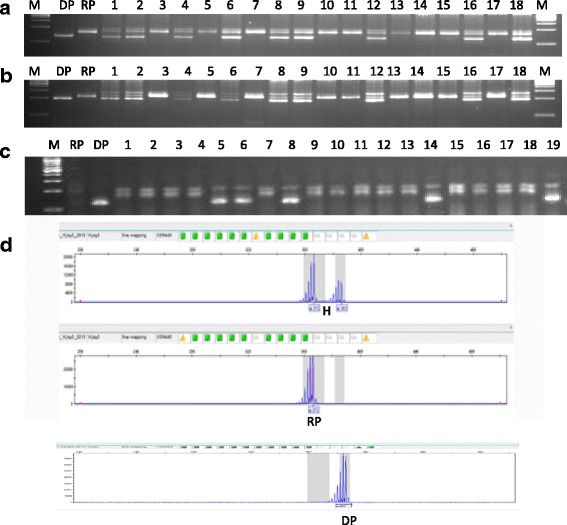
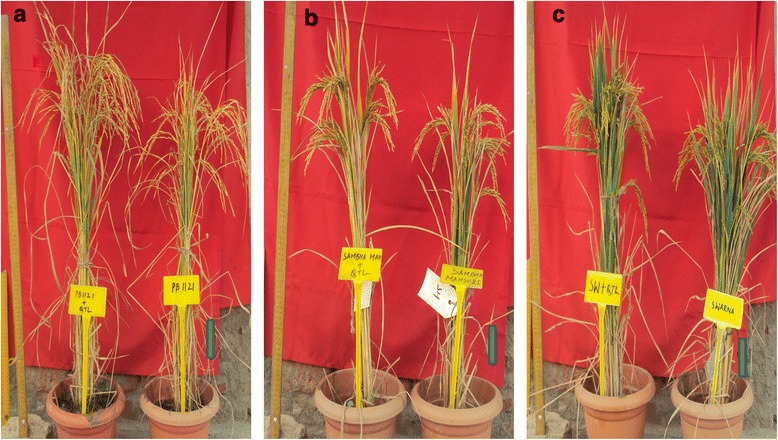
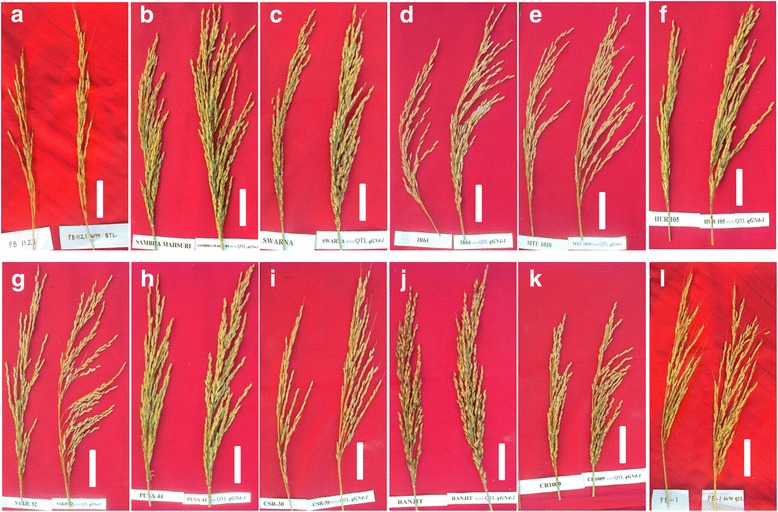
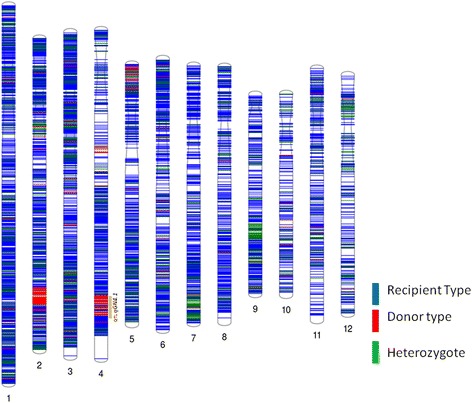
Here, we report the effect of qGN4.1 QTL in the genetic backgrounds of 12 different high-yielding mega varieties of rice, introgressed by marker assisted-backcross breeding (MABB) using two QTL positive markers for foreground selection and two QTL negative flanking markers for recombinant selection together with phenotypic selection for the recovery of recipient parent genetic background. Analysis of the performance of BCF plants showed a significant increase in the average number of well-filled grains per panicle in all the backgrounds, ranging from 21.6 in CSR 30-GN4.1 to 147.6 in Samba Mahsuri-GN4.1. Furthermore, qGN4.1 caused a significant increase in flag leaf width and panicle branching in most backgrounds. We identified BCF qGN4.1 near-isogenic lines (NILs) with 92.0-98.0% similarity to the respective recipient parent by background analysis using a 50 K rice SNP genotyping chip. Three of the NILs, namely Pusa Basmati 1121-GN4.1, Samba Mahsuri-GN4.1 and Swarna-GN4.1, showed a significant yield superiority to their recipient parents. Analysis of differential gene expression revealed that high grain number in these QTL-NILs was unlikely due to the overexpression of Nal1 gene (LOC_Os04g52479). Instead, another tightly linked gene (LOC_Os04g52590) coding for a protein kinase domain-containing protein was consistently overexpressed in the high grain number NILs.
We have successfully introgressed the qGN4.1 QTL for high grain number per panicle into 12 different mega varieties of rice using marker-assisted backcross breeding. The advanced near-isogenic lines are promising for the development of even higher yielding versions of these high-yielding mega varieties of rice.
水稻是主要的食物来源,尤其对于不断增长的亚洲人口而言;因此,利用基因提高其产量潜力对于确保粮食安全至关重要。此前,我们利用包含新型籼稻基因型Pusa 1266的双亲重组自交系(RIL)群体,定位了一个控制每穗粒数的主要数量性状位点(QTL)qGN4.1。后来,三项独立研究证实,在同一染色体区域存在一个控制小穗数的主要QTL,分别用三个不同的名称(SPIKE、GPS和LSCHL4)表示,并且认为Nal1基因的过表达是小穗数多的因果因素。然而,qGN4.1在不同水稻遗传背景中的效应以及潜在候选基因的表达水平尚不清楚。
在此,我们报道了通过标记辅助回交育种(MABB)将qGN4.1 QTL导入12个不同的高产水稻超级品种遗传背景中的效应,使用两个QTL阳性标记进行前景选择,两个QTL阴性侧翼标记进行重组选择,并结合表型选择以恢复受体亲本的遗传背景。对回交一代(BCF)植株表现的分析表明,在所有背景中,每穗饱满粒的平均数均显著增加,范围从CSR 30 - GN4.1中的21.6粒到Samba Mahsuri - GN4.1中的147.6粒。此外,在大多数背景中,qGN4.1导致剑叶宽度和穗分枝显著增加。我们使用50K水稻SNP基因分型芯片通过背景分析鉴定出与各自受体亲本相似度为92.0 - 98.0%的BCF qGN4.1近等基因系(NIL)。其中三个NIL,即Pusa Basmati 1121 - GN4.1、Samba Mahsuri - GN4.1和Swarna - GN4.1,表现出比其受体亲本显著的产量优势。差异基因表达分析表明,这些QTL - NIL中粒数多不太可能是由于Nal1基因(LOC_Os04g52479)的过表达。相反,另一个紧密连锁的基因(LOC_Os04g52590)编码一种含蛋白激酶结构域的蛋白质,在粒数多的NIL中持续过表达。
我们已通过标记辅助回交育种成功地将控制每穗高粒数的qGN4.1 QTL导入12个不同的水稻超级品种中。这些先进的近等基因系对于培育这些高产水稻超级品种更高产的版本具有前景。