Department of Genetics, Microbiology and Statistics and Institute of Biomedicine, Universitat de Barcelona, Barcelona, Catalunya, Spain.
Institut de Biomedicina de la Universitat de Barcelona (IBUB), Universitat de Barcelona, Barcelona, Catalunya, Spain.
PLoS Biol. 2018 Jan 22;16(1):e2002399. doi: 10.1371/journal.pbio.2002399. eCollection 2018 Jan.
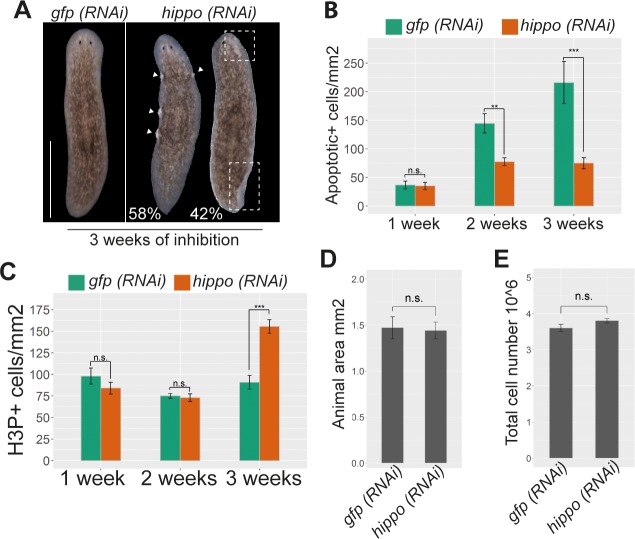
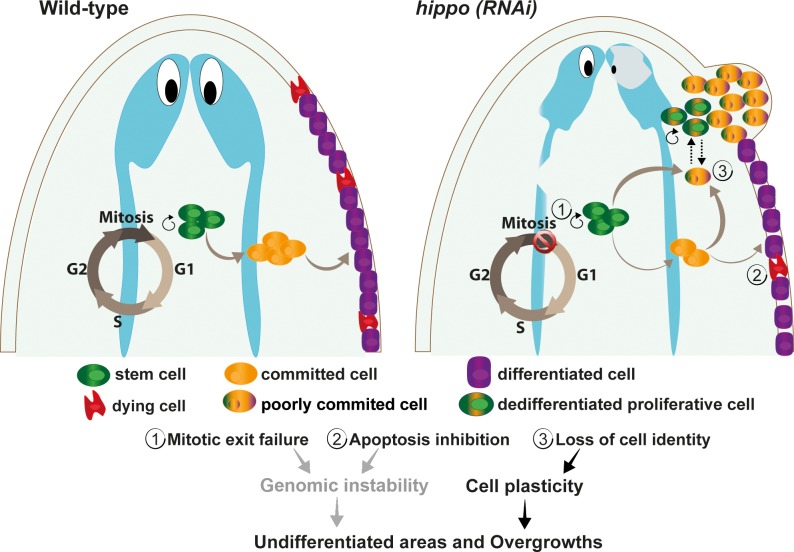
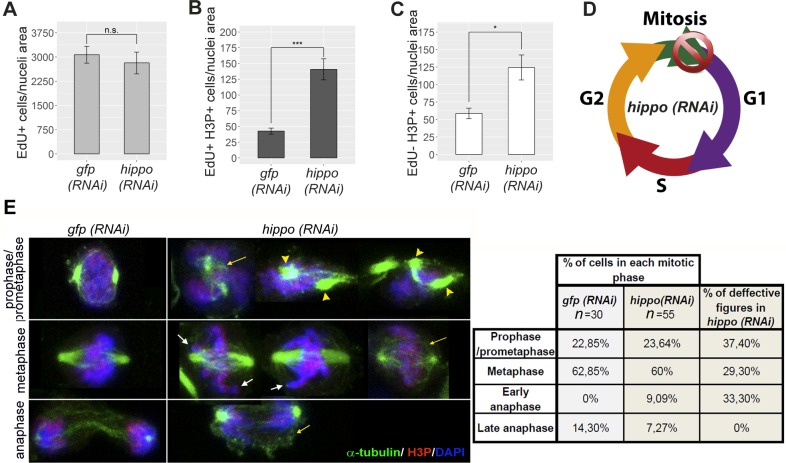
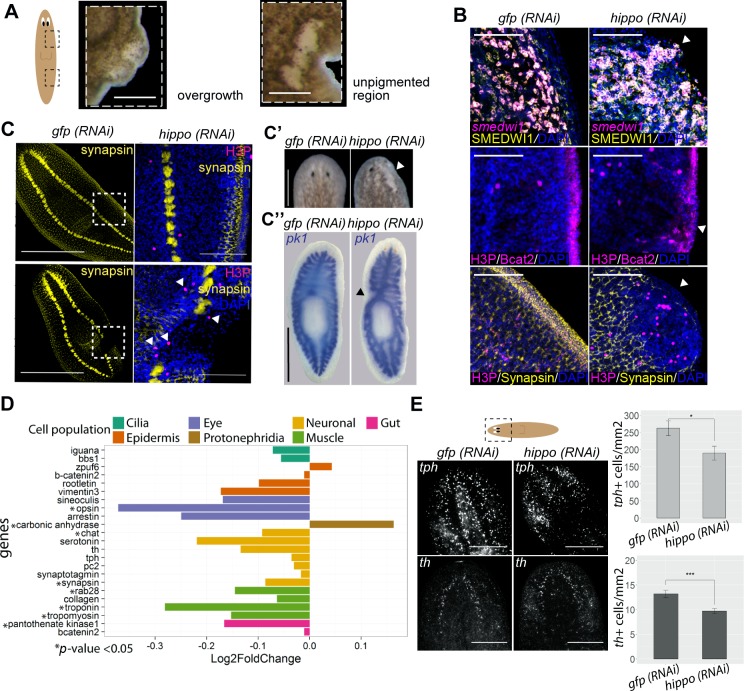
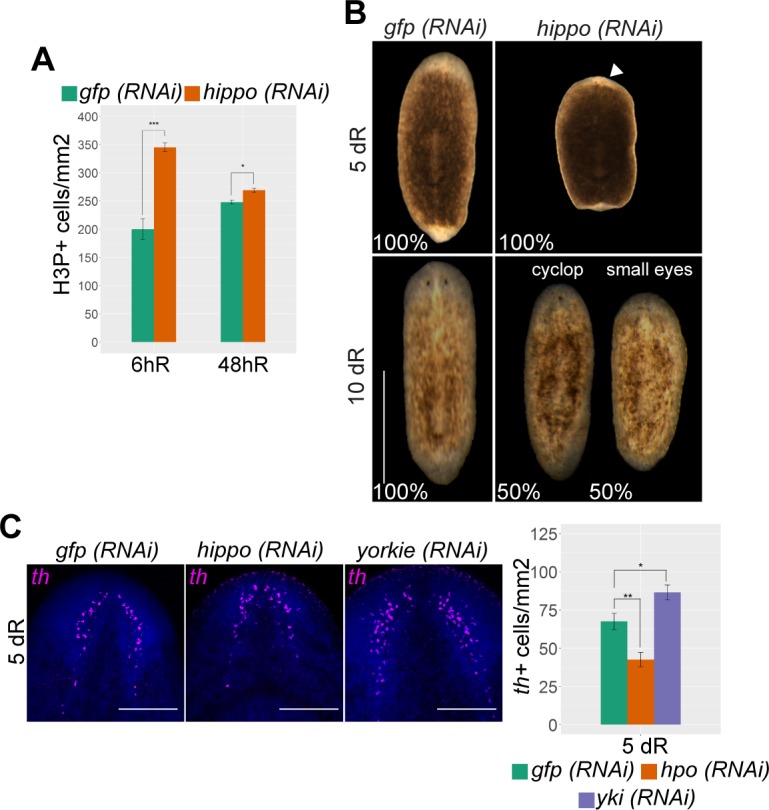
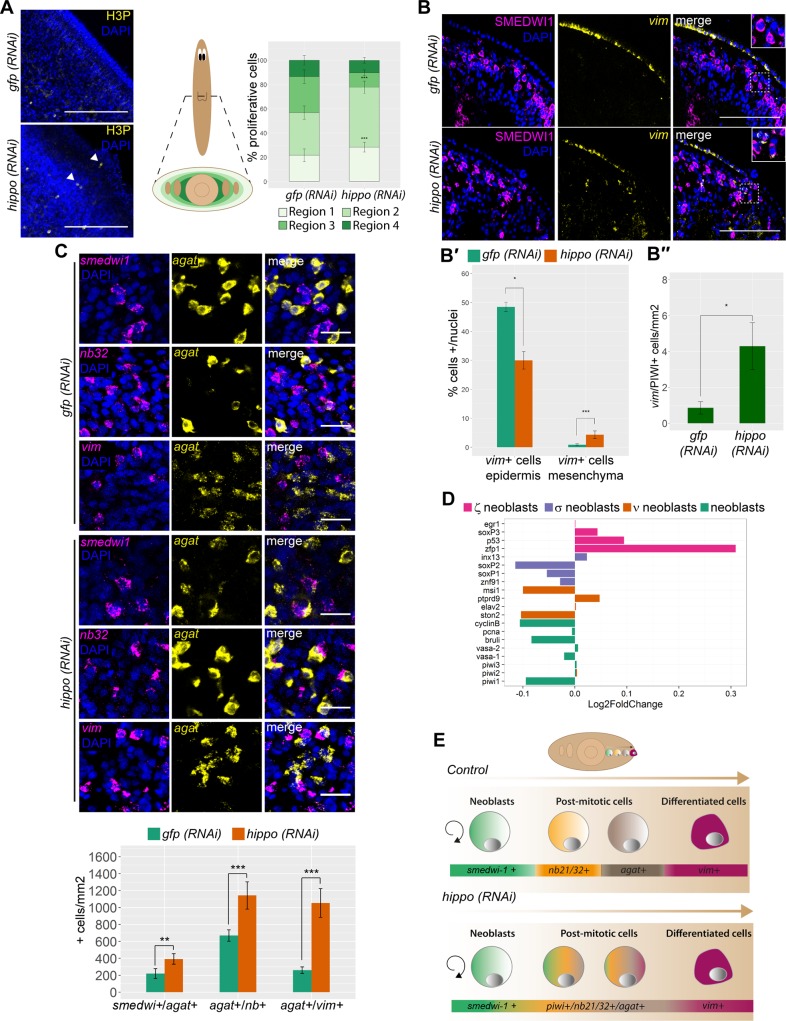
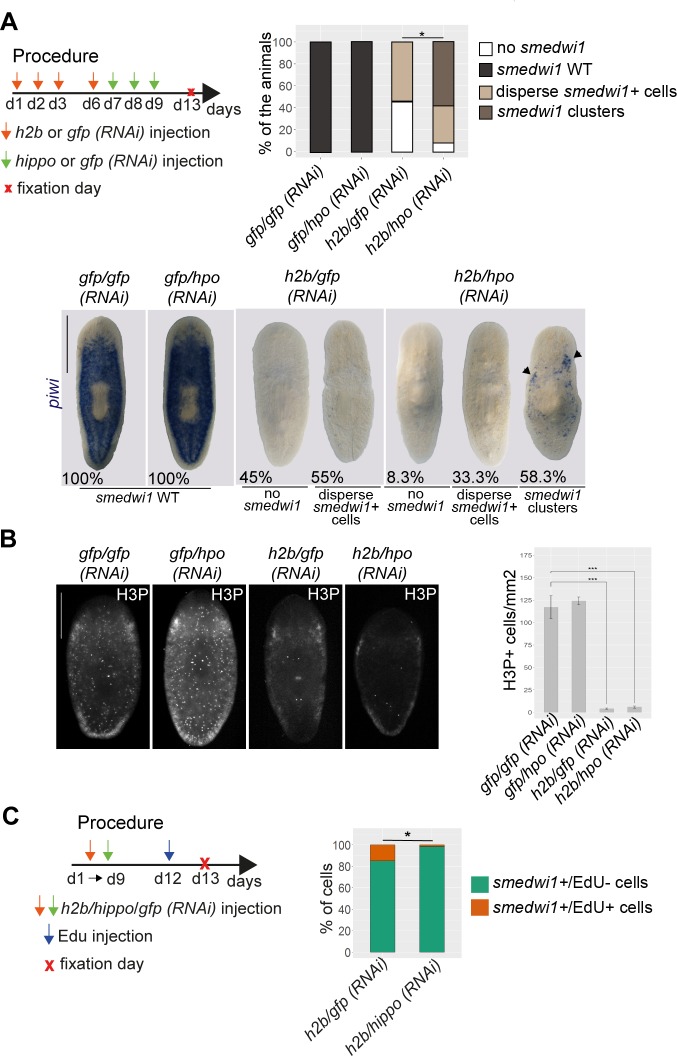
The Hippo pathway plays a key role in regulating cell turnover in adult tissues, and abnormalities in this pathway are consistently associated with human cancers. Hippo was initially implicated in the control of cell proliferation and death, and its inhibition is linked to the expansion of stem cells and progenitors, leading to larger organ size and tumor formation. To understand the mechanism by which Hippo directs cell renewal and promotes stemness, we studied its function in planarians. These stem cell-based organisms are ideal models for the analysis of the complex cellular events underlying tissue renewal in the whole organism. hippo RNA interference (RNAi) in planarians decreased apoptotic cell death, induced cell cycle arrest, and could promote the dedifferentiation of postmitotic cells. hippo RNAi resulted in extensive undifferentiated areas and overgrowths, with no effect on body size or cell number. We propose an essential role for hippo in controlling cell cycle, restricting cell plasticity, and thereby preventing tumoral transformation.
Hippo 通路在调节成体组织中的细胞更新中起着关键作用,该通路的异常与人类癌症密切相关。Hippo 最初被认为参与控制细胞增殖和死亡,其抑制与干细胞和祖细胞的扩增有关,导致器官增大和肿瘤形成。为了了解 Hippo 指导细胞更新和促进干性的机制,我们研究了它在扁形动物中的功能。这些基于干细胞的生物体是分析整个生物体组织更新所涉及的复杂细胞事件的理想模型。扁形动物中的 hippo RNA 干扰 (RNAi) 降低了细胞凋亡,诱导细胞周期停滞,并可能促进有丝分裂后细胞的去分化。hippo RNAi 导致广泛的未分化区域和过度生长,对身体大小或细胞数量没有影响。我们提出 hippo 在控制细胞周期、限制细胞可塑性方面具有重要作用,从而防止肿瘤转化。