Nishihara Arisa, Haruta Shin, McGlynn Shawn E, Thiel Vera, Matsuura Katsumi
Department of Biological Sciences, Tokyo Metropolitan University.
Earth-Life Science Institute, Tokyo Institute of Technology.
Microbes Environ. 2018 Mar 29;33(1):10-18. doi: 10.1264/jsme2.ME17134. Epub 2018 Jan 24.
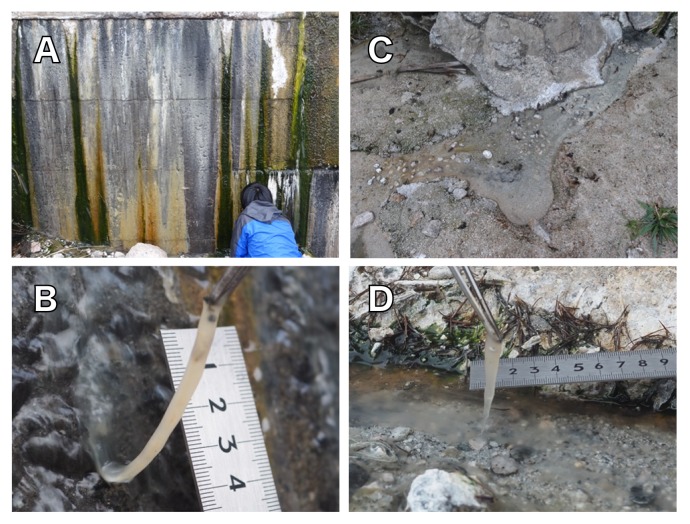
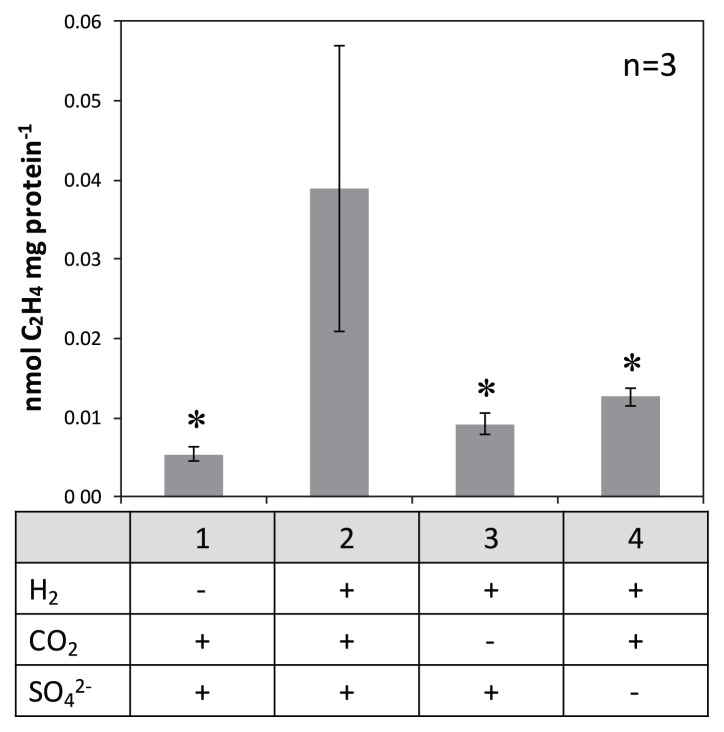
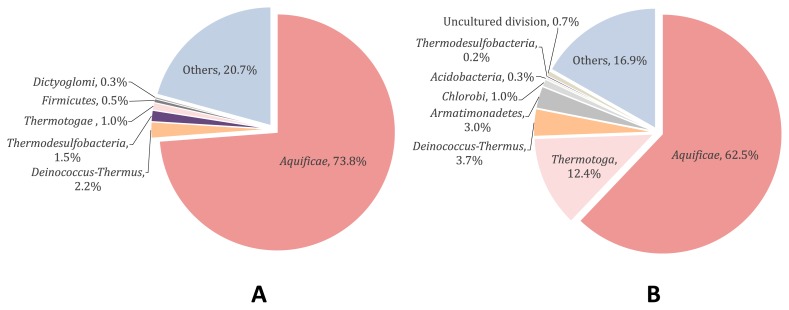
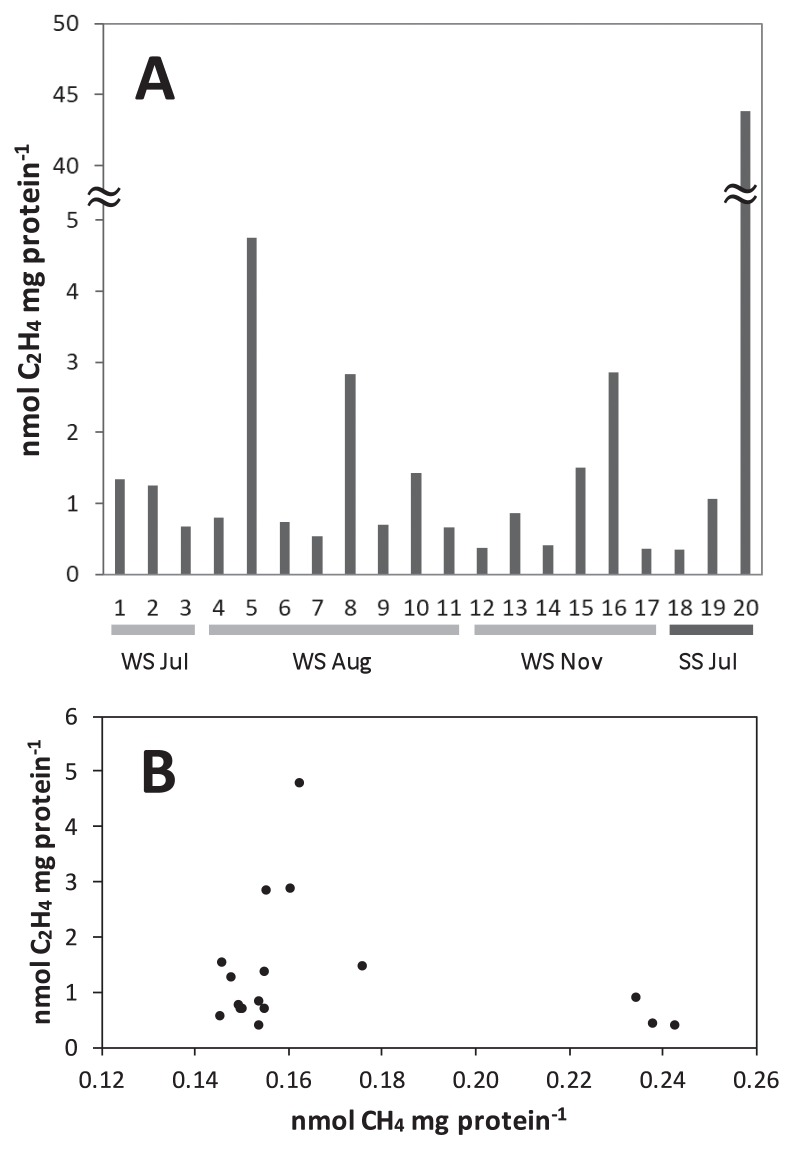
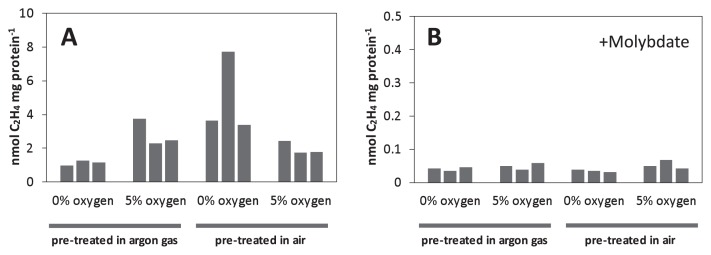
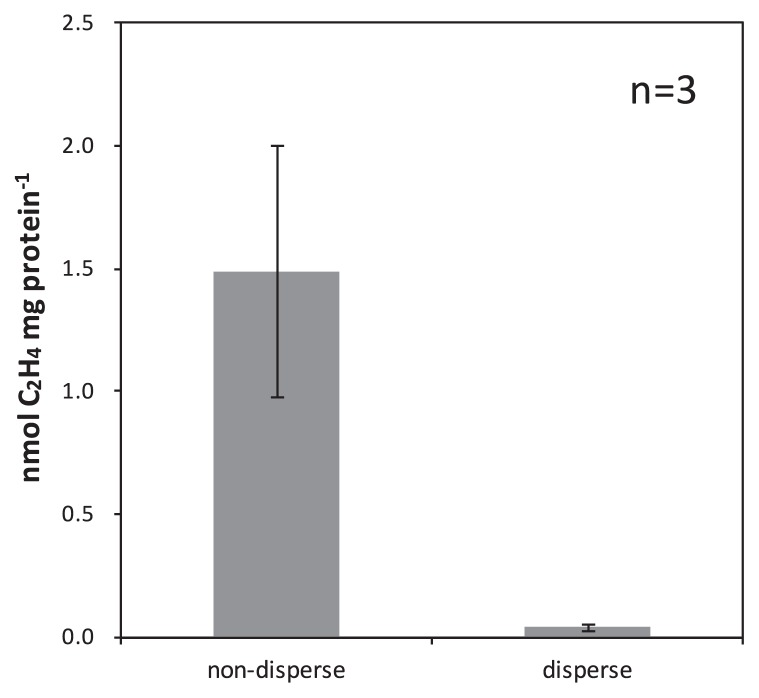
The activity of nitrogen fixation measured by acetylene reduction was examined in chemosynthetic microbial mats at 72-75°C in slightly-alkaline sulfidic hot springs in Nakabusa, Japan. Nitrogenase activity markedly varied from sampling to sampling. Nitrogenase activity did not correlate with methane production, but was detected in samples showing methane production levels less than the maximum amount, indicating a possible redox dependency of nitrogenase activity. Nitrogenase activity was not affected by 2-bromo-ethane sulfonate, an inhibitor of methanogenesis. However, it was inhibited by the addition of molybdate, an inhibitor of sulfate reduction and sulfur disproportionation, suggesting the involvement of sulfate-reducing or sulfur-disproportionating organisms. Nitrogenase activity was affected by different O concentrations in the gas phase, again supporting the hypothesis of a redox potential dependency, and was decreased by the dispersion of mats with a homogenizer. The loss of activity that occurred from dispersion was partially recovered by the addition of H, sulfate, and carbon dioxide. These results suggested that the observed activity of nitrogen fixation was related to chemoautotrophic sulfate reducers, and fixation may be active in a limited range of ambient redox potential. Since thermophilic chemosynthetic communities may resemble ancient microbial communities before the appearance of photosynthesis, the present results may be useful when considering the ancient nitrogen cycle on earth.
在日本中深谷微碱性硫化物温泉72 - 75°C的化学合成微生物垫中,通过乙炔还原法测定了固氮活性。不同采样之间固氮酶活性差异显著。固氮酶活性与甲烷生成无关,但在甲烷生成水平低于最大值的样品中检测到,这表明固氮酶活性可能存在氧化还原依赖性。固氮酶活性不受甲烷生成抑制剂2 - 溴乙烷磺酸盐的影响。然而,添加钼酸盐(一种硫酸盐还原和硫歧化的抑制剂)会抑制其活性,这表明硫酸盐还原或硫歧化生物参与其中。固氮酶活性受气相中不同氧气浓度的影响,再次支持了氧化还原电位依赖性的假设,并且通过匀浆器分散微生物垫会使其活性降低。分散导致的活性损失通过添加氢气、硫酸盐和二氧化碳可部分恢复。这些结果表明,观察到的固氮活性与化能自养硫酸盐还原菌有关,并且固氮作用可能在有限的环境氧化还原电位范围内活跃。由于嗜热化学合成群落可能类似于光合作用出现之前的古代微生物群落,因此在考虑地球上古代氮循环时,目前的结果可能会有所帮助。