Huang Xiaowen, Wang Jianchun, Li Tenghao, Wang Jianmei, Xu Min, Yu Weixing, El Abed Abdel, Zhang Xuming
Energy Research Institute, Shandong Academy of Sciences, Jinan, Shandong 250014, China.
Department of Applied Physics, The Hong Kong Polytechnic University, Hong Kong, China.
Beilstein J Nanotechnol. 2018 Jan 4;9:30-41. doi: 10.3762/bjnano.9.5. eCollection 2018.
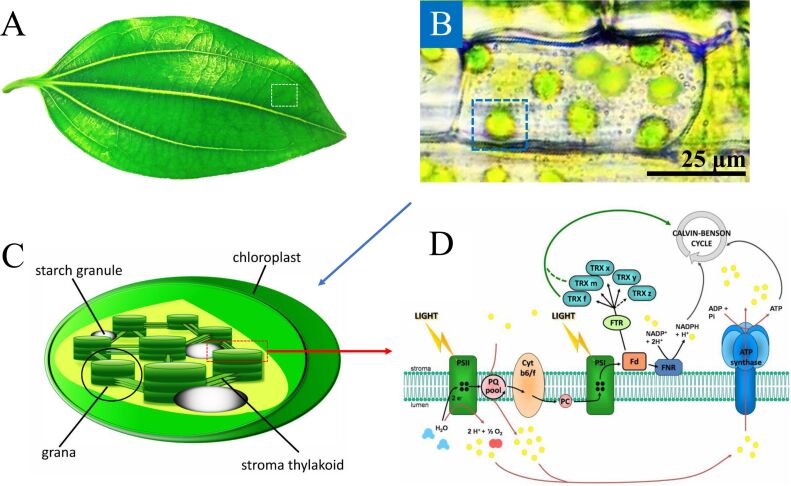
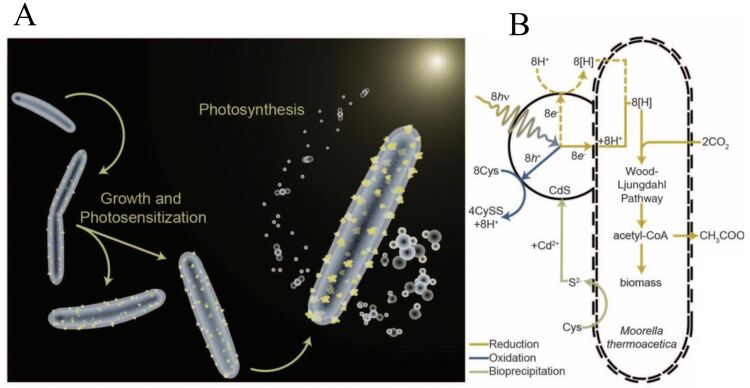
Artificial photosynthesis (APS) mimics natural photosynthesis (NPS) to store solar energy in chemical compounds for applications such as water splitting, CO fixation and coenzyme regeneration. NPS is naturally an optofluidic system since the cells (typical size 10 to 100 µm) of green plants, algae, and cyanobacteria enable light capture, biochemical and enzymatic reactions and the related material transport in a microscale, aqueous environment. The long history of evolution has equipped NPS with the remarkable merits of a large surface-area-to-volume ratio, fast small molecule diffusion and precise control of mass transfer. APS is expected to share many of the same advantages of NPS and could even provide more functionality if optofluidic technology is introduced. Recently, many studies have reported on optofluidic APS systems, but there is still a lack of an in-depth review. This article will start with a brief introduction of the physical mechanisms and will then review recent progresses in water splitting, CO fixation and coenzyme regeneration in optofluidic APS systems, followed by discussions on pending problems for real applications.
人工光合作用(APS)模仿自然光合作用(NPS),将太阳能存储在化合物中,用于水分解、二氧化碳固定和辅酶再生等应用。自然光合作用本质上是一个光流体系统,因为绿色植物、藻类和蓝细菌的细胞(典型尺寸为10至100微米)能够在微观的水性环境中进行光捕获、生化和酶促反应以及相关的物质运输。漫长的进化历史赋予了自然光合作用许多显著优点,如大的表面积与体积比、快速的小分子扩散以及对传质的精确控制。人工光合作用有望具备自然光合作用的许多相同优点,如果引入光流体技术,甚至可能提供更多功能。最近,许多研究报道了光流体人工光合作用系统,但仍缺乏深入的综述。本文将首先简要介绍其物理机制,然后综述光流体人工光合作用系统在水分解、二氧化碳固定和辅酶再生方面的最新进展,接着讨论实际应用中存在的悬而未决的问题。