Cunze Sarah, Kochmann Judith, Kuhn Thomas, Frank Raphael, Dörge Dorian D, Klimpel Sven
Goethe University Frankfurt, Institute of Ecology, Diversity and Evolution, Frankfurt am Main, Germany.
Senckenberg Biodiversity and Climate Research Centre, Senckenberg Research Institute and Natural History Museum, Frankfurt am Main, Germany.
PeerJ. 2018 Feb 1;6:e4255. doi: 10.7717/peerj.4255. eCollection 2018.
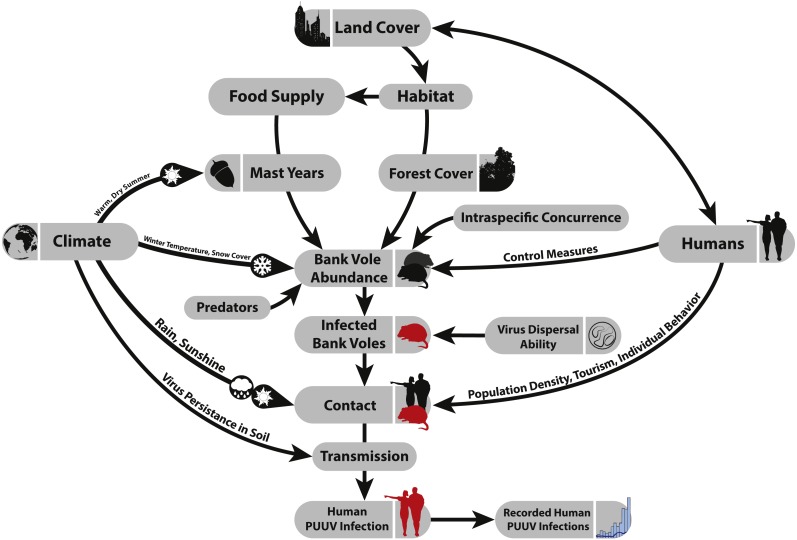
Worldwide, the number of recorded human hantavirus infections as well as the number of affected countries is on the rise. In Europe, most human hantavirus infections are caused by the Puumala virus (PUUV), with bank voles () as reservoir hosts. Generally, infection outbreaks have been related to environmental conditions, particularly climatic conditions, food supply for the reservoir species and land use. However, although attempts have been made, the insufficient availability of environmental data is often hampering accurate temporal and spatially explicit models of human hantavirus infections.
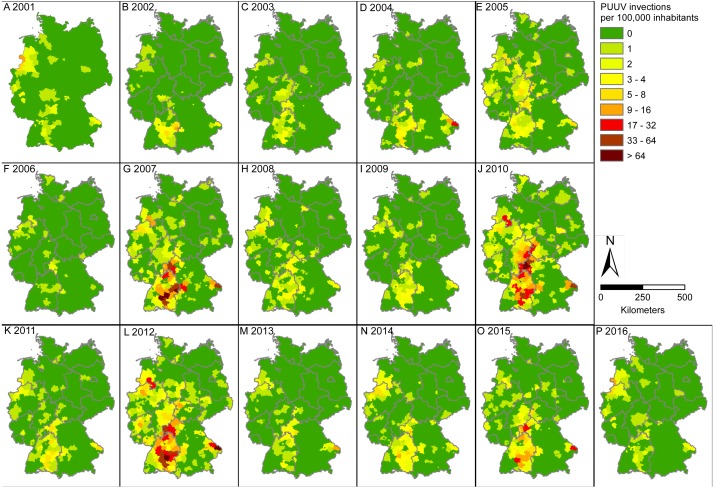
In the present study, dynamics of human PUUV infections between 2001 and 2015 were explored using ArcGIS in order to identify spatio-temporal patterns.
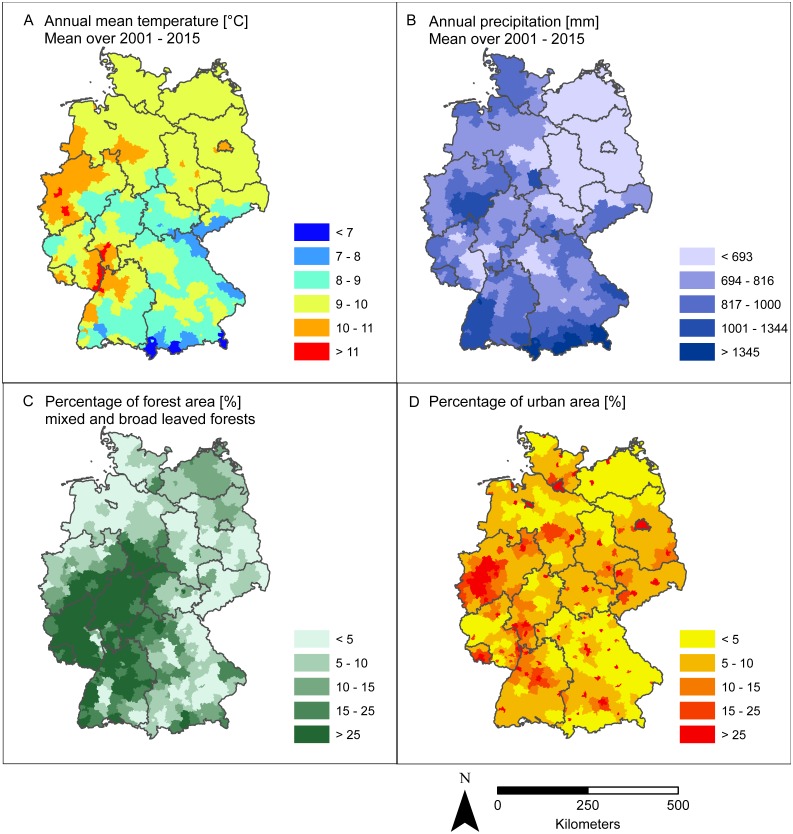
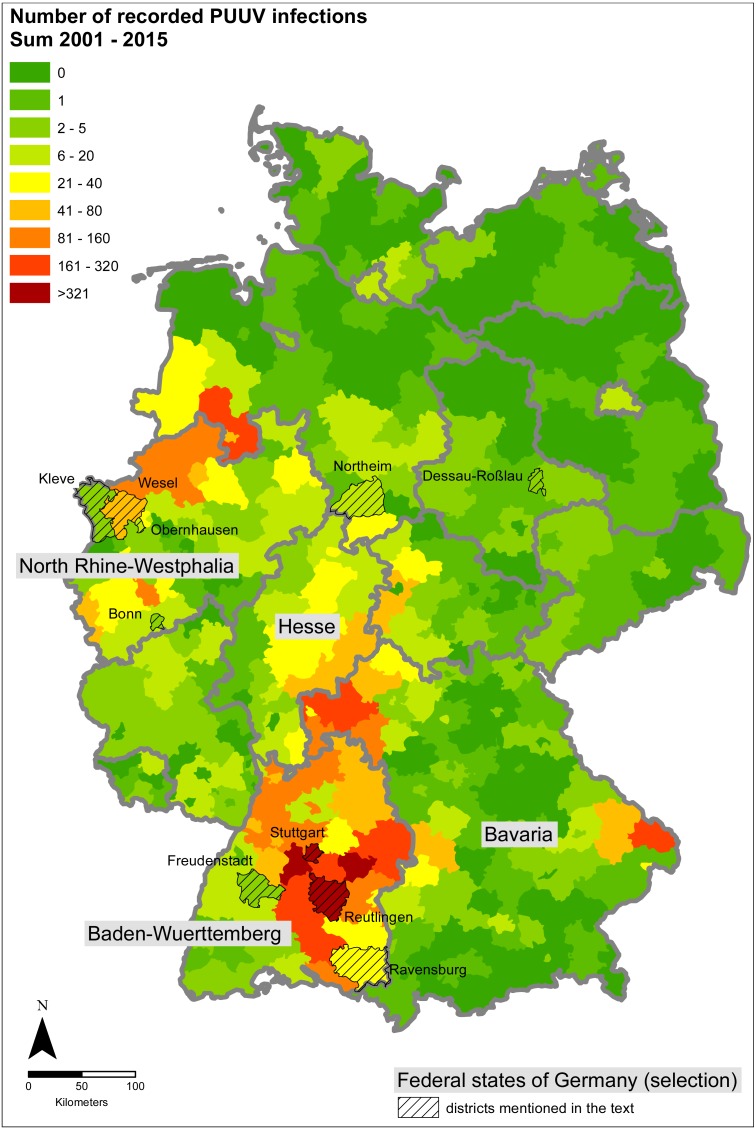
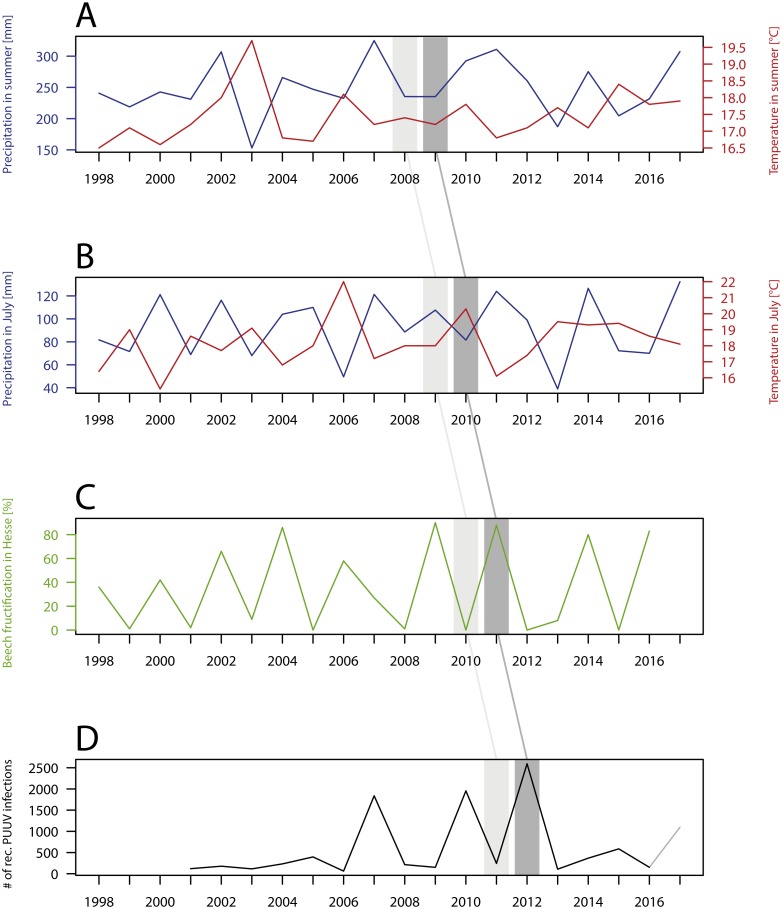
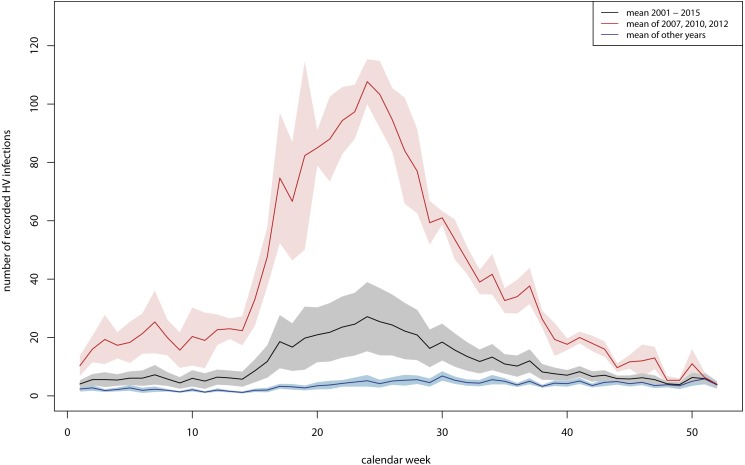
Percentage cover of forest area was identified as an important factor for the spatial pattern, whereas beech mast was found explaining temporal patterns of human PUUV infections in Germany. High numbers of infections were recorded in 2007, 2010 and 2012 and areas with highest records were located in Baden-Wuerttemberg (southwest Germany) and North Rhine-Westphalia (western Germany).
More reliable data on reservoir host distribution, pathogen verification as well as an increased awareness of physicians are some of the factors that should improve future human infection risk assessments in Germany.
在全球范围内,已记录的人类汉坦病毒感染病例数量以及受影响国家的数量都在增加。在欧洲,大多数人类汉坦病毒感染是由普马拉病毒(PUUV)引起的,以棕背鼠平()作为储存宿主。一般来说,感染暴发与环境条件有关,特别是气候条件、储存宿主物种的食物供应和土地利用。然而,尽管已经做出了努力,但环境数据的可获取性不足常常阻碍对人类汉坦病毒感染进行准确的时空明确模型分析。
在本研究中,利用ArcGIS探索了2001年至2015年期间人类PUUV感染的动态变化,以确定时空模式。
森林面积的百分比覆盖被确定为空间模式的一个重要因素,而山毛榉果实产量被发现可解释德国人类PUUV感染的时间模式。2007年、2010年和2012年记录到大量感染病例,记录数量最高的地区位于巴登 - 符腾堡州(德国西南部)和北莱茵 - 威斯特法伦州(德国西部)。
关于储存宿主分布的更可靠数据、病原体验证以及医生意识的提高是一些应该能改善德国未来人类感染风险评估的因素。