Department of Movement and Sports Sciences, Ghent University, Watersportlaan 2, 9000 Ghent, Belgium.
Research Foundation Flanders, Egmontstraat 5, 1000 Brussels, Belgium.
Int J Environ Res Public Health. 2018 Feb 7;15(2):291. doi: 10.3390/ijerph15020291.
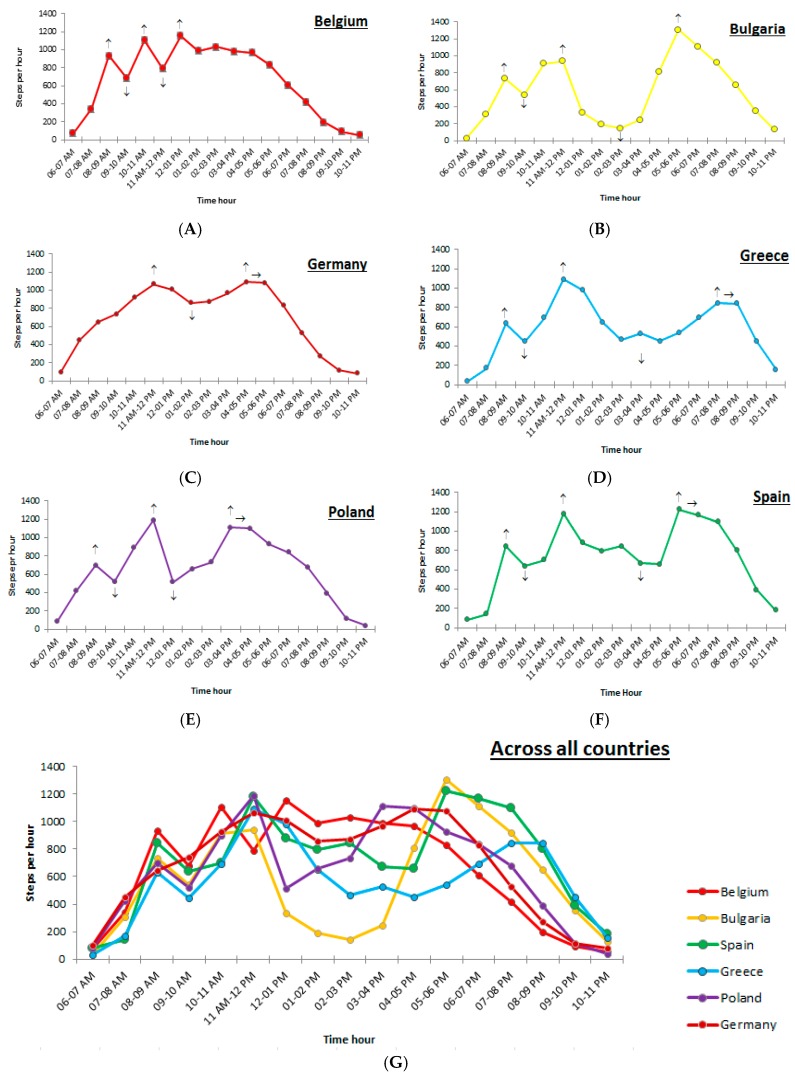
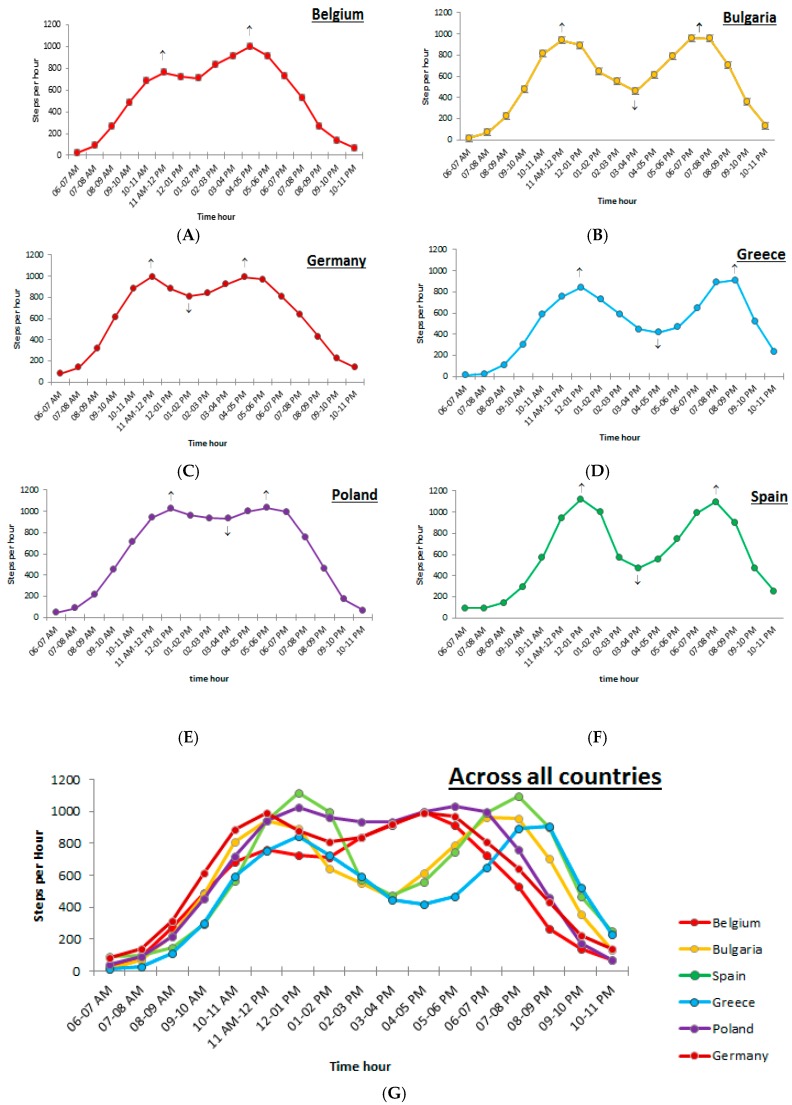
This study is part of the ToyBox-study, which is conducted in six European countries (Belgium, Bulgaria, Germany, Greece, Poland and Spain), aiming to develop a cost-effective kindergarten-based, family-involved intervention to prevent overweight and obesity in four- to six-year-old preschool children. In the current study, we aimed to examine and compare preschoolers' step count patterns, across the six European countries. A sample of 3578 preschoolers (mean age: 4.8 ± 0.4) was included. Multilevel analyses were performed to take clustering of measurements into account. Based on the average hourly steps, step count patterns for the six European countries were created for weekdays and weekend days. The step count patterns during weekdays were related to the daily kindergarten schedules. Step count patterns during weekdays showed several significant peaks and troughs ( < 0.01) and clearly reflected the kindergartens' daily schedules, except for Germany. For example, low numbers of steps were observed during afternoon naptimes and high numbers of steps during recess. In Germany, step count patterns did not show clear peaks and troughs, which can be explained by a less structured kindergarten schedule. On weekend days, differences in step count patterns were observed in the absolute number of steps in the afternoon trough and the period in which the evening peak occurred. Differences in step count patterns across the countries can be explained by differences in (school) policy, lifestyle habits, and culture. Therefore, it might be important to respond to these step count patterns and more specifically to tackle the inactive periods during interventions to promote physical activity in preschoolers.
这项研究是 ToyBox 研究的一部分,该研究在六个欧洲国家(比利时、保加利亚、德国、希腊、波兰和西班牙)进行,旨在开发一种具有成本效益的基于幼儿园、涉及家庭的干预措施,以预防 4 至 6 岁学龄前儿童超重和肥胖。在目前的研究中,我们旨在检查和比较六个欧洲国家学龄前儿童的步数模式。共有 3578 名学龄前儿童(平均年龄:4.8±0.4)被纳入研究。为了考虑测量的聚类,进行了多层次分析。基于平均每小时的步数,为六个欧洲国家的工作日和周末创建了步数模式。工作日的步数模式与每日幼儿园时间表有关。工作日的步数模式显示出几个明显的高峰和低谷(<0.01),除了德国,这反映了幼儿园的日常时间表。例如,下午午睡时间的步数很少,课间休息时间的步数很多。在德国,步数模式没有明显的高峰和低谷,这可以用幼儿园日程安排较少的结构来解释。在周末,下午低谷时的绝对步数和晚上高峰出现的时间段的步数模式存在差异。各国之间的步数模式差异可以用(学校)政策、生活方式习惯和文化的差异来解释。因此,针对这些步数模式采取措施,特别是在干预措施中解决不活跃时期,以促进学龄前儿童的身体活动,可能很重要。