Remote Sensing Division, National Institute for Space Research, Av. dos Astronautas, 1.758, 12227-010, São José dos Campos, Brazil.
College of Life and Environmental Sciences, University of Exeter, Exeter, EX4 4RJ, UK.
Nat Commun. 2018 Feb 13;9(1):536. doi: 10.1038/s41467-017-02771-y.
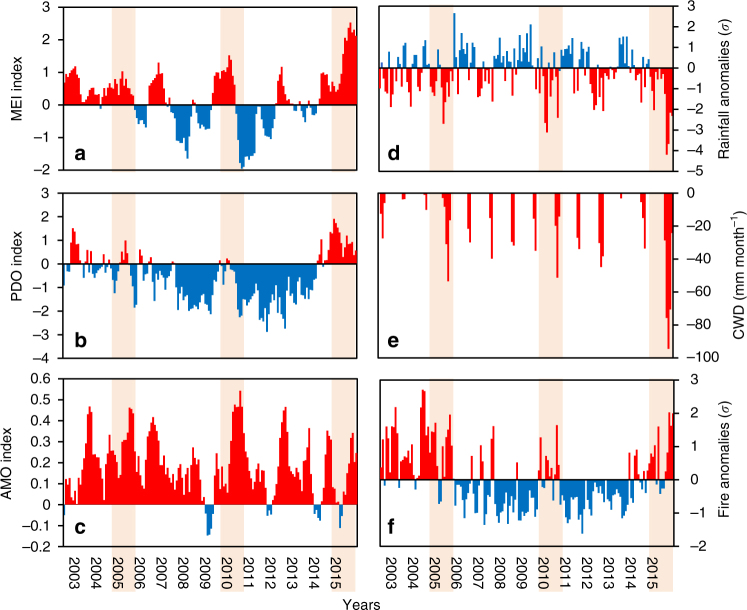
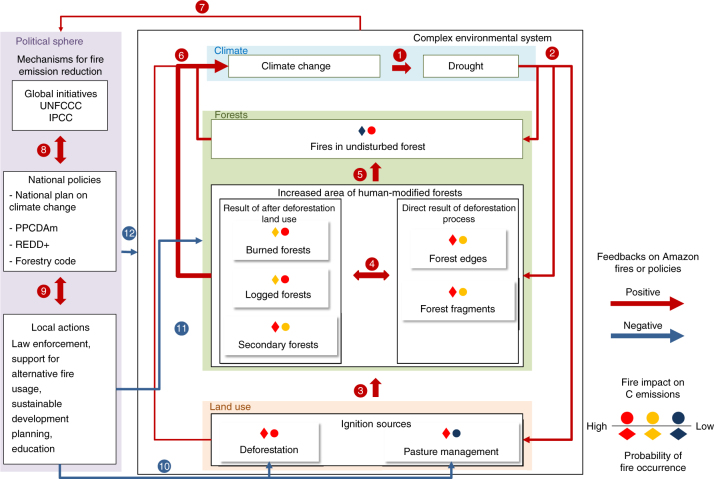
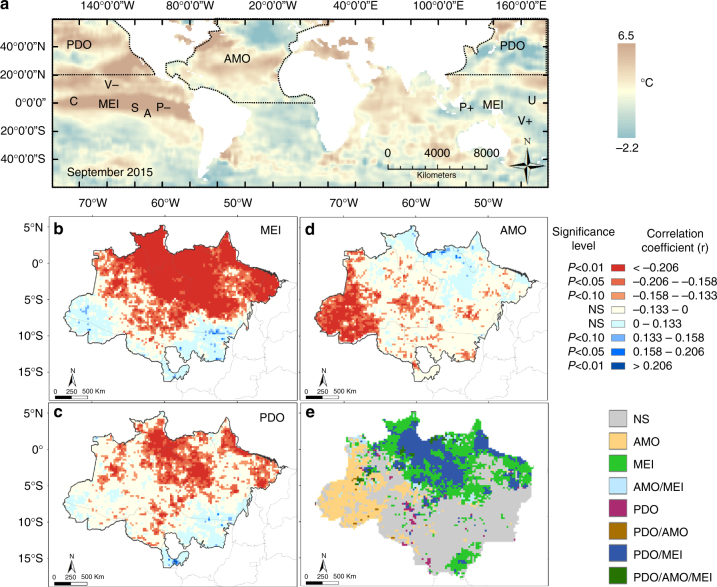
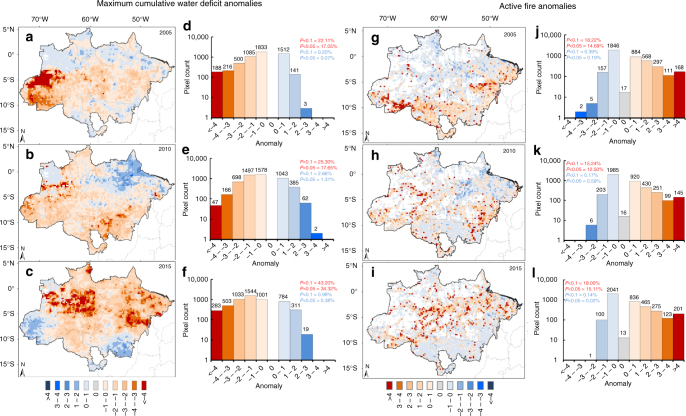
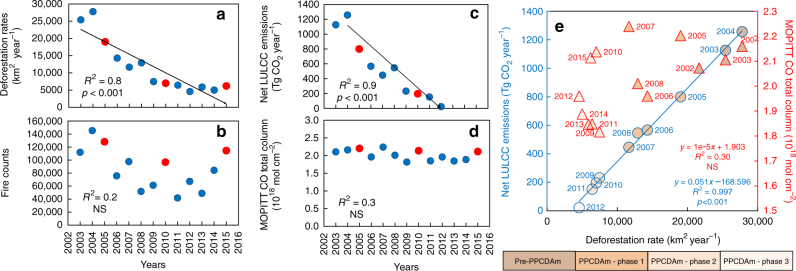
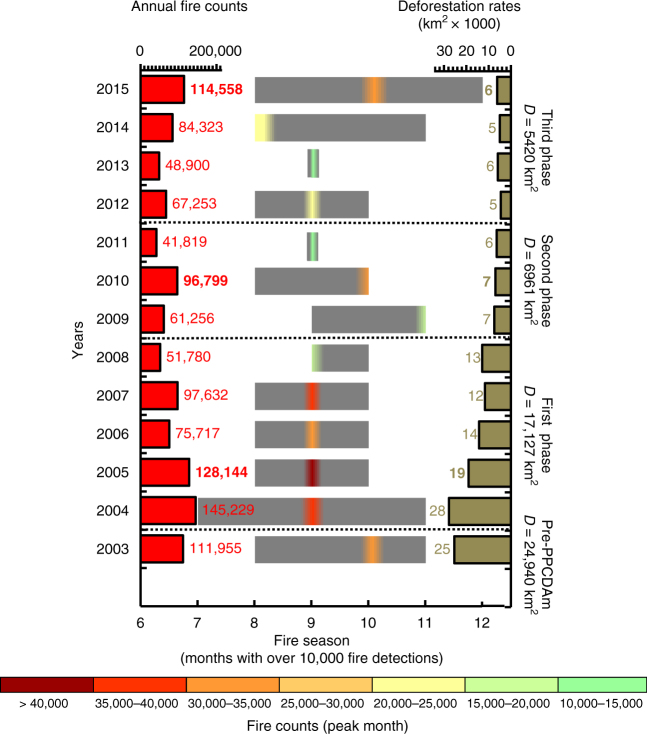
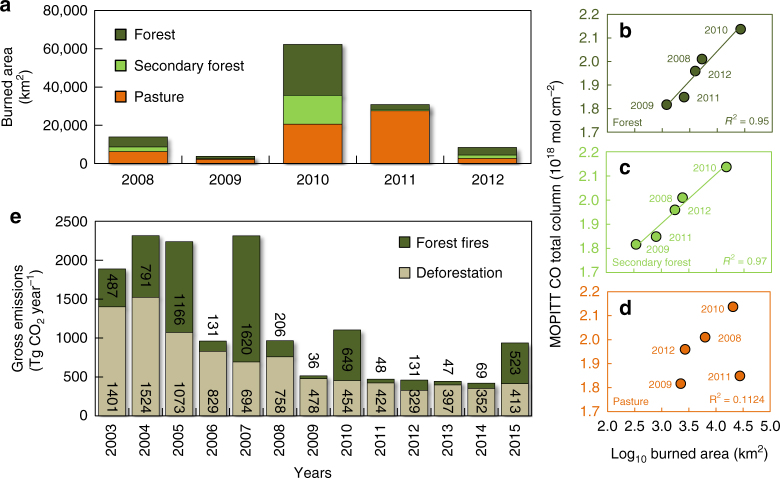
Tropical carbon emissions are largely derived from direct forest clearing processes. Yet, emissions from drought-induced forest fires are, usually, not included in national-level carbon emission inventories. Here we examine Brazilian Amazon drought impacts on fire incidence and associated forest fire carbon emissions over the period 2003-2015. We show that despite a 76% decline in deforestation rates over the past 13 years, fire incidence increased by 36% during the 2015 drought compared to the preceding 12 years. The 2015 drought had the largest ever ratio of active fire counts to deforestation, with active fires occurring over an area of 799,293 km. Gross emissions from forest fires (989 ± 504 Tg CO year) alone are more than half as great as those from old-growth forest deforestation during drought years. We conclude that carbon emission inventories intended for accounting and developing policies need to take account of substantial forest fire emissions not associated to the deforestation process.
热带地区的碳排放主要来自于直接的森林砍伐过程。然而,干旱引发的森林火灾所产生的碳排放通常不包括在国家一级的碳排放清单中。在这里,我们研究了巴西亚马逊地区干旱对火灾发生频率及相关森林火灾碳排放的影响,研究时段为 2003-2015 年。结果表明,尽管过去 13 年来森林砍伐率下降了 76%,但与前 12 年相比,2015 年干旱期间火灾发生频率增加了 36%。2015 年干旱期间,活跃火灾次数与森林砍伐面积之比达到了历史最高水平,活跃火灾发生在 799293 平方公里的区域。仅森林火灾的总排放量(989±504TgCO 年)就超过了干旱年份原始森林砍伐所产生的排放量的一半。我们的结论是,用于核算和制定政策的碳排放清单需要考虑到与森林砍伐过程无关的大量森林火灾排放。