Laboratoire des Systémes Perceptifs, UMR 8248, CNRS, France; Département d'Etudes Cognitives, Ecole Normale Supérieure, PSL, France; UCL Ear Institute, United Kingdom.
Laboratoire des Systémes Perceptifs, UMR 8248, CNRS, France; Département d'Etudes Cognitives, Ecole Normale Supérieure, PSL, France.
Neuroimage. 2018 May 15;172:903-912. doi: 10.1016/j.neuroimage.2018.01.035. Epub 2018 Feb 12.
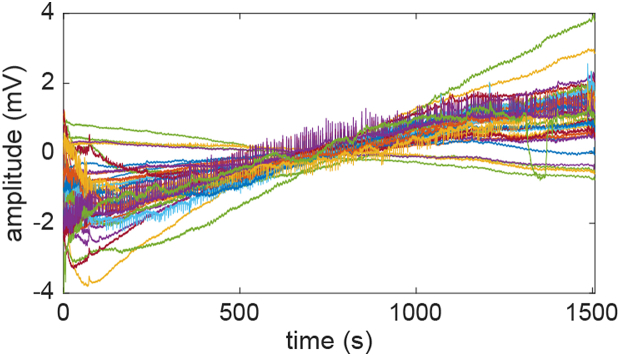
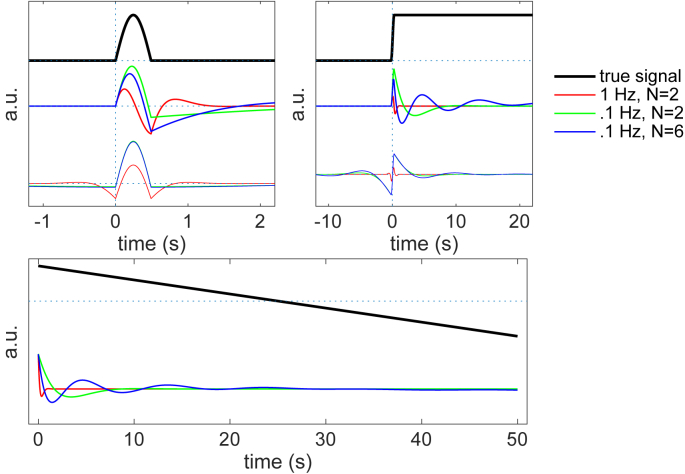
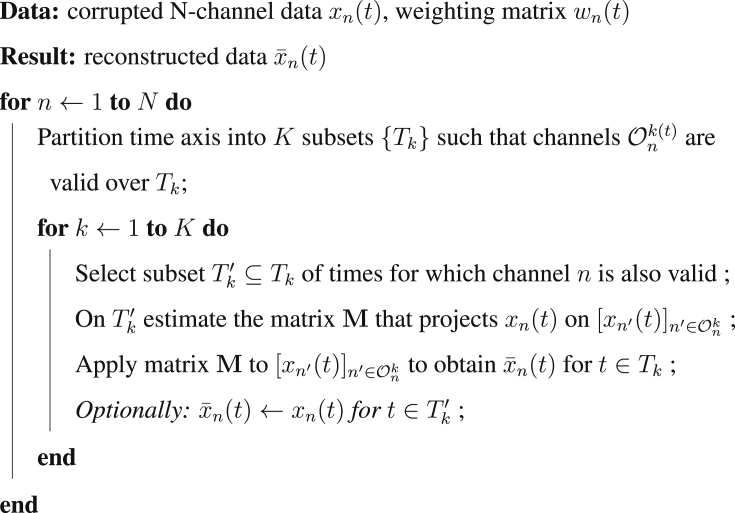
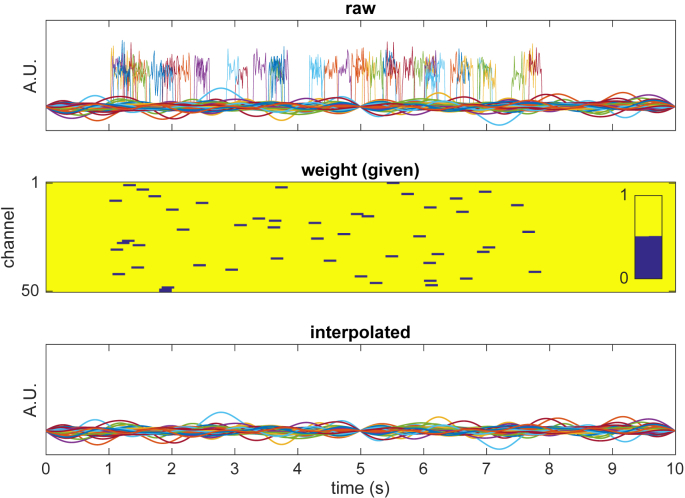
Electroencephalography (EEG), magnetoencephalography (MEG) and related techniques are prone to glitches, slow drift, steps, etc., that contaminate the data and interfere with the analysis and interpretation. These artifacts are usually addressed in a preprocessing phase that attempts to remove them or minimize their impact. This paper offers a set of useful techniques for this purpose: robust detrending, robust rereferencing, outlier detection, data interpolation (inpainting), step removal, and filter ringing artifact removal. These techniques provide a less wasteful alternative to discarding corrupted trials or channels, and they are relatively immune to artifacts that disrupt alternative approaches such as filtering. Robust detrending allows slow drifts and common mode signals to be factored out while avoiding the deleterious effects of glitches. Robust rereferencing reduces the impact of artifacts on the reference. Inpainting allows corrupt data to be interpolated from intact parts based on the correlation structure estimated over the intact parts. Outlier detection allows the corrupt parts to be identified. Step removal fixes the high-amplitude flux jump artifacts that are common with some MEG systems. Ringing removal allows the ringing response of the antialiasing filter to glitches (steps, pulses) to be suppressed. The performance of the methods is illustrated and evaluated using synthetic data and data from real EEG and MEG systems. These methods, which are mainly automatic and require little tuning, can greatly improve the quality of the data.
脑电图(EEG)、脑磁图(MEG)和相关技术容易出现故障、缓慢漂移、阶跃等,这些都会污染数据并干扰分析和解释。这些伪影通常在预处理阶段进行处理,试图去除或最小化其影响。本文提供了一组用于此目的的有用技术:稳健去趋势、稳健重参考、异常值检测、数据插值(修复)、阶跃去除和滤波器振铃伪影去除。这些技术提供了一种替代方法,即丢弃损坏的试验或通道,从而减少了浪费,并且相对不受干扰替代方法(如滤波)的伪影的影响。稳健去趋势允许将缓慢漂移和共模信号分离出来,同时避免故障的有害影响。稳健重参考减少了伪影对参考的影响。修复允许根据完整部分估计的相关结构,从完整部分中插值损坏的数据。异常值检测允许识别损坏的部分。阶跃去除固定了一些 MEG 系统中常见的高幅度通量跳跃伪影。振铃去除允许抑制抗混叠滤波器的振铃响应对故障(阶跃、脉冲)的影响。使用合成数据和真实 EEG 和 MEG 系统的数据说明了和评估了这些方法的性能。这些方法主要是自动的,需要很少的调整,可以大大提高数据的质量。