Desgorces François D, Moinard Christophe, Chennaoui Mounir, Toussaint Jean-François, Petibois Cyril, Noirez Philippe
EA 7329, Paris Descartes University, Paris, France.
IRMES, Institut de Recherche Médicale et d'Epidémiologie du Sport, INSEP, Paris, France.
Biochim Open. 2016 Nov 23;4:1-7. doi: 10.1016/j.biopen.2016.10.001. eCollection 2017 Jun.
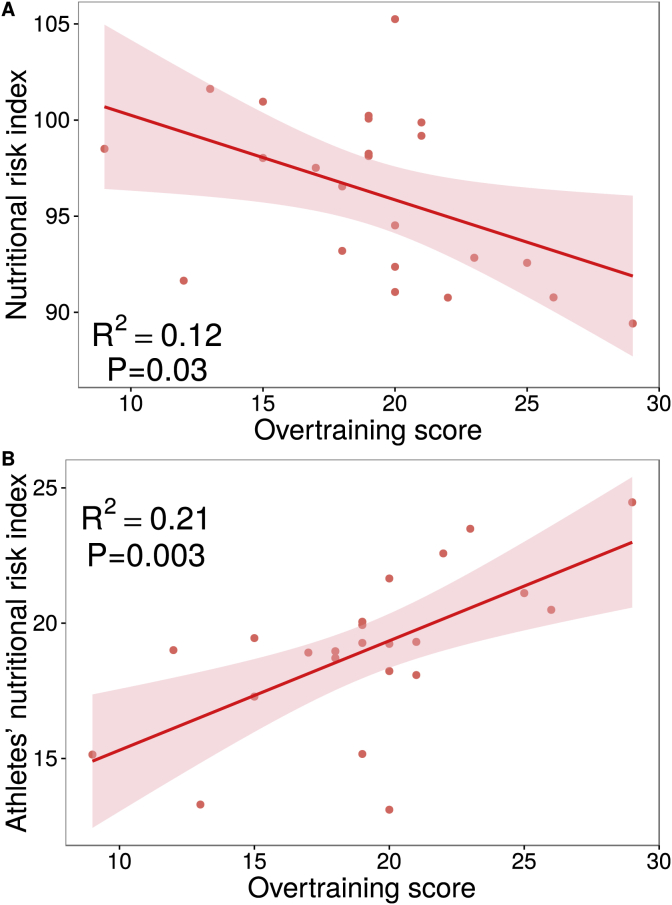
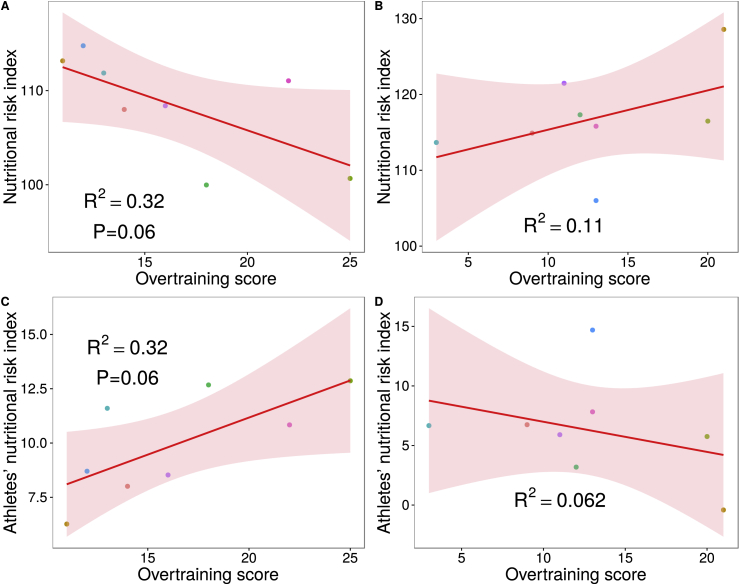
Fasted or weight-category athletes manage their training under strict diet conditions that could impair the stress-recovery balance and result in acute or chronic fatigue. However, to date, no validated biomarker are available to quantify this phenomena. The aim of this study was to assess the validity of a specific index combining plasma albumin and weight change to detect nutrition-related risks of fatigue increase and under-performance in athletes experiencing particular nutritional conditions. An athlete's nutrition risk index (ANRI) equation, based on data from lightweight and heavyweight rowers, was developed using relationship between plasma albumin concentrations combined to weight changes with sport performance and overtraining scores and was tested by odds ratio for failure. The accuracy and sensitivity of this former specific equation was subsequently tested on runners observing the Ramadan-fasting as well as on boxers after a short weight-loss period. Independently of training and performance, lightweight rowers presented lower nutritional parameters than heavyweight (albumin: 37.4 ± 2.7 39.9 ± 1.8 g·L, < 0.05; weight state: 94.5 ± 1.8 99.9 ± 0.9%, < 0.01). In lightweight, ANRI was related with overtraining score ( = 0.21, < 0.01), risks for failure in competition were enhanced when ANRI increased (OR:2.5, = 0.03). Relationship of ANRI with overtraining score tended to be also significant in runners ( = 0.32, = 0.06) but not in boxers ( = 0.4). Albumin concentrations combined to weight loss appeared relevant to delineate nutrition-related risks of fatigue and/or competitive failure associated with mid-term diets (about 30 days) as observed in rowers and Ramadan-fasted runners. ANRI may benefit to athletes monitoring by delineating effects of their weight loss program.
禁食或按体重分级的运动员在严格的饮食条件下进行训练,这可能会破坏压力恢复平衡,并导致急性或慢性疲劳。然而,迄今为止,尚无经过验证的生物标志物可用于量化这一现象。本研究的目的是评估结合血浆白蛋白和体重变化的特定指标在检测处于特定营养状况的运动员中与营养相关的疲劳增加和表现不佳风险方面的有效性。基于轻量级和重量级赛艇运动员的数据,开发了运动员营养风险指数(ANRI)方程,该方程利用血浆白蛋白浓度与体重变化相结合与运动表现和过度训练评分之间的关系,并通过失败比值比进行检验。随后,在观察斋月禁食的跑步者以及短期减重后的拳击手身上测试了这个先前特定方程的准确性和敏感性。独立于训练和表现,轻量级赛艇运动员的营养参数低于重量级赛艇运动员(白蛋白:37.4±2.7对39.9±1.8 g·L,P<0.05;体重状态:94.5±1.8对99.9±0.9%,P<0.01)。在轻量级运动员中,ANRI与过度训练评分相关(r=0.21,P<0.01),当ANRI升高时,比赛失败的风险增加(OR:2.5,P=0.03)。ANRI与过度训练评分的关系在跑步者中也趋于显著(r=0.32,P=0.06),但在拳击手中不显著(r=0.4)。如在赛艇运动员和斋月禁食的跑步者中所观察到的,血浆白蛋白浓度与体重减轻相结合似乎与中期饮食(约30天)相关的疲劳和/或比赛失败的营养相关风险的描述有关。ANRI通过描绘其减重计划的效果可能有助于运动员监测。