Red Cross College of Nursing, Chung-Ang University, Seoul 06974, Korea.
Phoenix Australia, Centre for Posttraumatic Mental Health, University of Melbourne, Melbourne, VIC 3002, Australia.
Int J Environ Res Public Health. 2018 Feb 18;15(2):362. doi: 10.3390/ijerph15020362.
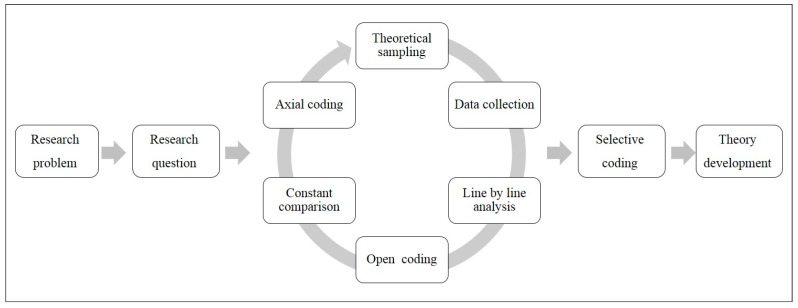
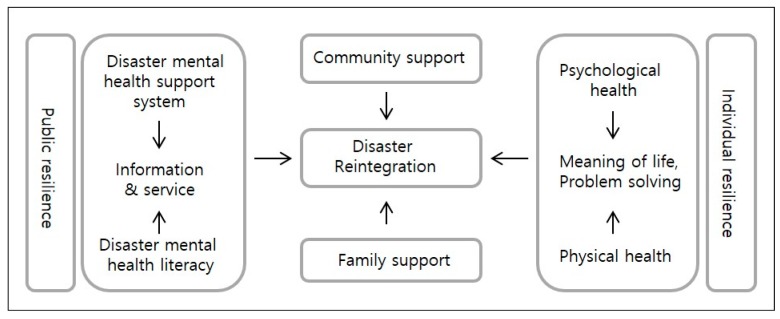
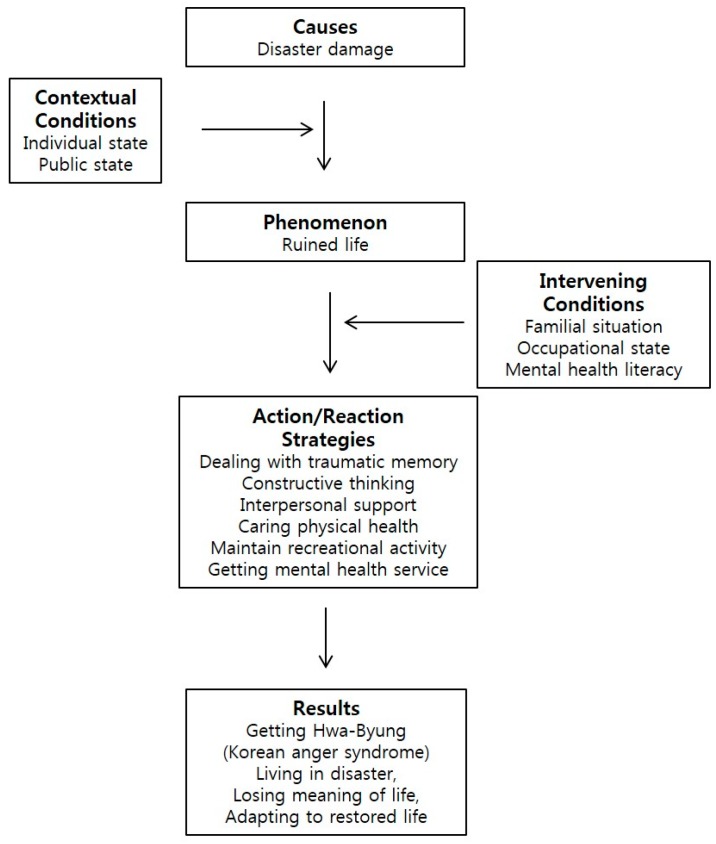
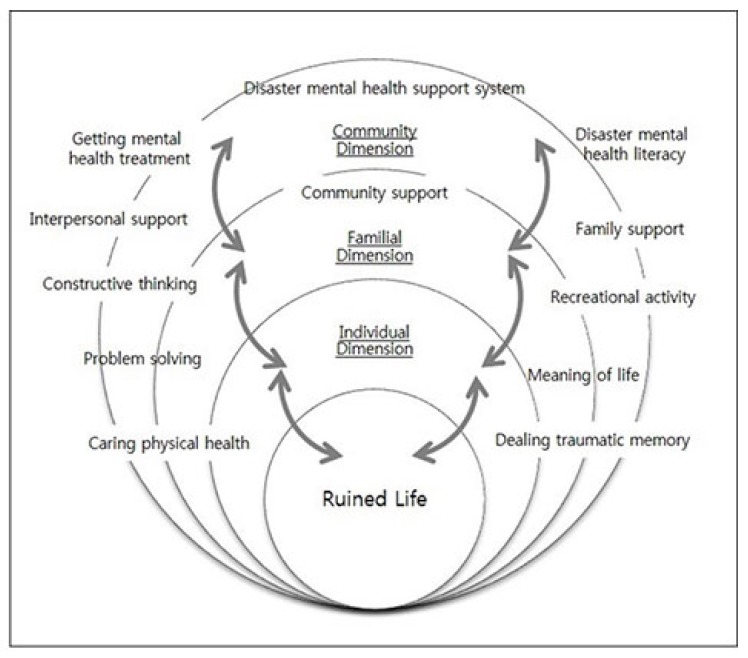
This study sought to describe the mental health problems experienced by Korean disaster survivors, using a qualitative research method to provide empirical resources for effective disaster mental health support in Korea. Participants were 16 adults or elderly adults who experienced one or more disasters at least 12 months ago recruited via theoretical sampling. Participants underwent in-depth individual interviews on their disaster experiences, which were recorded and transcribed for qualitative analysis, which followed Strauss and Corbin's (1998) Grounded theory. After open coding, participants' experiences were categorized into 130 codes, 43 sub-categories and 17 categories. The categories were further analyzed in a paradigm model, conditional model and the Disaster Reintegration Model, which proposed potentially effective mental health recovery strategies for disaster survivors, health providers and administrators. To provide effective assistance for mental health recovery of disaster survivors, both personal and public resilience should be promoted while considering both cultural and spiritual elements.
本研究旨在描述韩国灾难幸存者所经历的心理健康问题,采用定性研究方法,为韩国有效的灾难心理健康支持提供实证资源。参与者为 16 名成年人或老年人,他们通过理论抽样至少在 12 个月前经历过一次或多次灾难。参与者接受了关于他们灾难经历的深入个人访谈,这些访谈被记录并转录下来进行定性分析,遵循 Strauss 和 Corbin(1998)的扎根理论。经过开放式编码,参与者的经历被分为 130 个代码、43 个子类别和 17 个类别。这些类别进一步在范式模型、条件模型和灾难整合模型中进行了分析,为灾难幸存者、卫生提供者和管理者提出了潜在有效的心理健康恢复策略。为了为灾难幸存者的心理健康恢复提供有效帮助,在考虑文化和精神因素的同时,应促进个人和公共韧性。