School of Science, Beijing Jiaotong University, No. 3 Shangyuancun, Haidian District, Beijing, 100044, People's Republic of China.
Laboratory for Biointerfaces, Empa, Swiss Federal Laboratories for Materials Science and Technology, Lerchenfeldstrasse 5, 9014, St. Gallen, Switzerland.
J Nanobiotechnology. 2018 Feb 28;16(1):20. doi: 10.1186/s12951-018-0347-0.
Due to the increased emergence of antimicrobial resistance, alternatives to minimize the usage of antibiotics become attractive solutions. Biophysical manipulation of material surface topography to prevent bacterial adhesion is one promising approach. To this end, it is essential to understand the relationship between surface topographical features and bactericidal properties in order to develop antibacterial surfaces.
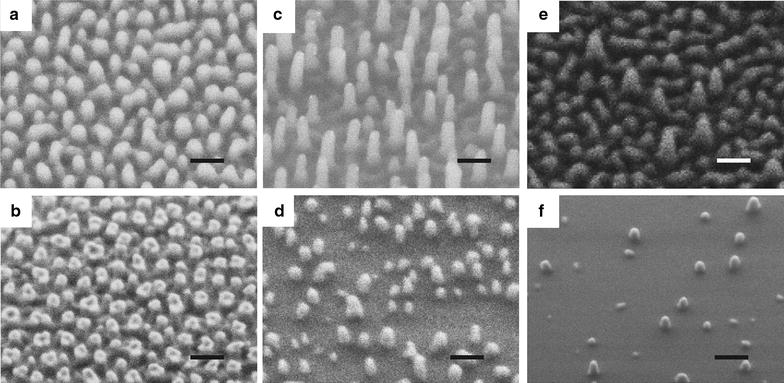
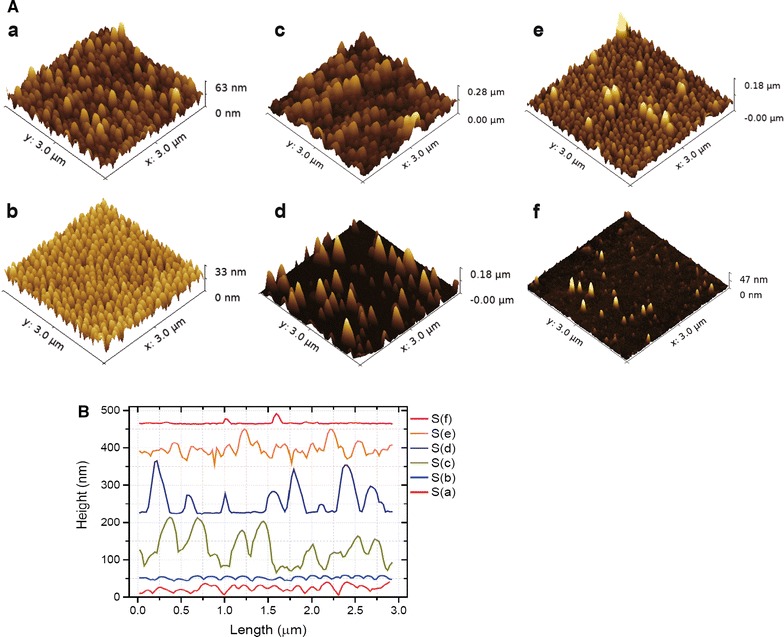
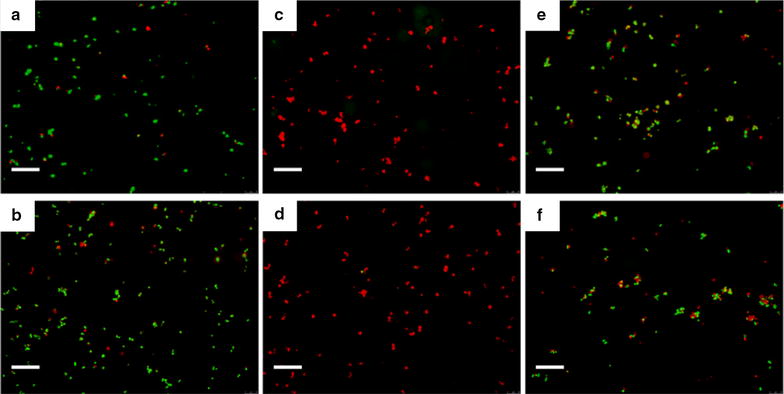
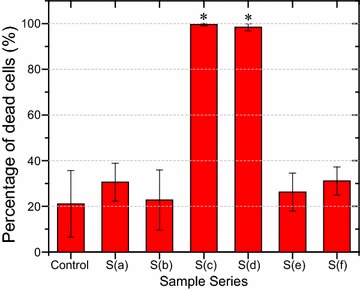
In this work a systematic study of topographical effects on bactericidal activity of nanostructured surfaces is presented. Nanostructured Ormostamp polymer surfaces are fabricated by nano-replication technology using nanoporous templates resulting in 80-nm diameter nanopillars. Six Ormostamp surfaces with nanopillar arrays of various nanopillar densities and heights are obtained by modifying the nanoporous template. The surface roughness ranges from 3.1 to 39.1 nm for the different pillar area parameters. A Gram-positive bacterium, Staphylococcus aureus, is used as the model bacterial strain. An average pillar density at ~ 40 pillars μm with surface roughness of 39.1 nm possesses the highest bactericidal efficiency being close to 100% compared with 20% of the flat control samples. High density structures at ~ 70 pillars μm and low density structures at < 20 pillars μm with surface roughness smaller than 20 nm reduce the bactericidal efficiency to almost the level of the control samples.
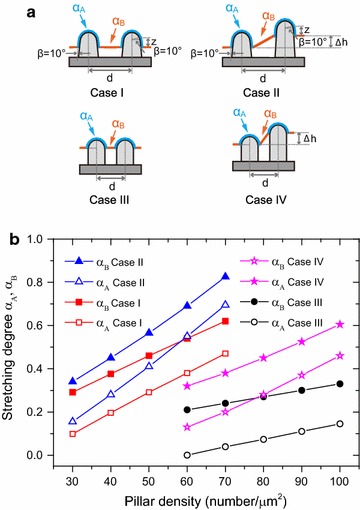
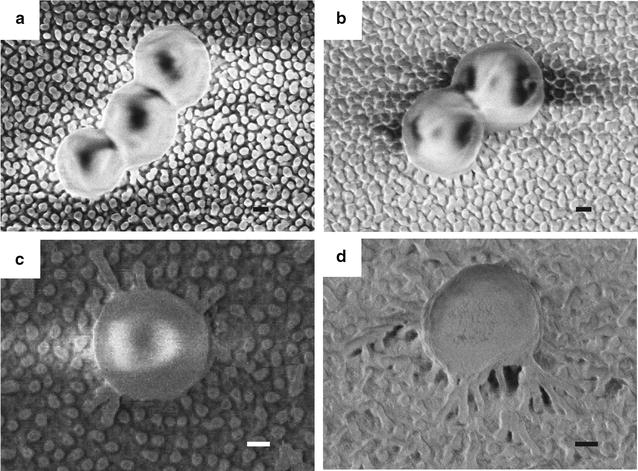
The results obtained here suggests that the topographical effects including pillar density and pillar height inhomogeneity may have significant impacts on adhering pattern and stretching degree of bacterial cell membrane. A biophysical model is prepared to interpret the morphological changes of bacteria on these nanostructures.
由于抗菌药物耐药性的增加,减少抗生素使用的替代方法成为有吸引力的解决方案。通过改变材料表面形貌来防止细菌黏附是一种很有前途的方法。为此,了解表面形貌特征与杀菌性能之间的关系对于开发抗菌表面至关重要。
本工作系统研究了表面形貌对纳米结构化表面杀菌活性的影响。纳米复制技术通过使用纳米多孔模板制造了 Ormostamp 聚合物纳米结构化表面,从而形成了 80nm 直径的纳米柱。通过修改纳米多孔模板,获得了六种具有不同纳米柱密度和高度的纳米柱阵列的 Ormostamp 表面。不同支柱面积参数的表面粗糙度范围为 3.1nm 至 39.1nm。使用革兰氏阳性菌金黄色葡萄球菌作为模型细菌菌株。平均支柱密度约为 40 个支柱 μm,表面粗糙度为 39.1nm 的表面具有最高的杀菌效率,接近 100%,而平坦对照样品的杀菌效率为 20%。表面粗糙度小于 20nm 的高密度结构约为 70 个支柱 μm 和低密度结构小于 20 个支柱 μm 会将杀菌效率降低到接近对照样品的水平。
这里得到的结果表明,包括支柱密度和支柱高度不均匀在内的形貌效应可能对细菌细胞膜的黏附模式和拉伸程度产生重大影响。准备了一个生物物理模型来解释细菌在这些纳米结构上的形态变化。