Department of Human Biology, NUTRIM School for Nutrition and Translational Research in Metabolism, Maastricht University Medical Centre, Universiteitssingel 50, 6229 ER, P.O. Box 616, 6200 MD Maastricht, The Netherlands.
Nutrients. 2018 Feb 28;10(3):275. doi: 10.3390/nu10030275.
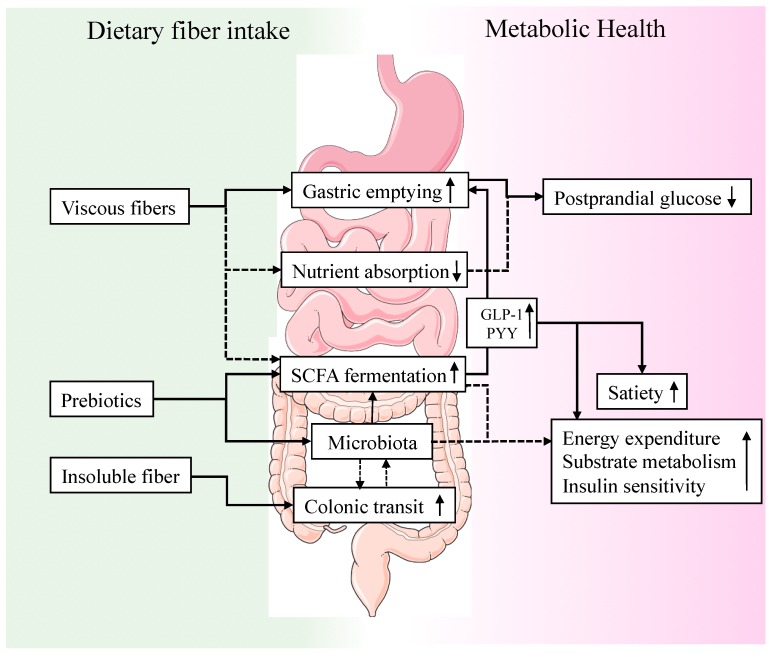
Gastrointestinal transit time may be an important determinant of glucose homeostasis and metabolic health through effects on nutrient absorption and microbial composition, among other mechanisms. Modulation of gastrointestinal transit may be one of the mechanisms underlying the beneficial health effects of dietary fibers. These effects include improved glucose homeostasis and a reduced risk of developing metabolic diseases such as obesity and type 2 diabetes mellitus. In this review, we first discuss the regulation of gastric emptying rate, small intestinal transit and colonic transit as well as their relation to glucose homeostasis and metabolic health. Subsequently, we briefly address the reported health effects of different dietary fibers and discuss to what extent the fiber-induced health benefits may be mediated through modulation of gastrointestinal transit.
胃肠道传输时间可能通过影响营养吸收和微生物组成等机制,成为葡萄糖内稳态和代谢健康的重要决定因素。调节胃肠道传输可能是膳食纤维对健康有益影响的机制之一。这些作用包括改善葡萄糖内稳态和降低肥胖和 2 型糖尿病等代谢疾病的发病风险。在这篇综述中,我们首先讨论了胃排空率、小肠传输和结肠传输的调节及其与葡萄糖内稳态和代谢健康的关系。随后,我们简要介绍了不同膳食纤维的报道的健康影响,并讨论了膳食纤维通过调节胃肠道传输介导健康益处的程度。