Cossio-Bolaños Marco, Lee-Andruske Cynthia, de Arruda Miguel, Luarte-Rocha Cristian, Almonacid-Fierro Alejandro, Gómez-Campos Rossana
Faculty of Physical Education, State University of Campinas, Campinas, Brazil.
Departamento de Ciencias de la Actividad Física, Universidad Católica del Maule, Talca, Chile.
BMC Pediatr. 2018 Mar 2;18(1):96. doi: 10.1186/s12887-018-1015-0.
Maintaining and building healthy bones during the lifetime requires a complicated interaction between a number of physiological and lifestyle factors. Our goal of this study was to analyze the association between hand grip strength and the maximum peak expiratory flow with bone mineral density and content in adolescent students.
The research team studied 1427 adolescent students of both sexes (750 males and 677 females) between the ages of 11.0 and 18.9 years in the Maule Region of Talca (Chile). Weight, standing height, sitting height, hand grip strength (HGS), and maximum peak expiratory flow (PEF) were measured. Furthermore, bone mineral density (BMD) and total body bone mineral content (BMC) were determined by using the Dual-Energy X-Ray Absorptiometry (DXA). Hand grip strength and PEF were categorized in tertiles (lowest, middle, and highest). Linear regression was performed in steps to analyze the relationship between the variables. Differences between categories were determined through ANOVA.
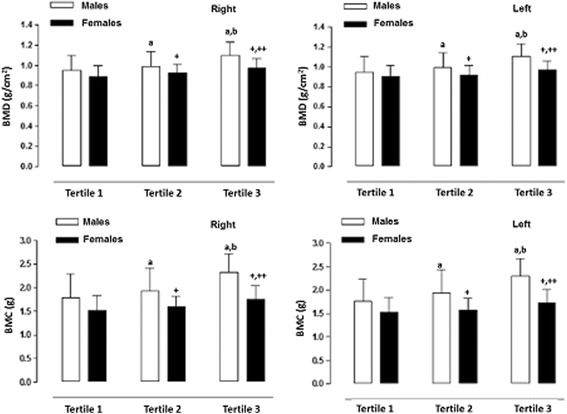
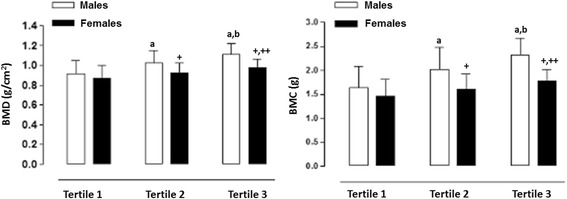
In males, the hand grip strength explained 18-19% of the BMD and 20-23% of the BMC. For the females, the percentage of variation occurred between 12 and 13% of the BMD and 17-18% of the BMC. The variation of PEF for the males was observed as 33% of the BMD and 36% of the BMC. For the females, both the BMD and BMC showed a variation of 19%. The HGS and PEF were divided into three categories (lowest, middle, and highest). In both cases, significant differences occurred in bone density health between the three categories.
In conclusion, the HGS and the PEF related positively to the bone density health of both sexes of adolescent students. The adolescents with poor values for hand grip strength and expiratory flow showed reduced values of BMD and BMC for the total body. Furthermore, the PEF had a greater influence on bone density health with respect to the HGS of the adolescents of both sexes.
在一生中维持和构建健康骨骼需要多种生理和生活方式因素之间复杂的相互作用。本研究的目的是分析青少年学生握力和最大呼气流量与骨矿物质密度和含量之间的关联。
研究团队对智利塔尔卡省莫莱地区1427名年龄在11.0至18.9岁之间的青少年学生(750名男性和677名女性)进行了研究。测量了体重、身高、坐高、握力(HGS)和最大呼气流量(PEF)。此外,使用双能X线吸收法(DXA)测定骨矿物质密度(BMD)和全身骨矿物质含量(BMC)。握力和PEF被分为三分位数(最低、中间和最高)。逐步进行线性回归以分析变量之间的关系。通过方差分析确定类别之间的差异。
在男性中,握力解释了BMD的18 - 19%和BMC的20 - 23%。对于女性,BMD的变异百分比在12%至13%之间,BMC的变异百分比在17 - 18%之间。男性中PEF的变异为BMD的33%和BMC的36%。对于女性,BMD和BMC均显示出19%的变异。HGS和PEF分为三类(最低、中间和最高)。在这两种情况下,三类之间的骨密度健康状况存在显著差异。
总之,HGS和PEF与青少年学生两性的骨密度健康呈正相关。握力和呼气流量值较差的青少年全身BMD和BMC值降低。此外,对于两性青少年,PEF对骨密度健康的影响相对于HGS更大。