Department of Food Science, Cornell University, Ithaca, New York, United States of America.
Department of Molecular Medicine, College of Veterinary Medicine, Cornell University, Ithaca, New York, United States of America.
PLoS Biol. 2018 Mar 20;16(3):e2001959. doi: 10.1371/journal.pbio.2001959. eCollection 2018 Mar.
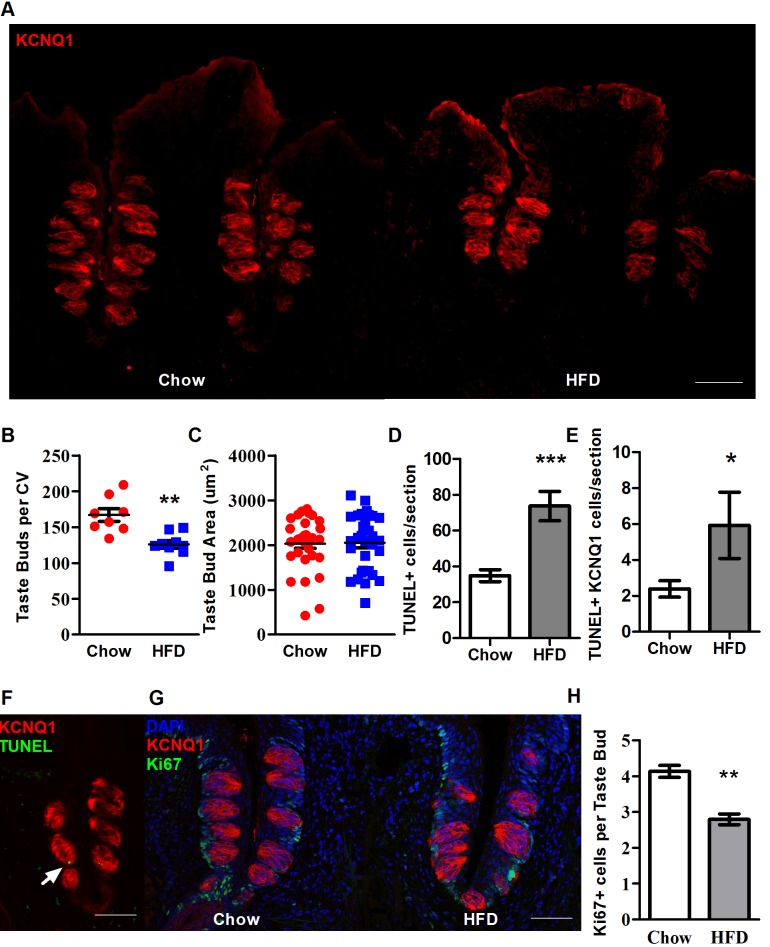
Despite evidence that the ability to taste is weakened by obesity and can be rescued with weight loss intervention, few studies have investigated the molecular effects of obesity on the taste system. Taste bud cells undergo continual turnover even in adulthood, exhibiting an average life span of only a few weeks, tightly controlled by a balance of proliferation and cell death. Recent data reveal that an acute inflammation event can alter this balance. We demonstrate that chronic low-grade inflammation brought on by obesity reduces the number of taste buds in gustatory tissues of mice-and is likely the cause of taste dysfunction seen in obese populations-by upsetting this balance of renewal and cell death.
尽管有证据表明,肥胖会削弱味觉能力,而通过减肥干预可以恢复味觉,但很少有研究调查肥胖对味觉系统的分子影响。味蕾细胞即使在成年后也在不断更新,其平均寿命只有几周,增殖和细胞死亡的平衡严格控制着它们的更新。最近的数据显示,急性炎症事件可以改变这种平衡。我们证明,肥胖引起的慢性低度炎症会通过扰乱这种更新和细胞死亡的平衡,减少小鼠味觉组织中的味蕾数量——这很可能是肥胖人群味觉功能障碍的原因。