Division of Geriatrics and Nutritional Sciences and Center for Human Nutrition, Washington University School of Medicine, St. Louis, MO, USA.
Department of Clinical and Experimental Sciences, Brescia University, Brescia, Italy.
Aging Cell. 2018 Jun;17(3):e12746. doi: 10.1111/acel.12746. Epub 2018 Mar 25.
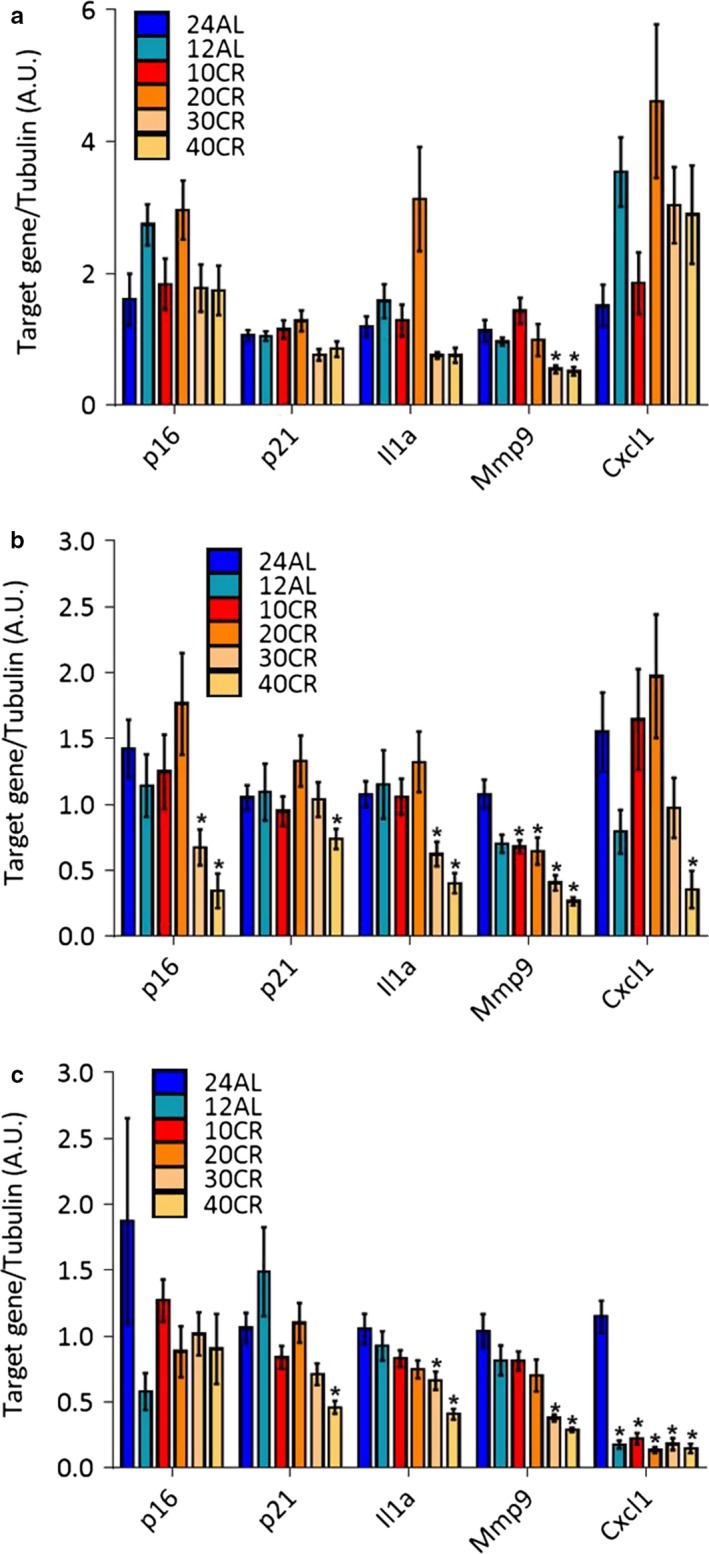
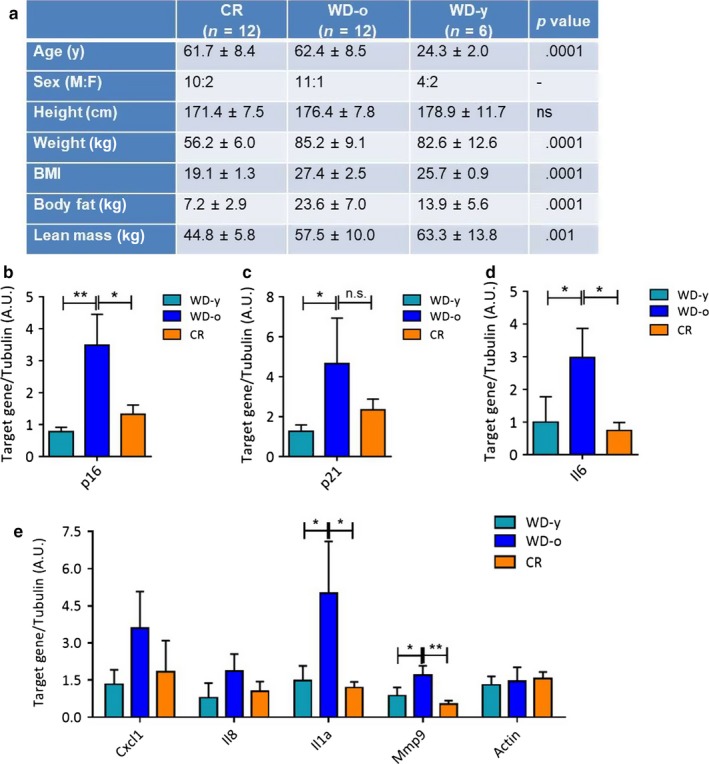
Calorie restriction (CR) is an effective strategy to delay the onset and progression of aging phenotypes in a variety of organisms. Several molecular players are involved in the anti-aging effects of CR, but mechanisms of regulation are poorly understood. Cellular senescence-a cellular state of irreversible growth arrest-is considered a basic mechanism of aging. Senescent cells accumulate with age and promote a number of age-related pathologies. Whether environmental conditions such as diet affect the accumulation of cellular senescence with age is still unclear. Here, we show that a number of classical transcriptomic markers of senescent cells are reduced in adult but relatively young mice under CR. Moreover, we demonstrate that such senescence markers are not induced in the colon of middle-age human volunteers under CR in comparison with age-matched volunteers consuming normal Western diets. Our data support the idea that the improvement in health span observed in different organisms under CR might be partly due to a reduction in the number of senescent cells.
热量限制(CR)是一种有效的策略,可以延缓多种生物体衰老表型的发生和发展。有几种分子参与了 CR 的抗衰老作用,但调控机制尚不清楚。细胞衰老——细胞不可逆生长停滞的状态——被认为是衰老的基本机制。衰老细胞随着年龄的增长而积累,并促进许多与年龄相关的病理。饮食等环境条件是否会影响衰老细胞随年龄的积累仍不清楚。在这里,我们发现,在 CR 下,成年但相对年轻的小鼠中,许多衰老细胞的经典转录组标志物减少。此外,我们还证明,与摄入正常西方饮食的年龄匹配的志愿者相比,CR 下的中年人类志愿者的结肠中不会诱导这种衰老标志物。我们的数据支持这样一种观点,即 CR 下不同生物体健康寿命的改善可能部分是由于衰老细胞数量的减少。