Wu Yujia, Chi Xiaopei, Zhang Qian, Chen Feng, Deng Xuliang
Department of Geriatric Dentistry, Peking University School and Hospital of Stomatology, Beijing, China.
Department of Prosthodontics, Peking University School and Hospital of Stomatology, Beijing, China.
PeerJ. 2018 Mar 16;6:e4458. doi: 10.7717/peerj.4458. eCollection 2018.
The interactions between the gut microbiome and obesity have been extensively studied. Although the oral cavity is the gateway to the gut, and is extensively colonized with microbes, little is known about the oral microbiome in people with obesity. In the present study, we investigated the salivary microbiome in obese and normal weight healthy participants using metagenomic analysis. The subjects were categorized into two groups, obesity and normal weight, based on their BMIs.
We characterized the salivary microbiome of 33 adults with obesity and 29 normal weight controls using high-throughput sequencing of the V3-V4 region of the 16S rRNA gene (Illumina MiSeq). None of the selected participants had systemic, oral mucosal, or periodontal diseases.
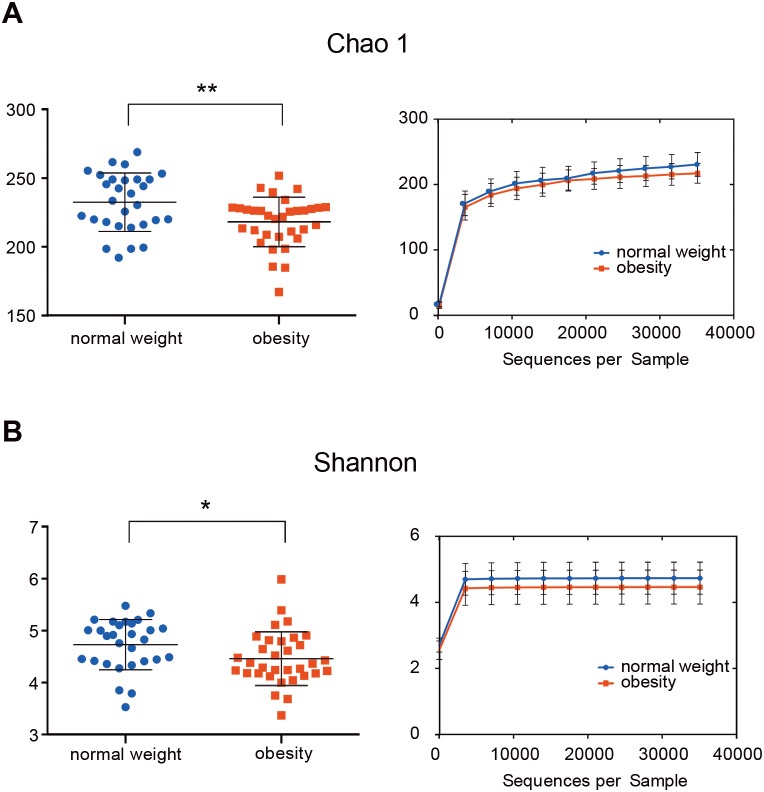
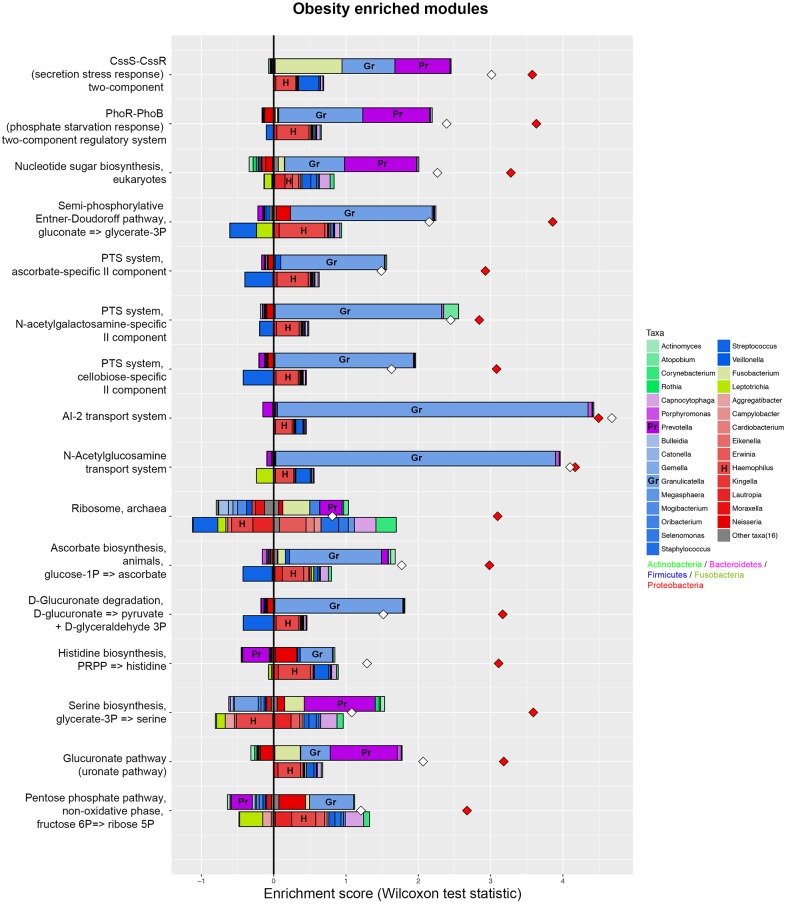
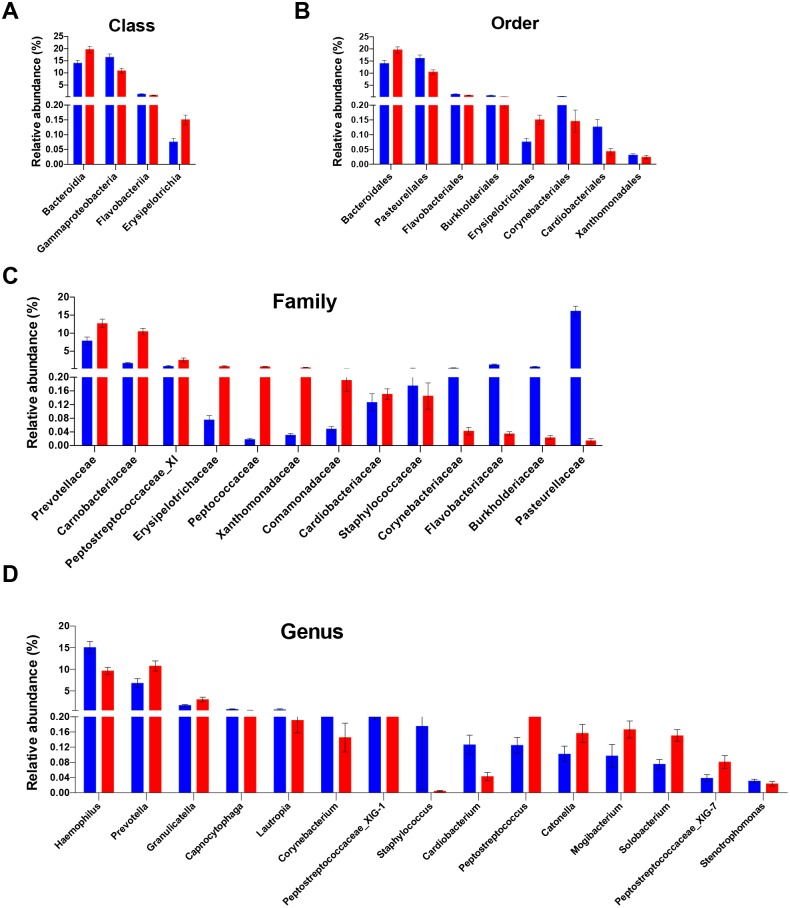
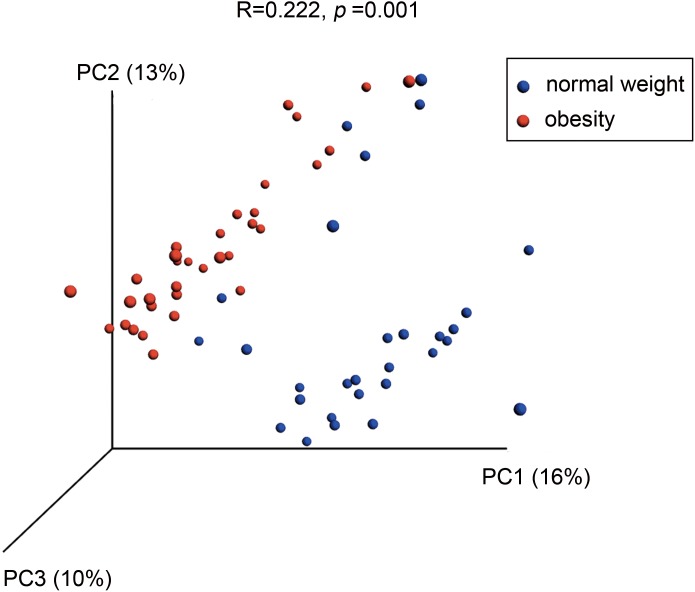
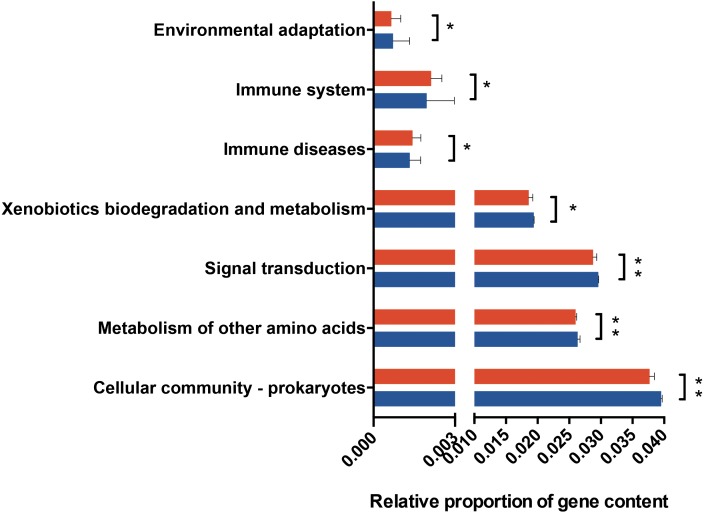
The salivary microbiome of the obesity group was distinct from that of the normal weight group. The salivary microbiome of periodontally healthy people with obesity had both significantly lower bacterial diversity and richness compared with the controls. The genus , , and were significantly more abundant in the obesity group; meanwhile the genus , and were less abundant in the obesity group. We also performed a functional analysis of the inferred metagenomes, and showed that the salivary community associated with obesity had a stronger signature of immune disease and a decreased functional signature related to environmental adaptation and Xenobiotics biodegradation compared with the normal weight controls.
Our study demonstrates that the microbial diversity and structure of the salivary microbiome in people with obesity are significantly different from those of normal weight controls. These results suggested that changes in the structure and function of salivary microbiome in people with obesity might reflect their susceptibility to oral diseases.
肠道微生物群与肥胖之间的相互作用已得到广泛研究。尽管口腔是通向肠道的门户,且被微生物大量定植,但对于肥胖人群的口腔微生物群却知之甚少。在本研究中,我们使用宏基因组分析研究了肥胖和正常体重健康参与者的唾液微生物群。根据体重指数将受试者分为肥胖和正常体重两组。
我们使用16S rRNA基因V3-V4区域的高通量测序(Illumina MiSeq)对33名肥胖成年人和29名正常体重对照者的唾液微生物群进行了表征。所有选定的参与者均无全身性、口腔黏膜或牙周疾病。
肥胖组的唾液微生物群与正常体重组不同。与对照组相比,牙周健康的肥胖人群的唾液微生物群的细菌多样性和丰富度均显著降低。肥胖组中 属、 属和 属的含量显著更高;同时,肥胖组中 属、 属和 属的含量较低。我们还对推断的宏基因组进行了功能分析,结果表明,与正常体重对照组相比,与肥胖相关的唾液群落具有更强的免疫疾病特征,以及与环境适应和外源性生物降解相关的功能特征降低。
我们的研究表明,肥胖人群唾液微生物群的微生物多样性和结构与正常体重对照组显著不同。这些结果表明,肥胖人群唾液微生物群的结构和功能变化可能反映了他们对口腔疾病的易感性。