Elshaer Sally L, Lemtalsi Tahira, El-Remessy Azza B
Retinopathy Research, Augusta Biomedical Research Corporation Charlie Norwood VA Medical Center, Augusta, GA 30912, USA.
Antioxidants (Basel). 2018 Mar 25;7(4):47. doi: 10.3390/antiox7040047.
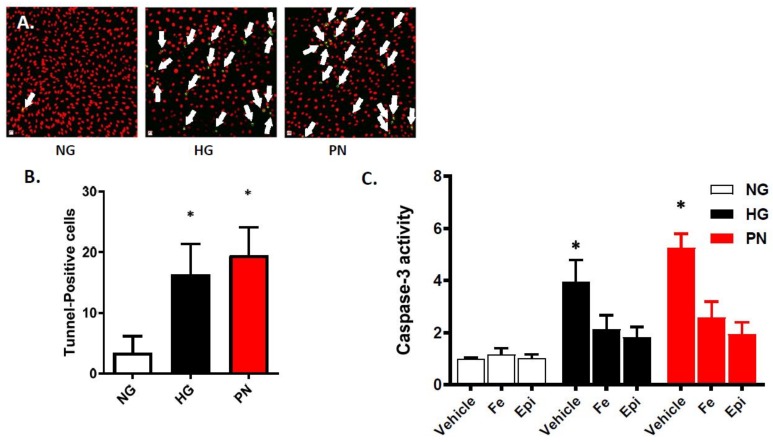
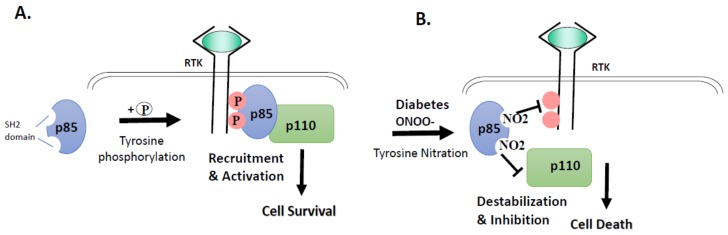
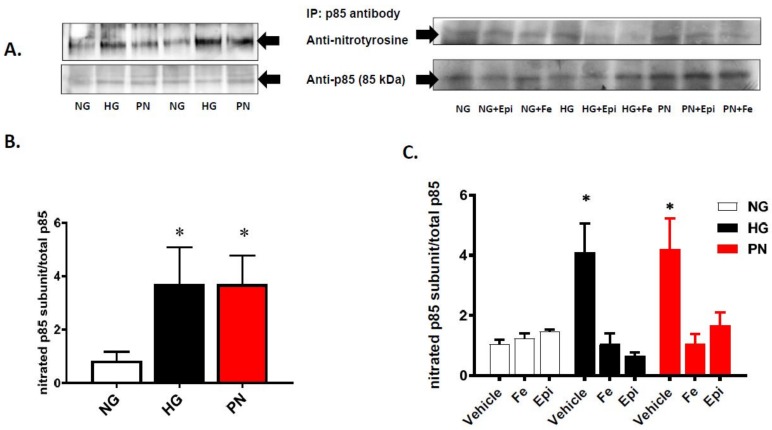
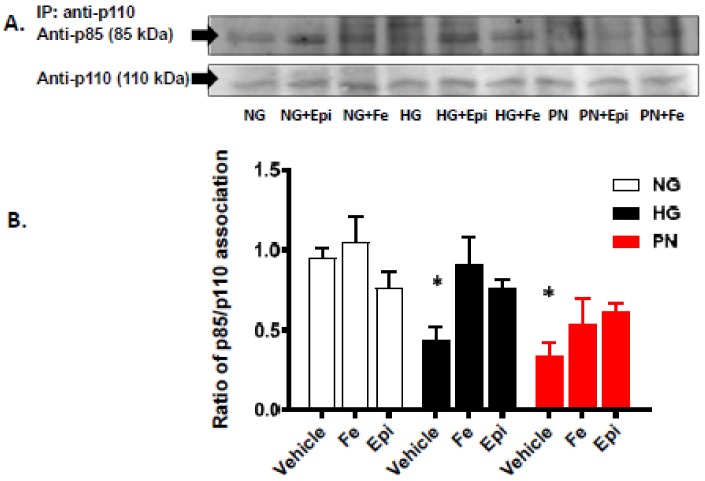
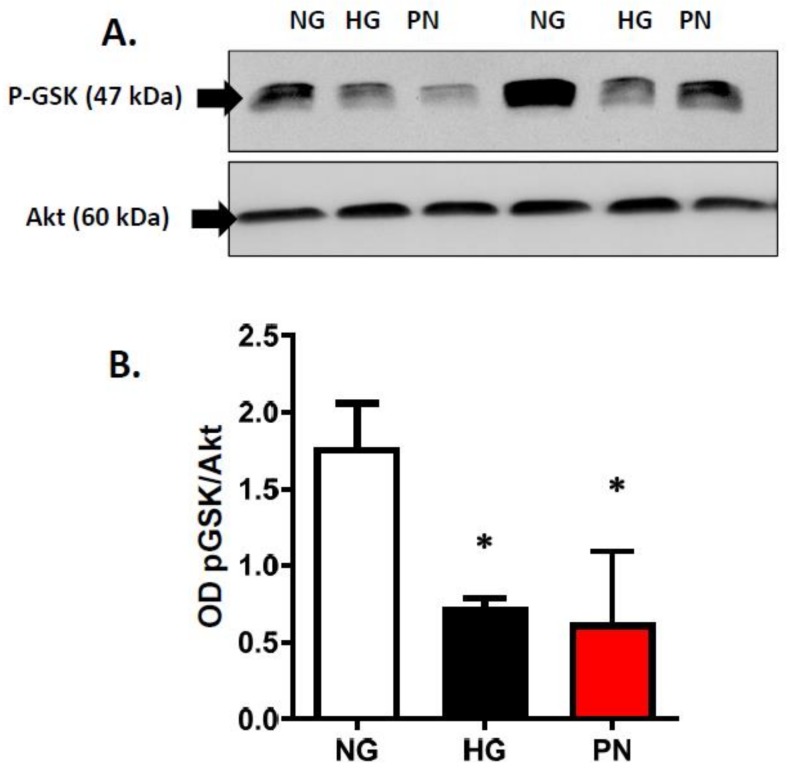
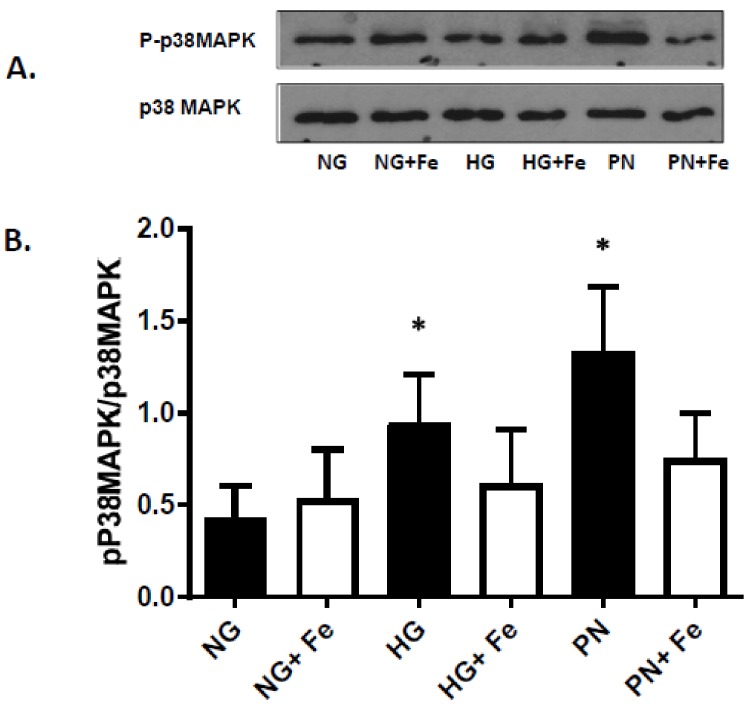
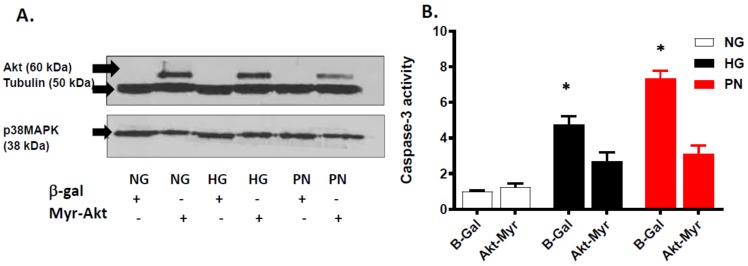
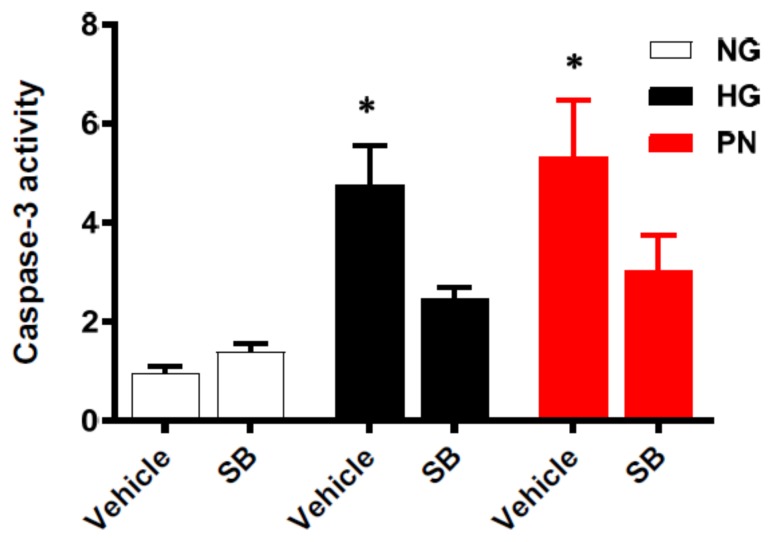
Diabetes and hyperglycemia are associated with increased retinal oxidative and nitrative stress and vascular cell death. Paradoxically, high glucose stimulates expression of survival and angiogenic growth factors. Therefore, we examined the hypothesis that high glucose-mediated tyrosine nitration causes inhibition of the survival protein PI3-kinase, and in particular, its regulatory p85 subunit in retinal endothelial cell (EC) cultures. Retinal EC were cultured in high glucose (HG, 25 mM) for 3 days or peroxynitrite (PN, 100 µM) overnight in the presence or absence of a peroxynitrite decomposition catalyst (FeTPPs, 2.5 µM), or the selective nitration inhibitor epicatechin (100 µM). Apoptosis of ECs was assessed using TUNEL assay and caspase-3 activity. Immunoprecipitation and Western blot were used to assess protein expression and tyrosine nitration of p85 subunit and its interaction with the p110 subunit. HG or PN accelerated apoptosis of retinal ECs compared to normal glucose (NG, 5 mM) controls. HG- or PN-treated cells also showed significant increases in tyrosine nitration on the p85 subunit of PI3-kinase that inhibited its association with the catalytic p110 subunit and impaired PI3-kinase/Akt kinase activity. Decomposing peroxynitrite or blocking tyrosine nitration of p85 restored the activity of PI3-kinase, and prevented apoptosis and activation of p38 MAPK. Inhibiting p38 MAPK or overexpression of the constitutively activated Myr-Akt construct prevented HG- or peroxynitrite-mediated apoptosis. In conclusion, HG impairs pro-survival signals and causes accelerated EC apoptosis, at least in part via tyrosine nitration and inhibition of PI3-kinase. Inhibitors of nitration can be used in adjuvant therapy to delay diabetic retinopathy and microvascular complication.
糖尿病和高血糖与视网膜氧化应激和硝化应激增加以及血管细胞死亡有关。矛盾的是,高糖会刺激生存和血管生成生长因子的表达。因此,我们检验了这样一个假设,即高糖介导的酪氨酸硝化会导致视网膜内皮细胞(EC)培养物中生存蛋白PI3激酶,尤其是其调节性p85亚基受到抑制。视网膜EC在高糖(HG,25 mM)中培养3天,或在存在或不存在过氧亚硝酸盐分解催化剂(FeTPPs,2.5 µM)或选择性硝化抑制剂表儿茶素(100 µM)的情况下,用过夜的过氧亚硝酸盐(PN,100 µM)处理。使用TUNEL检测法和半胱天冬酶-3活性评估EC的凋亡情况。采用免疫沉淀和蛋白质印迹法评估p85亚基的蛋白质表达、酪氨酸硝化及其与p110亚基的相互作用。与正常葡萄糖(NG,5 mM)对照相比,HG或PN加速了视网膜EC的凋亡。HG或PN处理的细胞还显示PI3激酶p85亚基上的酪氨酸硝化显著增加,这抑制了其与催化性p110亚基的结合,并损害了PI3激酶/Akt激酶活性。分解过氧亚硝酸盐或阻断p85的酪氨酸硝化可恢复PI3激酶的活性,并防止凋亡和p38丝裂原活化蛋白激酶(MAPK)的激活。抑制p38 MAPK或组成型活化的Myr-Akt构建体的过表达可防止HG或过氧亚硝酸盐介导的凋亡。总之,HG损害了促生存信号,导致EC凋亡加速,至少部分是通过酪氨酸硝化和PI3激酶抑制实现的。硝化抑制剂可用于辅助治疗,以延缓糖尿病性视网膜病变和微血管并发症。