Dong Min, Kathiresan Venkatesan, Fenwick Michael K, Torelli Andrew T, Zhang Yang, Caranto Jonathan D, Dzikovski Boris, Sharma Ajay, Lancaster Kyle M, Freed Jack H, Ealick Steven E, Hoffman Brian M, Lin Hening
Department of Chemistry and Chemical Biology, Cornell University, Ithaca, NY 14853, USA.
Department of Chemistry, Northwestern University, Evanston, IL 60208, USA.
Science. 2018 Mar 16;359(6381):1247-1250. doi: 10.1126/science.aao6595.
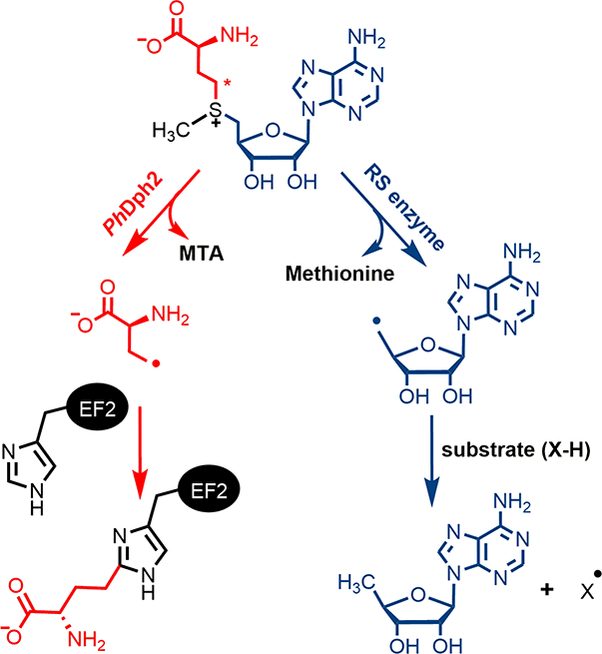
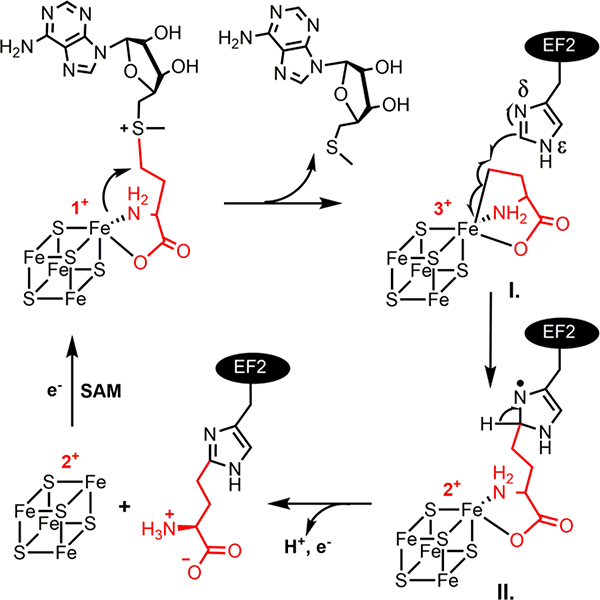
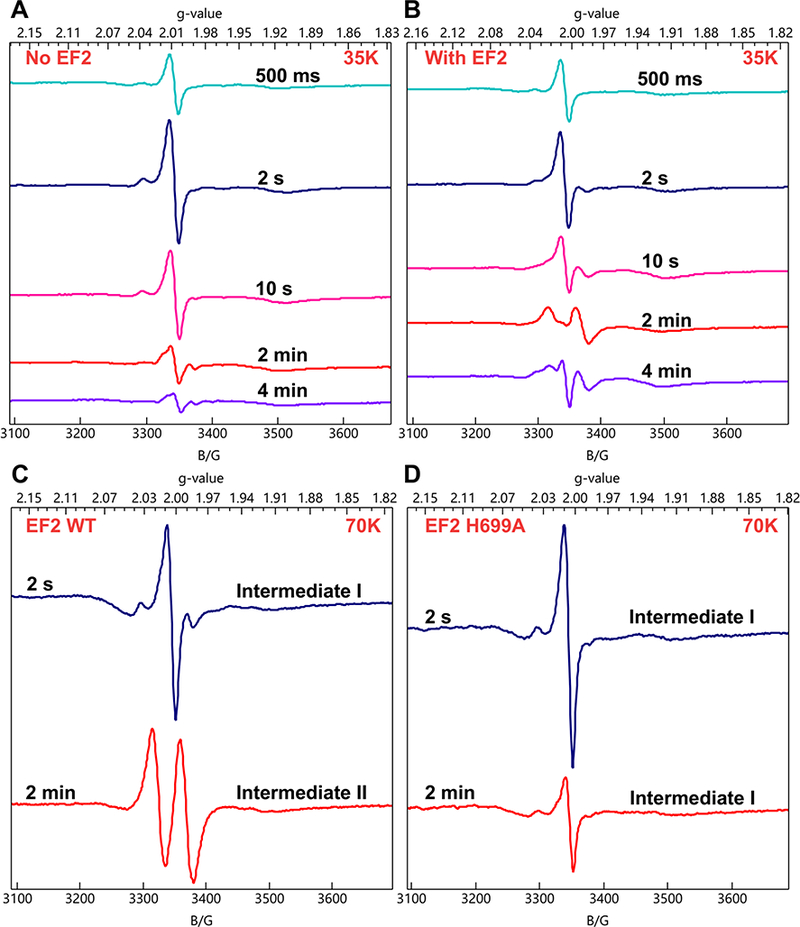
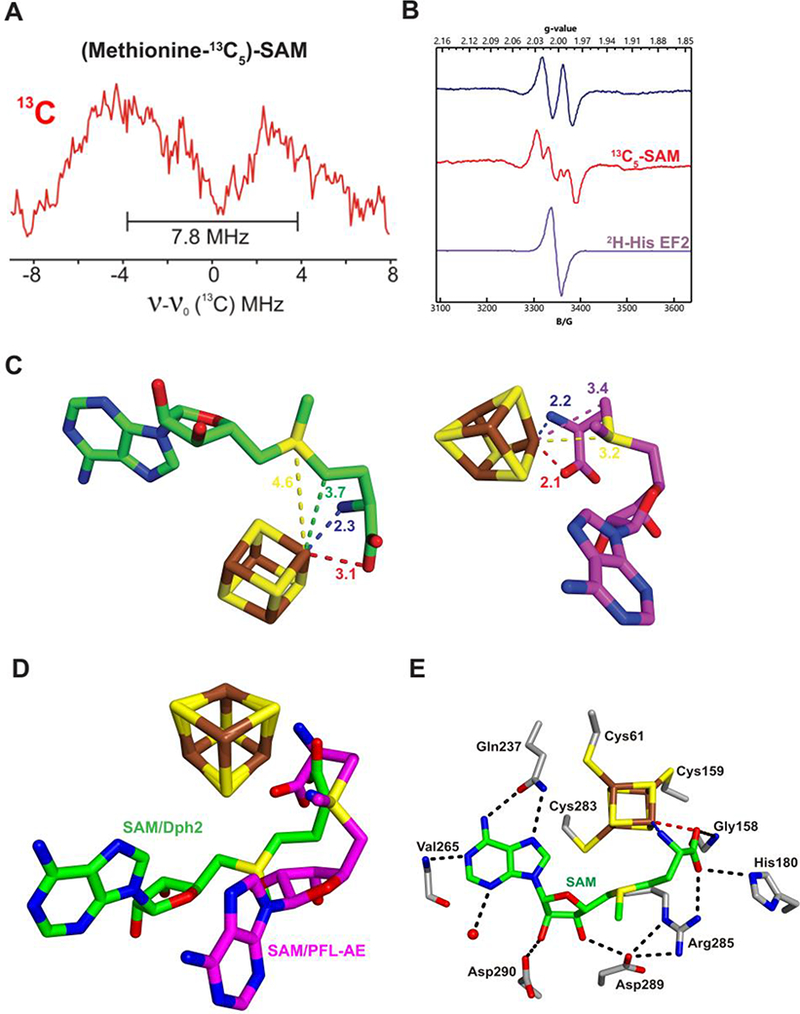
Diphthamide biosynthesis involves a carbon-carbon bond-forming reaction catalyzed by a radical S-adenosylmethionine (SAM) enzyme that cleaves a carbon-sulfur (C-S) bond in SAM to generate a 3-amino-3-carboxypropyl (ACP) radical. Using rapid freezing, we have captured an organometallic intermediate with an iron-carbon (Fe-C) bond between ACP and the enzyme's [4Fe-4S] cluster. In the presence of the substrate protein, elongation factor 2, this intermediate converts to an organic radical, formed by addition of the ACP radical to a histidine side chain. Crystal structures of archaeal diphthamide biosynthetic radical SAM enzymes reveal that the carbon of the SAM C-S bond being cleaved is positioned near the unique cluster Fe, able to react with the cluster. Our results explain how selective C-S bond cleavage is achieved in this radical SAM enzyme.
白喉酰胺生物合成涉及一种由自由基S-腺苷甲硫氨酸(SAM)酶催化的碳-碳键形成反应,该酶裂解SAM中的碳-硫(C-S)键以生成3-氨基-3-羧丙基(ACP)自由基。通过快速冷冻,我们捕获了一种有机金属中间体,其在ACP与酶的[4Fe-4S]簇之间形成了铁-碳(Fe-C)键。在底物蛋白延伸因子2存在的情况下,该中间体转化为由ACP自由基加成到组氨酸侧链形成的有机自由基。古细菌白喉酰胺生物合成自由基SAM酶的晶体结构表明,被裂解的SAM C-S键的碳位于独特的簇铁附近,能够与该簇发生反应。我们的结果解释了在这种自由基SAM酶中如何实现选择性C-S键裂解。