Department of Bioinformatics, University of Würzburg, Würzburg, Germany.
Institute of Clinical Neurobiology, University Hospital Würzburg, Würzburg, Germany.
PLoS Comput Biol. 2018 Mar 30;14(3):e1006054. doi: 10.1371/journal.pcbi.1006054. eCollection 2018 Mar.
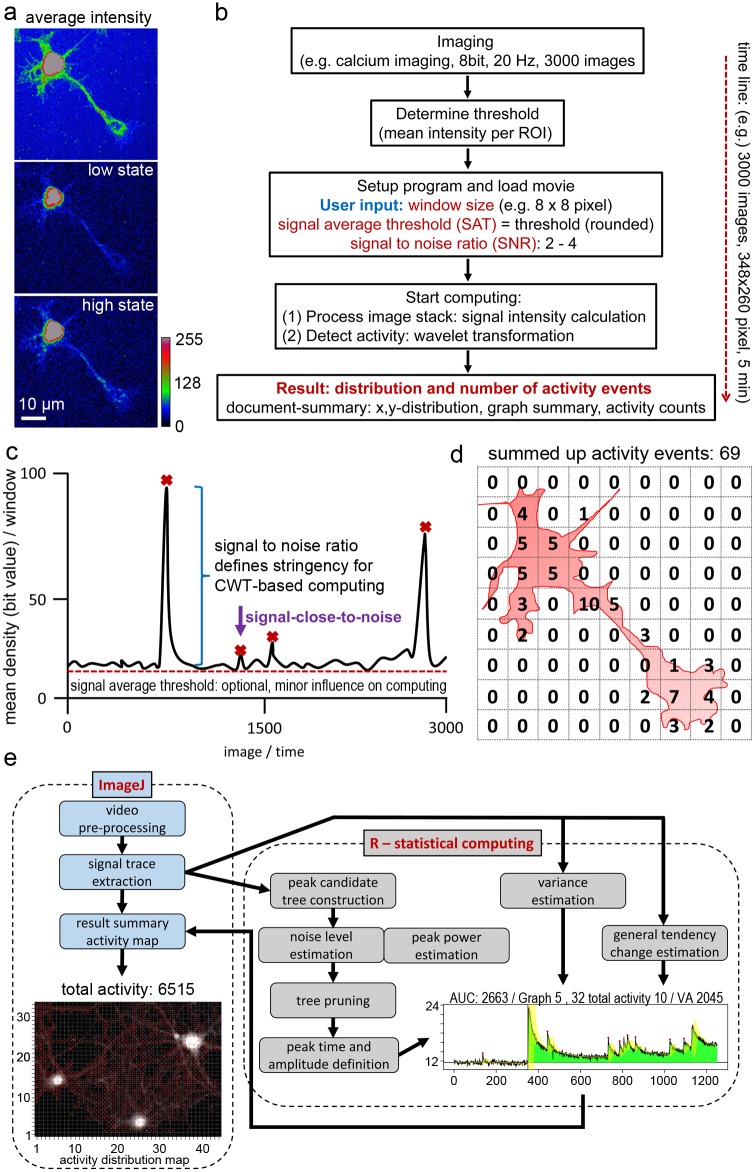
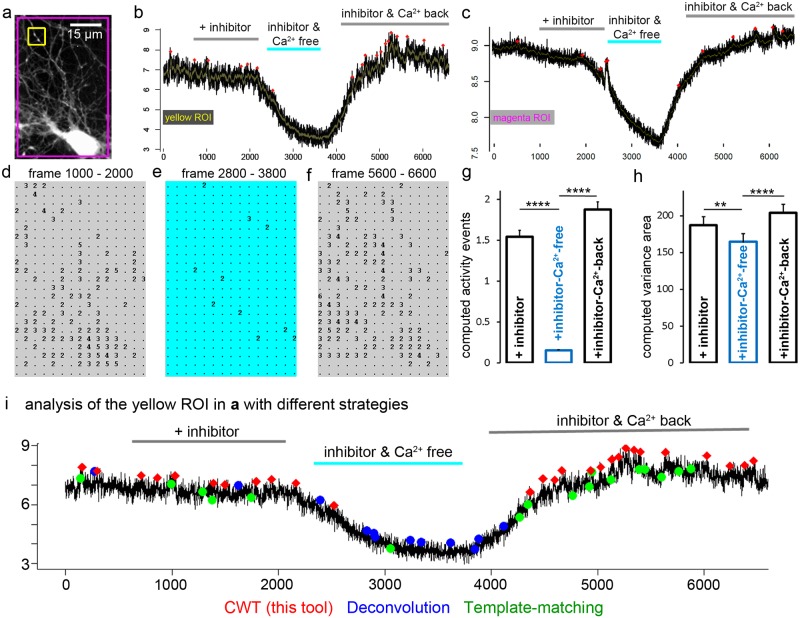
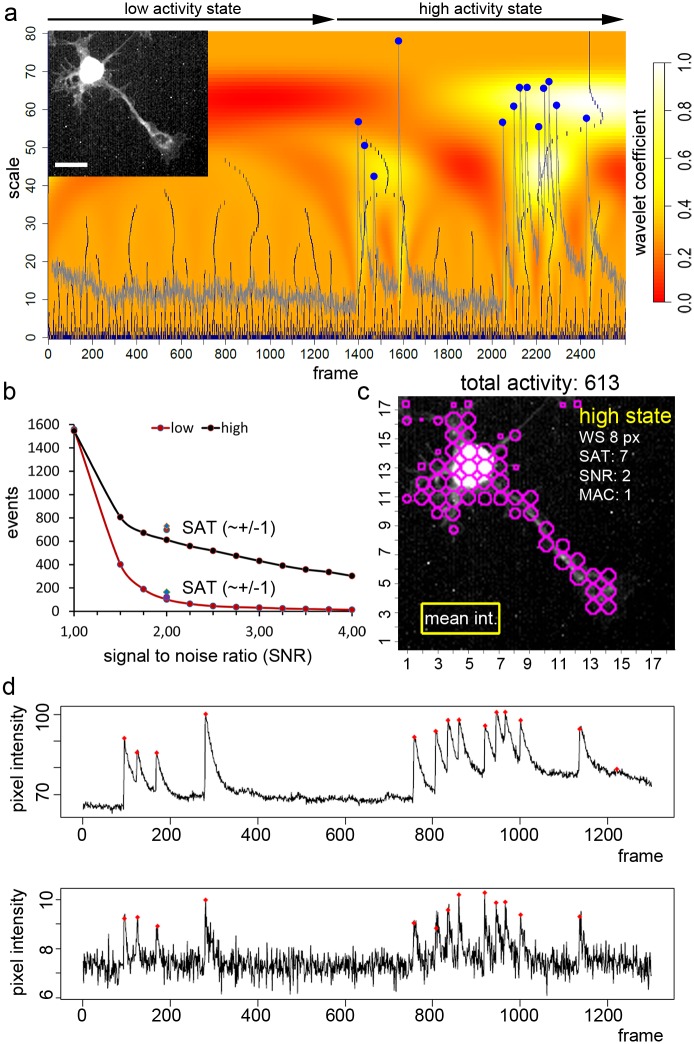
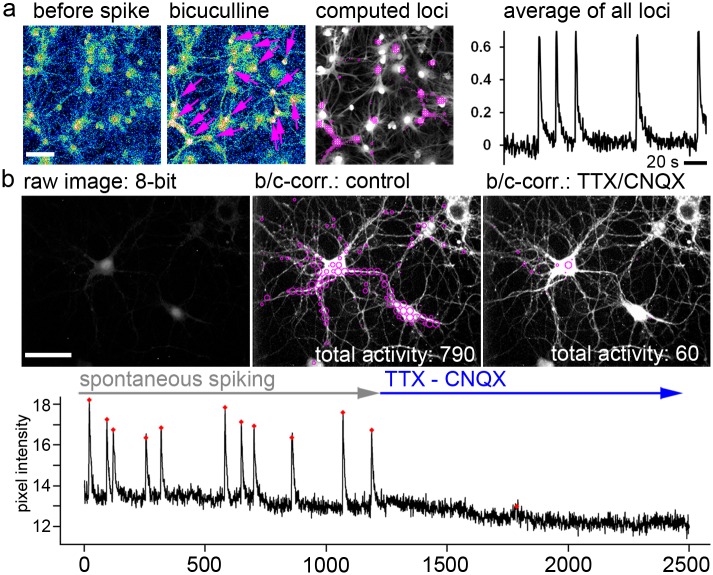
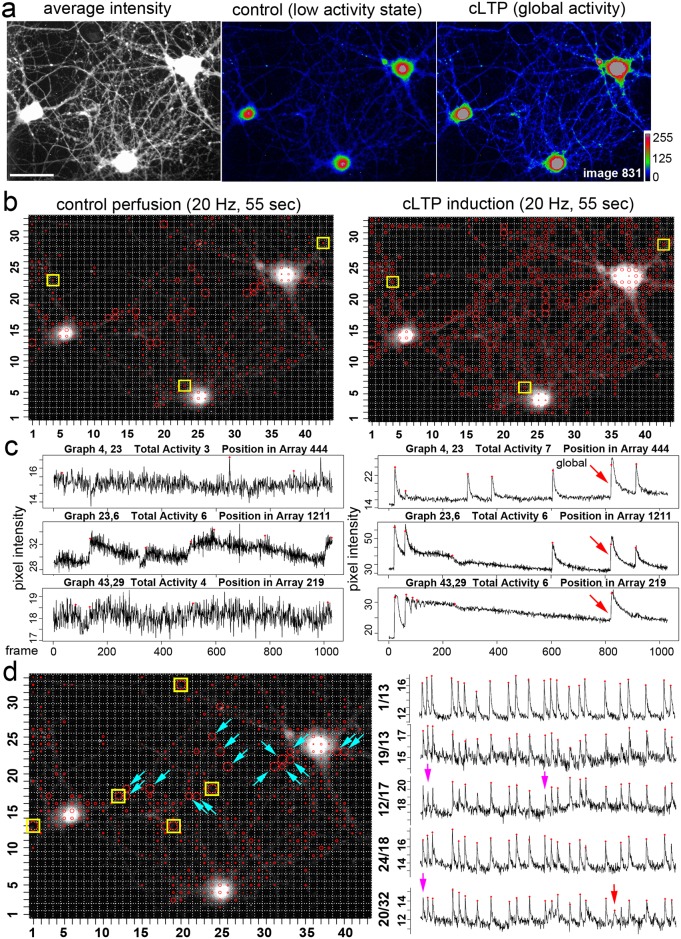
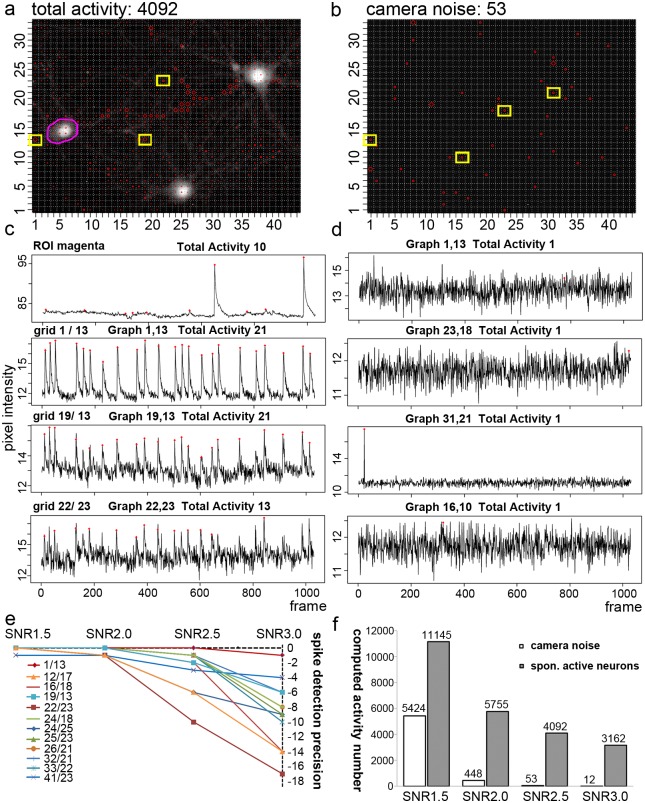
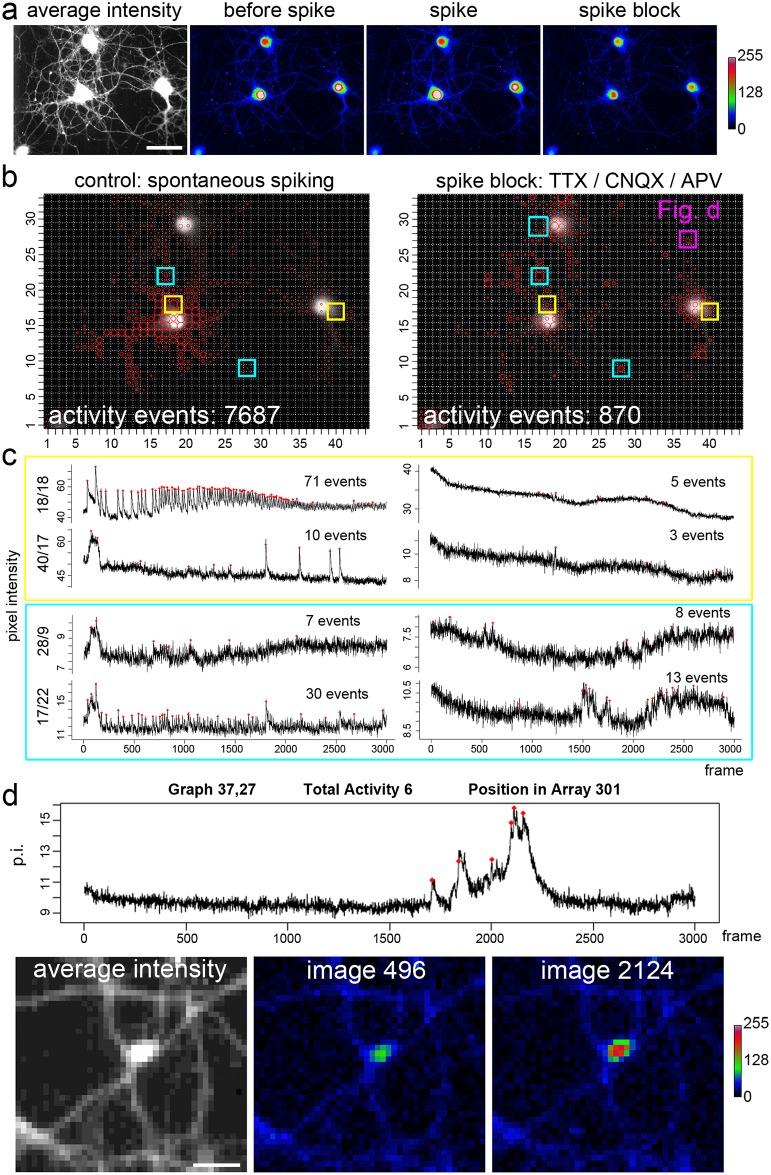
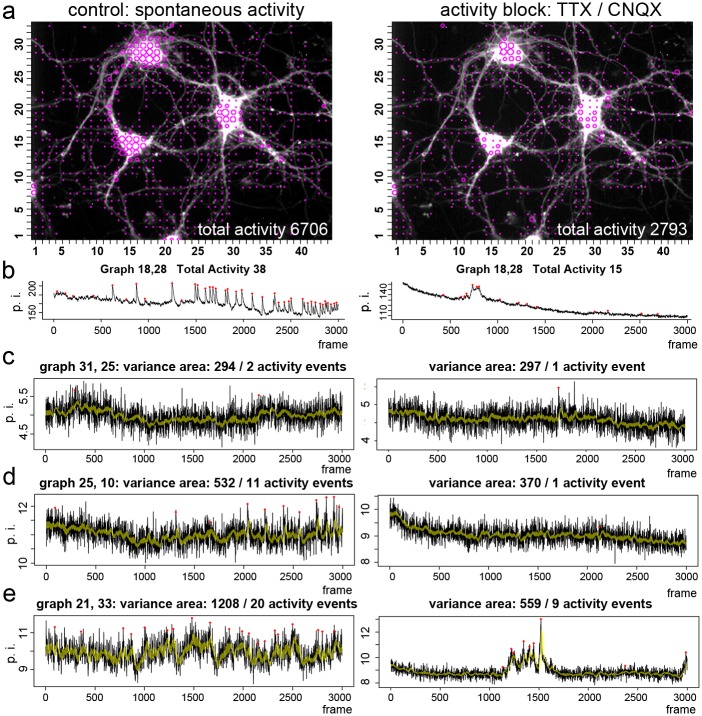
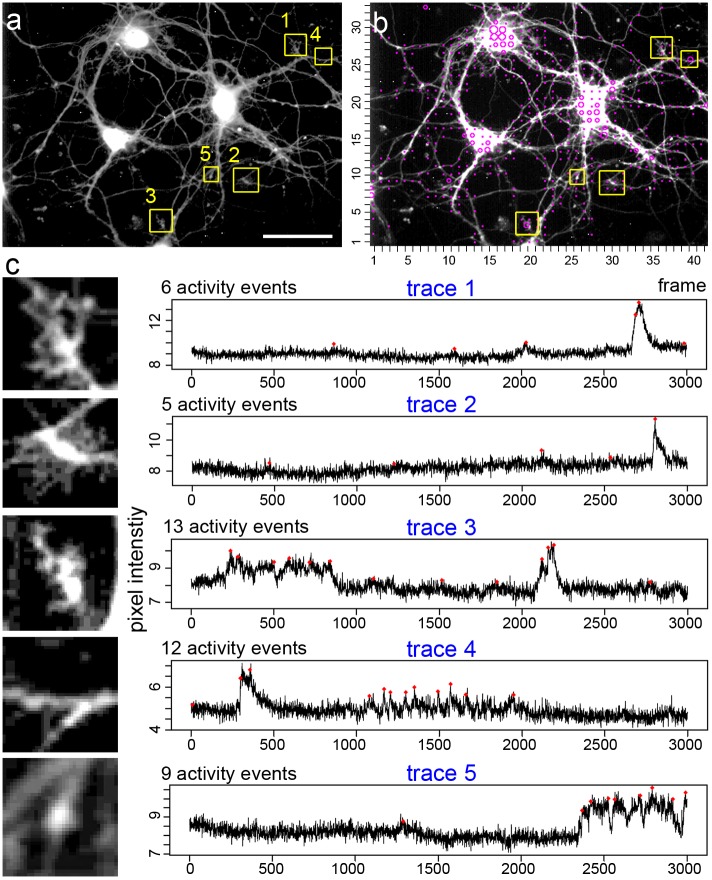
Local and spontaneous calcium signals play important roles in neurons and neuronal networks. Spontaneous or cell-autonomous calcium signals may be difficult to assess because they appear in an unpredictable spatiotemporal pattern and in very small neuronal loci of axons or dendrites. We developed an open source bioinformatics tool for an unbiased assessment of calcium signals in x,y-t imaging series. The tool bases its algorithm on a continuous wavelet transform-guided peak detection to identify calcium signal candidates. The highly sensitive calcium event definition is based on identification of peaks in 1D data through analysis of a 2D wavelet transform surface. For spatial analysis, the tool uses a grid to separate the x,y-image field in independently analyzed grid windows. A document containing a graphical summary of the data is automatically created and displays the loci of activity for a wide range of signal intensities. Furthermore, the number of activity events is summed up to create an estimated total activity value, which can be used to compare different experimental situations, such as calcium activity before or after an experimental treatment. All traces and data of active loci become documented. The tool can also compute the signal variance in a sliding window to visualize activity-dependent signal fluctuations. We applied the calcium signal detector to monitor activity states of cultured mouse neurons. Our data show that both the total activity value and the variance area created by a sliding window can distinguish experimental manipulations of neuronal activity states. Notably, the tool is powerful enough to compute local calcium events and 'signal-close-to-noise' activity in small loci of distal neurites of neurons, which remain during pharmacological blockade of neuronal activity with inhibitors such as tetrodotoxin, to block action potential firing, or inhibitors of ionotropic glutamate receptors. The tool can also offer information about local homeostatic calcium activity events in neurites.
局部和自发的钙信号在神经元和神经元网络中发挥着重要作用。自发或细胞自主的钙信号可能难以评估,因为它们以不可预测的时空模式出现,并且出现在轴突或树突的非常小的神经元位置。我们开发了一种用于 x,y-t 成像系列中钙信号无偏评估的开源生物信息学工具。该工具的算法基于连续小波变换引导的峰值检测,以识别钙信号候选者。高度敏感的钙事件定义基于通过分析二维小波变换表面来识别 1D 数据中的峰值。对于空间分析,该工具使用网格将 x,y-图像场分离为独立分析的网格窗口。自动创建包含数据图形摘要的文档,并显示广泛信号强度的活动位置。此外,活动事件的数量被汇总以创建估计的总活动值,该值可用于比较不同的实验情况,例如实验处理前后的钙活性。所有轨迹和活动位置的数据都被记录下来。该工具还可以计算滑动窗口中的信号方差,以可视化活动相关的信号波动。我们应用钙信号检测器来监测培养的小鼠神经元的活动状态。我们的数据表明,总活动值和滑动窗口创建的方差区域都可以区分神经元活动状态的实验操作。值得注意的是,该工具足够强大,可以计算局部钙事件和“信号接近噪声”活动在神经元远端神经突的小位置,这些位置在神经元活动用抑制剂(如河豚毒素)阻断时仍然存在,以阻断动作电位发射,或抑制离子型谷氨酸受体。该工具还可以提供关于神经突局部动态钙活动事件的信息。