Park Bok Won, Ha Ji Min, Cho Eun Byul, Jin Jae Kwang, Park Eun Joo, Park Hye Rim, Kang Hee Jung, Ko Sung Hoon, Kim Kwang Ho, Kim Kwang Joong
Department of Dermatology, Hallym University Sacred Heart Hospital, Anyang, Korea.
Ilsong Institute of Life Science, Hallym University, Anyang, Korea.
Ann Dermatol. 2018 Apr;30(2):136-142. doi: 10.5021/ad.2018.30.2.136. Epub 2018 Feb 21.
Rosacea is a chronic inflammatory disease characterized by centrofacial erythema. Excess cathelicidin is suggested to be important to the pathophysiology of the disease. Recently, presence of a vitamin D response element was revealed in the cathelicidin gene promoter.
The aim of this study was to determine whether vitamin D and cathelicidin are associated with rosacea, both serologically and histopathologically.
Subjects with rosacea and without chronic skin disorders were enrolled in the patient and control groups, respectively. Serum 25-hydroxy-vitamin D and cathelicidin levels were measured. Tissue expression of cathelicidin and vitamin D receptor were measured with immunostaining-intensity-distribution index.
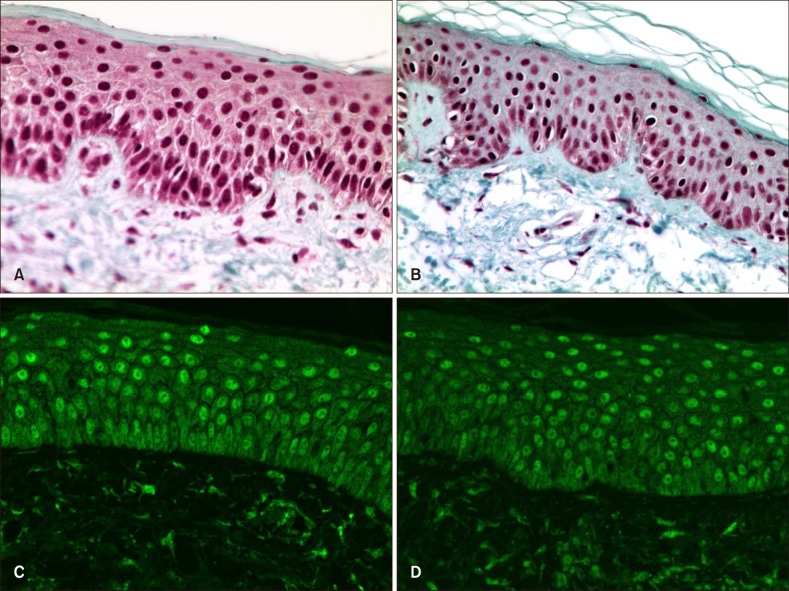
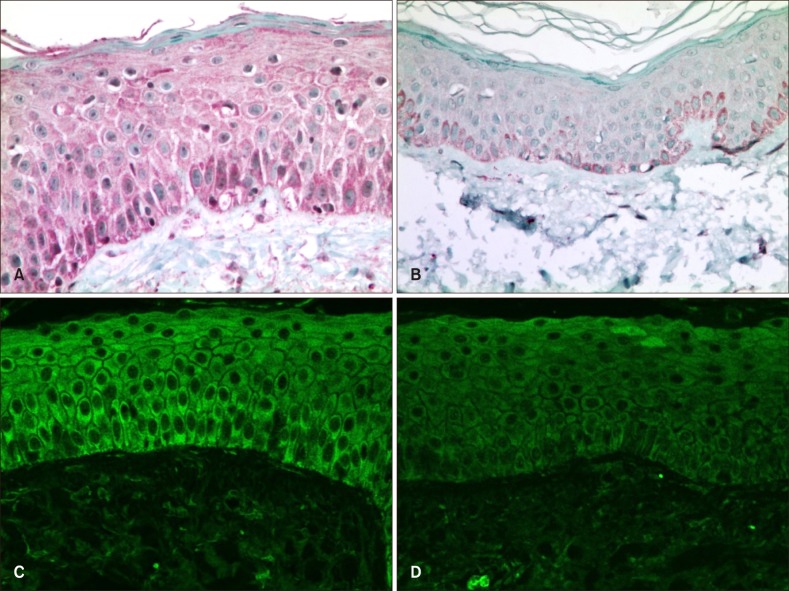
The mean serum 25-hydroxyvitamin D level of patients with rosacea was 12.18±5.65 ng/ml, which is lower than that of the controls (17.41±6.75 ng/ml). Mean serum cathelicidin levels in patients with rosacea and the controls were 85.0±26.1 ng/ml and 55.0±23.3 ng/ml, respectively. Cathelicidin expression in rosacea tissue was significantly higher than that in control tissue (5.21 vs. 4.03). No significant difference was observed in vitamin D receptor expression.
Higher cathelicidin expression in rosacea supports the hypothesis that an abnormal inflammatory response of the innate immune system is important in pathogenesis of rosacea, but the role of high cathelicidin serum levels is complicated. Serum vitamin D was lower in patients with rosacea, although serum cathelicidin was higher than that of the controls. This suggests that the role of vitamin D level in the pathogenesis of rosacea merits further investigation.
酒渣鼻是一种以面部中央红斑为特征的慢性炎症性疾病。过量的抗菌肽被认为对该疾病的病理生理学很重要。最近,在抗菌肽基因启动子中发现了维生素D反应元件。
本研究的目的是从血清学和组织病理学方面确定维生素D和抗菌肽是否与酒渣鼻有关。
酒渣鼻患者和无慢性皮肤疾病的受试者分别纳入患者组和对照组。测量血清25-羟基维生素D和抗菌肽水平。用免疫染色强度分布指数测量抗菌肽和维生素D受体的组织表达。
酒渣鼻患者的平均血清25-羟基维生素D水平为12.18±5.65 ng/ml,低于对照组(17.41±6.75 ng/ml)。酒渣鼻患者和对照组的平均血清抗菌肽水平分别为85.0±26.1 ng/ml和55.0±23.3 ng/ml。酒渣鼻组织中抗菌肽的表达明显高于对照组织(5.21对4.03)。维生素D受体表达未观察到显著差异。
酒渣鼻中较高的抗菌肽表达支持了先天性免疫系统异常炎症反应在酒渣鼻发病机制中很重要的假说,但血清抗菌肽水平升高的作用较为复杂。酒渣鼻患者的血清维生素D较低,尽管血清抗菌肽高于对照组。这表明维生素D水平在酒渣鼻发病机制中的作用值得进一步研究。