Dai Zhao, Chu Haichen, Ma Jiahai, Yan Ying, Zhang Xueying, Liang Yongxin
Department of Anesthesiology, The Affiliated Hospital of Qingdao University, Qingdao, China.
Department of Anesthesiology, The Affiliated Yantai Yuhuangding Hospital, Qingdao University, Qingdao, China.
Front Mol Neurosci. 2018 Mar 16;11:80. doi: 10.3389/fnmol.2018.00080. eCollection 2018.
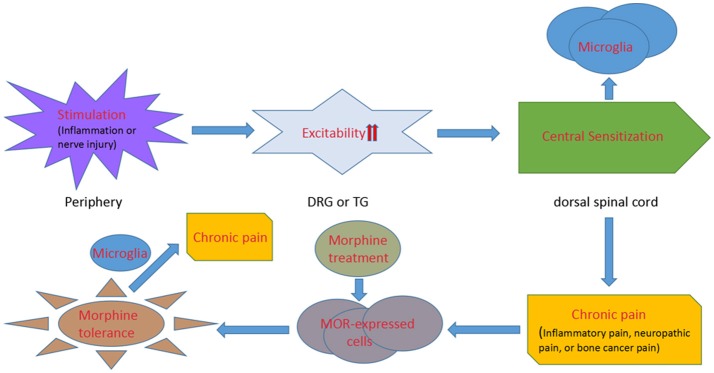
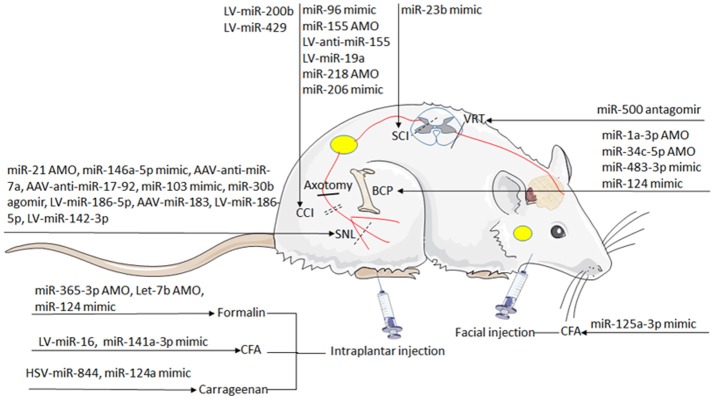
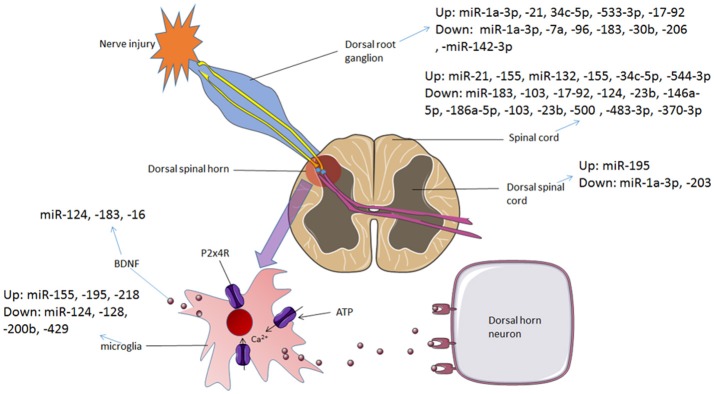
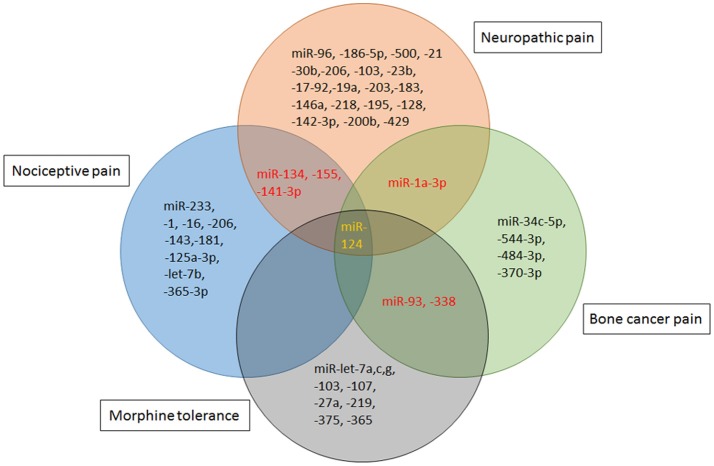
Chronic pain, including cancer-related pain, is a pain condition often caused by inflammation or dysfunctional nerves. Chronic pain treatment poses a significant health care challenge, where opioids especially morphine are widely used and patients often develop tolerance over time with aggravated pain. microRNA (miRNA) is known to play important roles in regulating gene expressions in the nervous system to affect neuronal network plasticity related to algogenesis and the developing of morphine tolerance. In this article, we reviewed studies conducted in rodent animal models investigating the mechanisms of miRNAs regulation in chronic pain with different phenotypes and morphine tolerance. In addition, the potential of targeting miRNAs for chronic pain and morphine tolerance treatment is also reviewed. Finally, we point out the directions of the future research in chronic pain and morphine tolerance.
慢性疼痛,包括癌症相关疼痛,是一种常由炎症或神经功能障碍引起的疼痛状况。慢性疼痛治疗带来了重大的医疗保健挑战,在此过程中阿片类药物尤其是吗啡被广泛使用,且随着时间推移患者常常会产生耐受性,疼痛加剧。已知微小RNA(miRNA)在调节神经系统中的基因表达以影响与疼痛发生及吗啡耐受性发展相关的神经网络可塑性方面发挥重要作用。在本文中,我们综述了在啮齿动物模型中进行的研究,这些研究调查了miRNA在具有不同表型的慢性疼痛和吗啡耐受性中的调节机制。此外,还综述了以miRNA为靶点治疗慢性疼痛和吗啡耐受性的潜力。最后,我们指出了慢性疼痛和吗啡耐受性未来研究的方向。