Zhang Shuangfei, Hu Zhong, Wang Hui
Biology Department, College of Science, Shantou University, Shantou, China.
Front Microbiol. 2018 Mar 23;9:520. doi: 10.3389/fmicb.2018.00520. eCollection 2018.
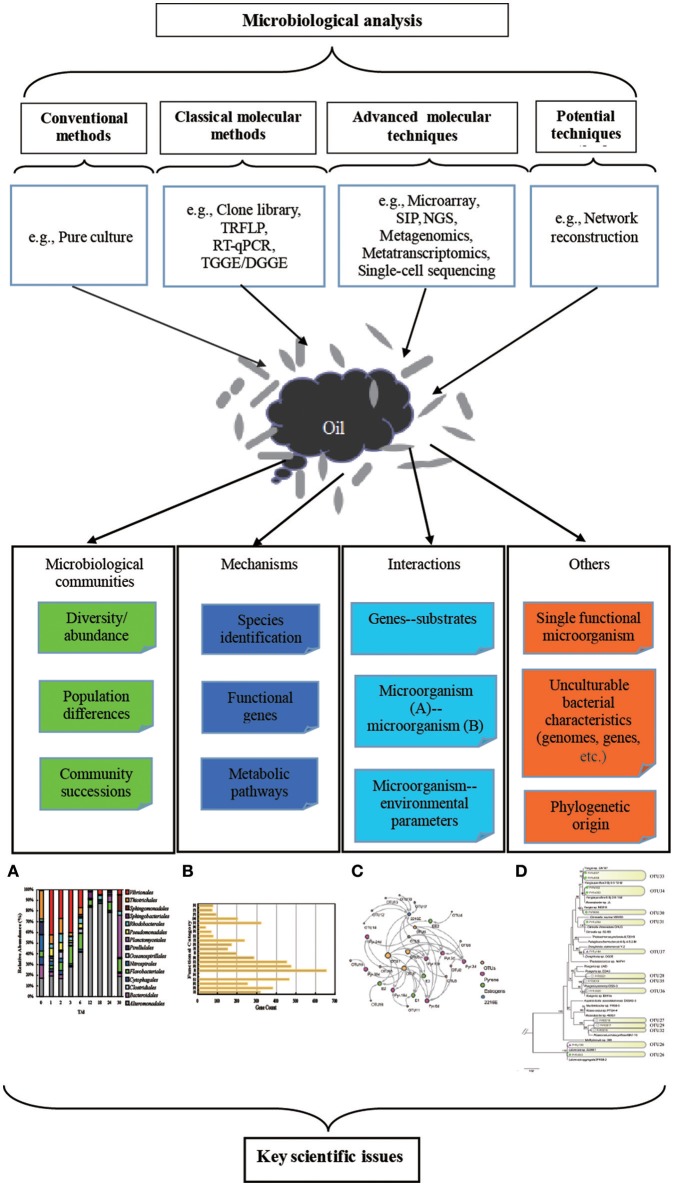
The Deepwater Horizon (DWH) oil spill in the Gulf of Mexico in 2010 resulted in serious damage to local marine and coastal environments. In addition to the physical removal and chemical dispersion of spilled oil, biodegradation by indigenous microorganisms was regarded as the most effective way for cleaning up residual oil. Different microbiological methods were applied to investigate the changes and responses of bacterial communities after the DWH oil spills. By summarizing and analyzing these microbiological methods, giving recommendations and proposing some methods that have not been used, this review aims to provide constructive guidelines for microbiological studies after environmental disasters, especially those involving organic pollutants.
2010年墨西哥湾的“深水地平线”(DWH)石油泄漏对当地海洋和沿海环境造成了严重破坏。除了对泄漏石油进行物理清除和化学分散外,本地微生物的生物降解被认为是清理残留石油的最有效方法。采用了不同的微生物学方法来研究DWH石油泄漏后细菌群落的变化和反应。通过总结和分析这些微生物学方法、提出建议并介绍一些尚未使用的方法,本综述旨在为环境灾难尤其是涉及有机污染物的灾难后的微生物学研究提供建设性指导方针。