Santegoeds Rene G C, Temel Yasin, Beckervordersandforth Jan C, Van Overbeeke Jacobus J, Hoeberigs Christianne M
1Department of Radiology, Maastricht University Medical Center, P. Debyelaan 25, 6229 HX Maastricht, The Netherlands.
2Department of Neurosurgery, Maastricht University Medical Center, Maastricht, The Netherlands.
Curr Radiol Rep. 2018;6(5):16. doi: 10.1007/s40134-018-0275-7. Epub 2018 Apr 3.
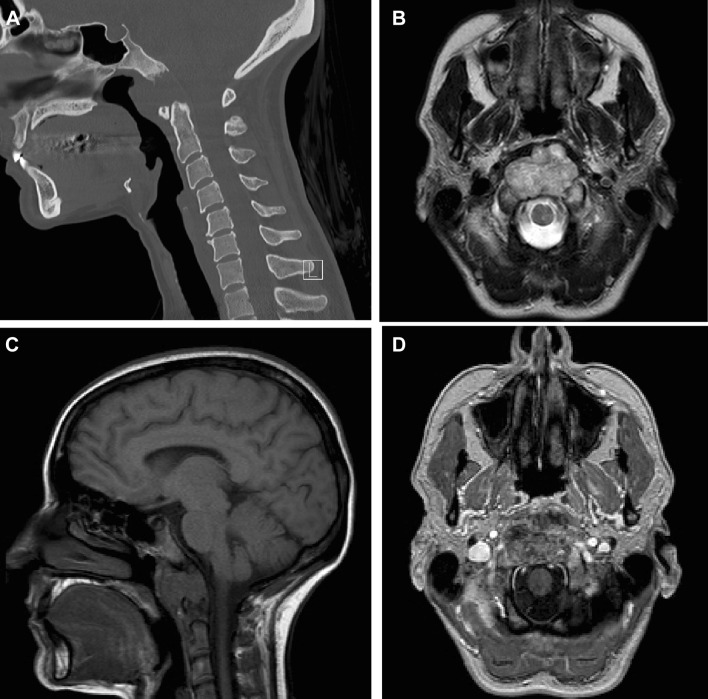
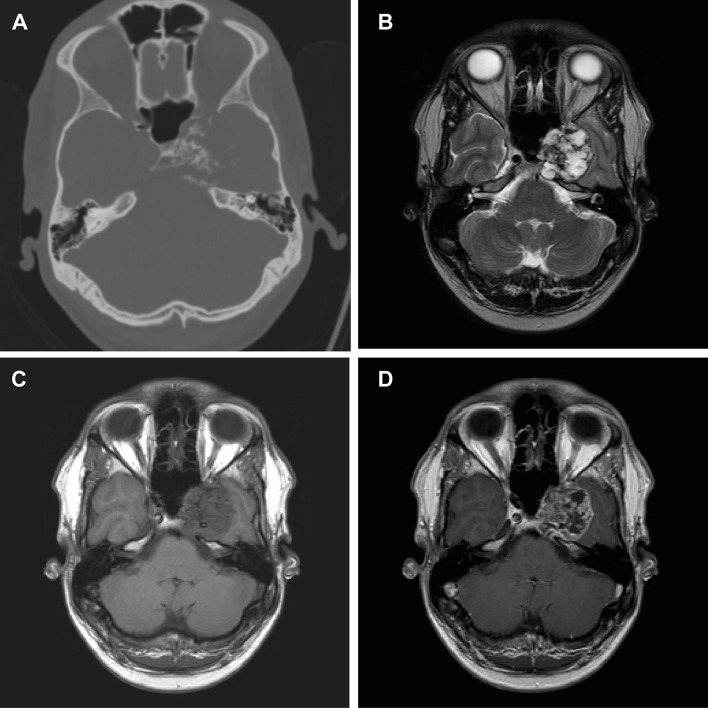
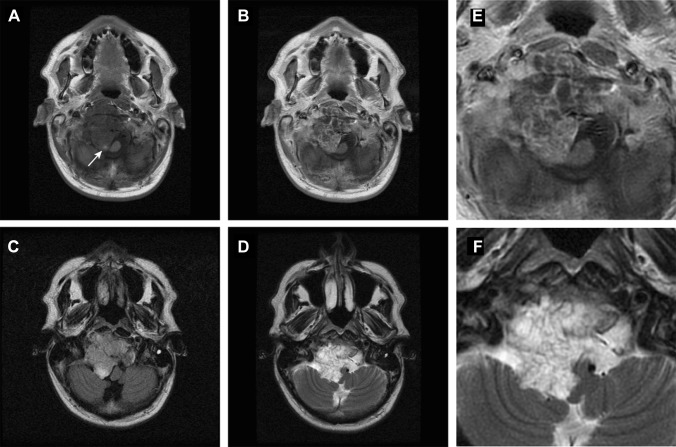
Chordoma are rare tumours of the axial skeleton which occur most often at the base of the skull and in the sacrum. Although chordoma are generally slow-growing lesions, the recurrence rate is high and the location makes it often difficult to treat. Both computed tomography (CT) and magnetic resonance imaging (MRI) are crucial in the initial diagnosis, treatment planning and post-treatment follow-up.
Basic MRI and CT characteristics of chordoma were described in the late 1980s and early 1990s. Since then, imaging techniques have evolved with increased resolution and new molecular imaging tools are rapidly evolving. New imaging tools have been developed not only to study anatomy, but also physiologic changes and characterization of tissue and assessment of tumour biology. Recent studies show the uptake of multiple PET tracers in chordoma, which may become an important aspect in the diagnosis, follow-up and personalized therapy.
This review gives an overview of skull base chordoma histopathology, classic imaging characteristics, radiomics and state-of-the-art imaging techniques that are now emerging in diagnosis, treatment planning and disease monitoring of skull base chordoma.
脊索瘤是一种罕见的中轴骨肿瘤,最常发生于颅底和骶骨。尽管脊索瘤通常生长缓慢,但复发率高,且因其位置特殊,治疗往往困难。计算机断层扫描(CT)和磁共振成像(MRI)在初始诊断、治疗规划及治疗后随访中都至关重要。
脊索瘤的基本MRI和CT特征在20世纪80年代末和90年代初已有描述。从那时起,成像技术不断发展,分辨率提高,新的分子成像工具也在迅速发展。新的成像工具不仅用于研究解剖结构,还用于研究生理变化、组织特征及肿瘤生物学评估。近期研究显示多种PET示踪剂在脊索瘤中有摄取,这可能成为诊断、随访及个性化治疗的一个重要方面。
本综述概述了颅底脊索瘤的组织病理学、经典成像特征、放射组学以及目前在颅底脊索瘤诊断、治疗规划和疾病监测中出现的先进成像技术。