Université Savoie Mont Blanc, Laboratoire Interuniversitaire de Biologie de la Motricité, EA, Chambéry, France.
Département Scientifique et Sportif, Fédération Française de Ski, Annecy, France.
PLoS One. 2018 Apr 11;13(4):e0195477. doi: 10.1371/journal.pone.0195477. eCollection 2018.
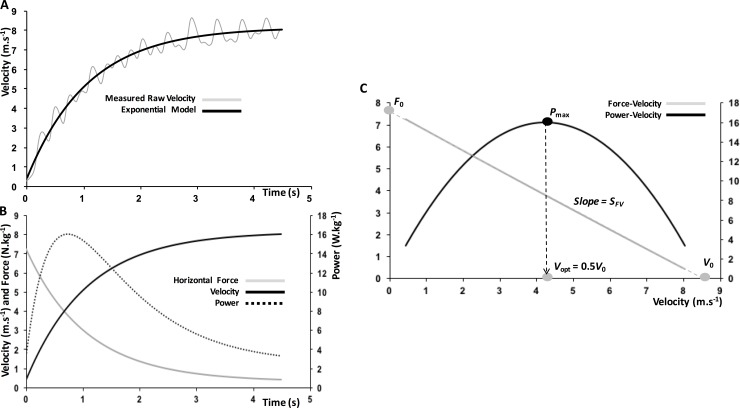
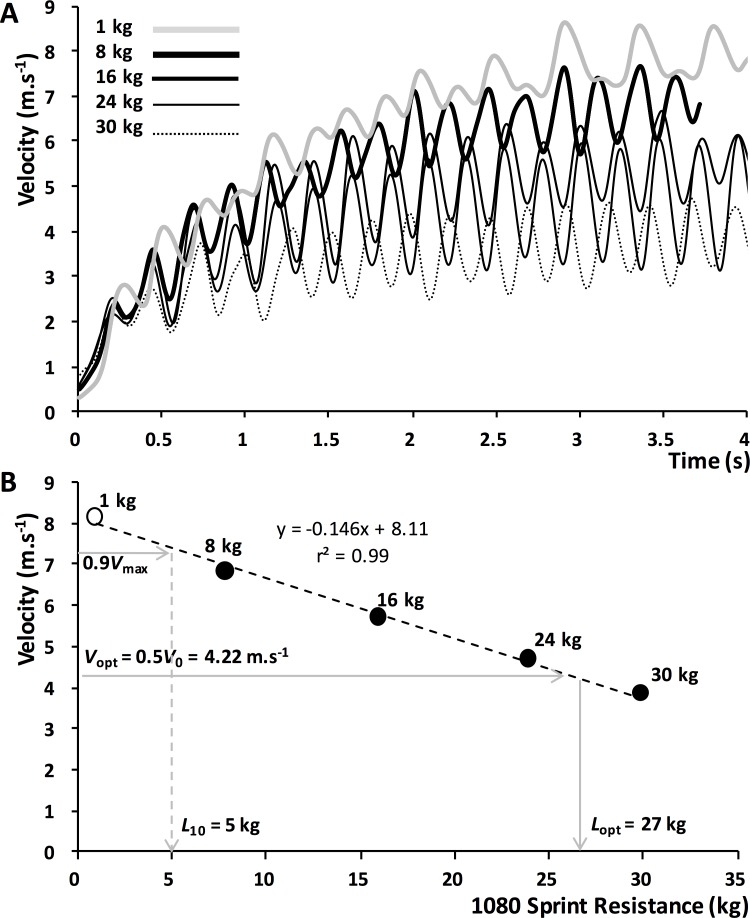
In the current study we investigated the effects of resisted sprint training on sprinting performance and underlying mechanical parameters (force-velocity-power profile) based on two different training protocols: (i) loads that represented maximum power output (Lopt) and a 50% decrease in maximum unresisted sprinting velocity and (ii) lighter loads that represented a 10% decrease in maximum unresisted sprinting velocity, as drawn from previous research (L10).
Soccer [n = 15 male] and rugby [n = 21; 9 male and 12 female] club-level athletes were individually assessed for horizontal force-velocity and load-velocity profiles using a battery of resisted sprints, sled or robotic resistance respectively. Athletes then performed a 12-session resisted (10 × 20-m; and pre- post-profiling) sprint training intervention following the L10 or Lopt protocol.
Both L10 and Lopt training protocols had minor effects on sprinting performance (average of -1.4 to -2.3% split-times respectively), and provided trivial, small and unclear changes in mechanical sprinting parameters. Unexpectedly, Lopt impacted velocity dominant variables to a greater degree than L10 (trivial benefit in maximum velocity; small increase in slope of the force-velocity relationship), while L10 improved force and power dominant metrics (trivial benefit in maximal power; small benefit in maximal effectiveness of ground force orientation).
Both resisted-sprint training protocols were likely to improve performance after a short training intervention in already sprint trained athletes. However, widely varied individualised results indicated that adaptations may be dependent on pre-training force-velocity characteristics.
在本研究中,我们根据两种不同的训练方案(i)代表最大功率输出的负荷(Lopt)和最大无阻力冲刺速度降低 50%的负荷和(ii)代表最大无阻力冲刺速度降低 10%的较轻负荷,研究了抗阻冲刺训练对冲刺表现和潜在机械参数(力-速度-功率曲线)的影响,这两种方案都来自于先前的研究(L10)。
对 15 名足球[男性]和 21 名橄榄球[9 名男性和 12 名女性]俱乐部级别的运动员进行个体评估,使用一系列抗阻冲刺、雪橇或机器人阻力设备,分别测量水平力-速度和负荷-速度曲线。然后,运动员根据 L10 或 Lopt 方案进行 12 节抗阻(10×20m;和前后 profiling)冲刺训练干预。
L10 和 Lopt 训练方案对冲刺表现都有较小的影响(平均分别减少了 1.4%至 2.3%的分段时间),并且对机械冲刺参数的影响微乎其微,只有较小且不明确的变化。出乎意料的是,Lopt 对速度主导变量的影响大于 L10(最大速度有轻微的益处;力-速度关系的斜率略有增加),而 L10 则提高了力和功率主导指标(最大功率有轻微的益处;地面力方向的最大有效性有较小的益处)。
在已经进行过冲刺训练的运动员中,两种抗阻冲刺训练方案都有可能在短期训练干预后提高表现。然而,广泛的个体差异结果表明,适应可能取决于训练前的力-速度特征。