Division of Infectious Diseases, Department of Medicine, Brigham and Women's Hospital and Harvard Medical School, 181 Longwood Avenue, Boston, MA, 02115, USA.
Interfaculty Institute for Microbiology and Infection Medicine, University of Tuebingen, Elfriede Aulhorn Strasse 6, 72076, Tuebingen, Germany.
Nat Commun. 2018 Apr 11;9(1):1379. doi: 10.1038/s41467-018-03847-z.
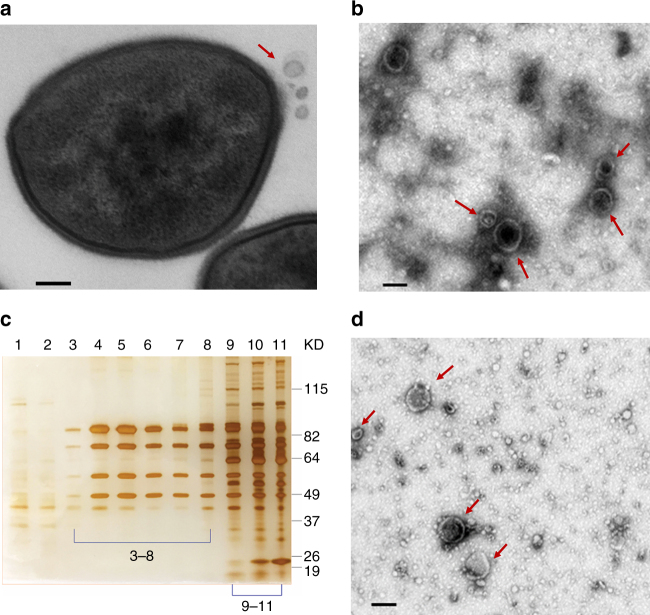
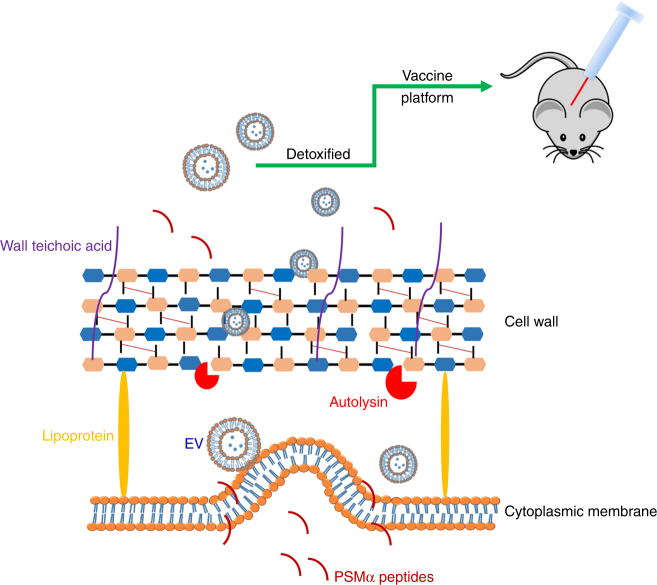
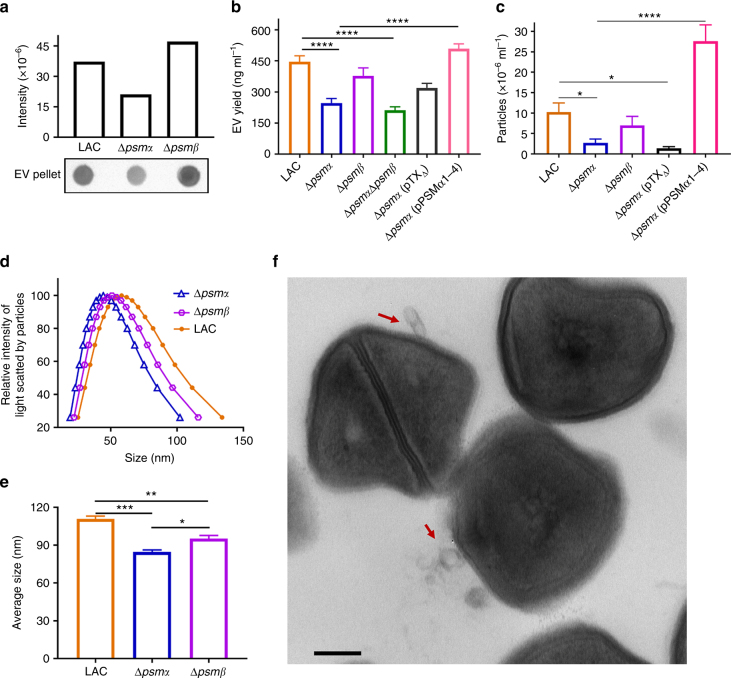
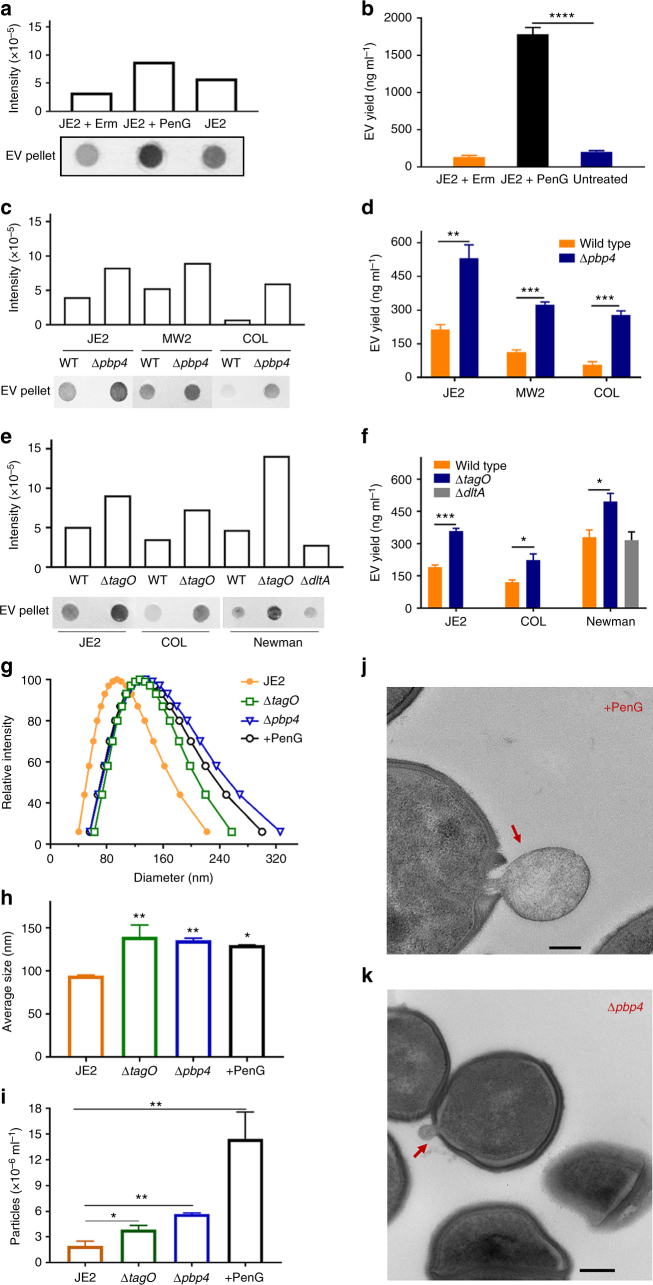
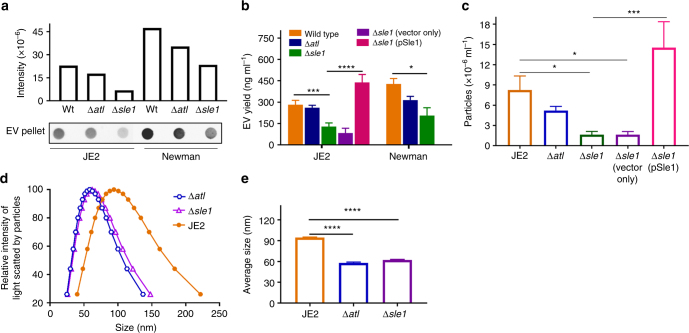
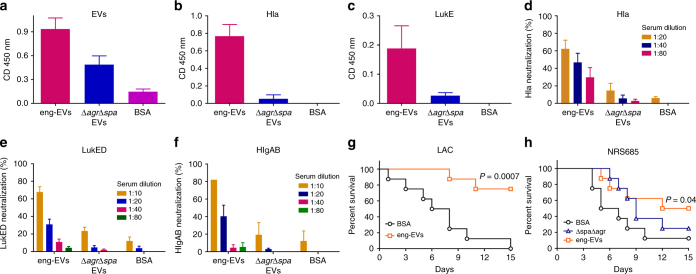
Secretion of extracellular vesicles (EVs), a process common to eukaryotes, archae, and bacteria, represents a secretory pathway that allows cell-free intercellular communication. Microbial EVs package diverse proteins and influence the host-pathogen interaction, but the mechanisms underlying EV production in Gram-positive bacteria are poorly understood. Here we show that EVs purified from community-associated methicillin-resistant Staphylococcus aureus package cytosolic, surface, and secreted proteins, including cytolysins. Staphylococcal alpha-type phenol-soluble modulins promote EV biogenesis by disrupting the cytoplasmic membrane; whereas, peptidoglycan cross-linking and autolysin activity modulate EV production by altering the permeability of the cell wall. We demonstrate that EVs purified from a S. aureus mutant that is genetically engineered to express detoxified cytolysins are immunogenic in mice, elicit cytolysin-neutralizing antibodies, and protect the animals in a lethal sepsis model. Our study reveals mechanisms underlying S. aureus EV production and highlights the usefulness of EVs as a S. aureus vaccine platform.
细胞外囊泡(EVs)的分泌是真核生物、古菌和细菌共有的过程,代表了一种允许细胞外细胞间通讯的分泌途径。微生物 EVs 包装多种蛋白质,并影响宿主-病原体相互作用,但革兰氏阳性菌中 EV 产生的机制知之甚少。在这里,我们表明,从社区相关耐甲氧西林金黄色葡萄球菌中纯化的 EVs 包装细胞质、表面和分泌蛋白,包括细胞毒素。金黄色葡萄球菌 α 型酚可溶性调节素通过破坏细胞质膜促进 EV 的生物发生;而肽聚糖交联和自溶素活性通过改变细胞壁的通透性来调节 EV 的产生。我们证明,从经过基因工程改造表达解毒细胞毒素的金黄色葡萄球菌突变体中纯化的 EVs 在小鼠中具有免疫原性,可引发细胞毒素中和抗体,并在致命败血症模型中保护动物。我们的研究揭示了金黄色葡萄球菌 EV 产生的机制,并强调了 EV 作为金黄色葡萄球菌疫苗平台的有用性。