
基于忆阻神经形态网络的关联时空记忆的容量、保真度和噪声容忍度
Capacity, Fidelity, and Noise Tolerance of Associative Spatial-Temporal Memories Based on Memristive Neuromorphic Networks.
作者信息
Gavrilov Dmitri, Strukov Dmitri, Likharev Konstantin K
机构信息
Department of Electrical and Computer Engineering, Stony Brook University, Stony Brook, NY, United States.
Department of Electrical and Computer Engineering, University of California, Santa Barbara, Santa Barbara, CA, United States.
出版信息
Front Neurosci. 2018 Mar 28;12:195. doi: 10.3389/fnins.2018.00195. eCollection 2018.
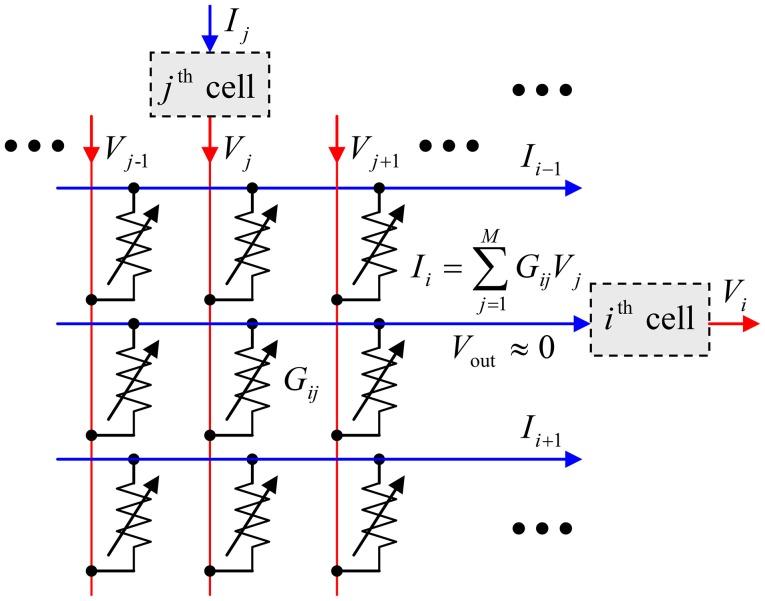
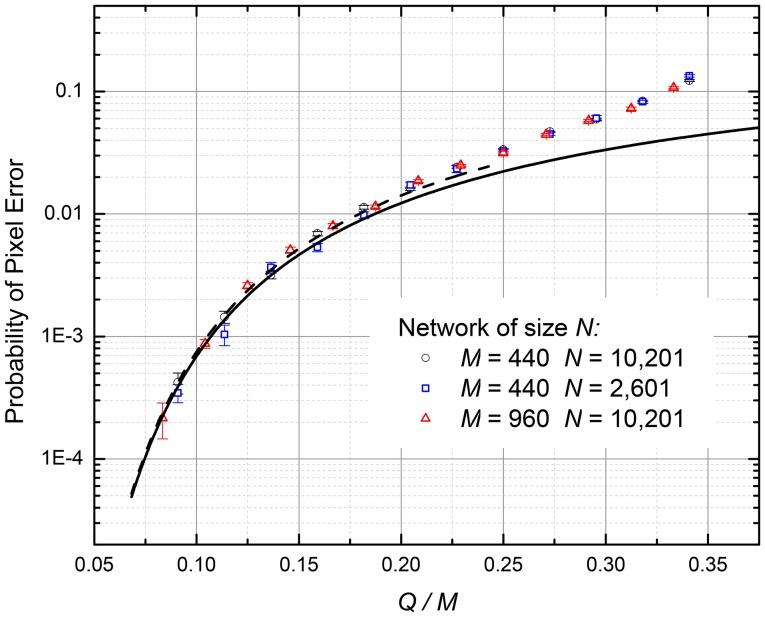
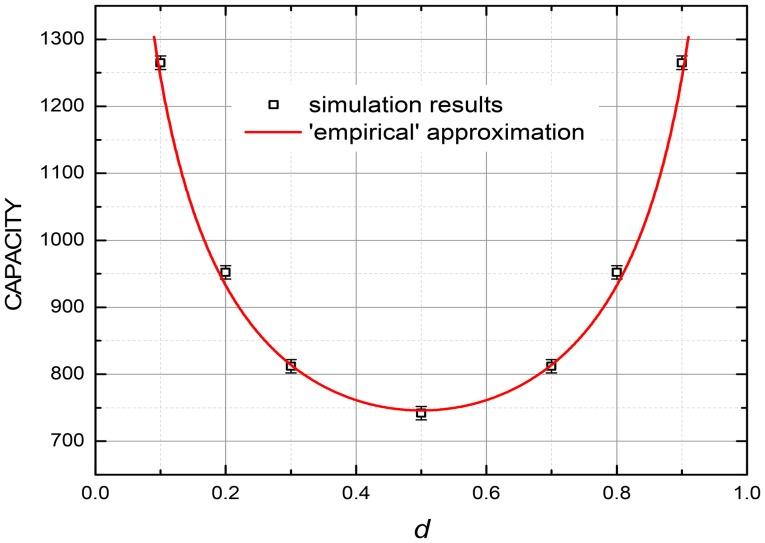
We have calculated key characteristics of associative (content-addressable) spatial-temporal memories based on neuromorphic networks with restricted connectivity-"CrossNets." Such networks may be naturally implemented in nanoelectronic hardware using hybrid memristive circuits, which may feature extremely high energy efficiency, approaching that of biological cortical circuits, at much higher operation speed. Our numerical simulations, in some cases confirmed by analytical calculations, show that the characteristics depend substantially on the method of information recording into the memory. Of the four methods we have explored, two methods look especially promising-one based on the quadratic programming, and the other one being a specific discrete version of the gradient descent. The latter method provides a slightly lower memory capacity (at the same fidelity) then the former one, but it allows local recording, which may be more readily implemented in nanoelectronic hardware. Most importantly, at the synchronous retrieval, both methods provide a capacity higher than that of the well-known Ternary Content-Addressable Memories with the same number of nonvolatile memory cells (e.g., memristors), though the input noise immunity of the CrossNet memories is lower.
我们基于具有受限连接性的神经形态网络——“交叉网络”,计算了关联(内容可寻址)时空记忆的关键特征。这种网络可以在纳米电子硬件中使用混合忆阻电路自然实现,其能效可能极高,接近生物皮层电路,且运行速度要快得多。我们的数值模拟在某些情况下得到了解析计算的证实,结果表明这些特征在很大程度上取决于信息记录到存储器中的方法。在我们探索的四种方法中,有两种方法看起来特别有前景——一种基于二次规划,另一种是梯度下降的特定离散版本。后一种方法在相同保真度下的存储容量比前一种方法略低,但它允许局部记录,这在纳米电子硬件中可能更容易实现。最重要的是,在同步检索时,这两种方法在具有相同数量的非易失性存储单元(例如忆阻器)的情况下,提供的容量都高于著名的三值内容可寻址存储器,尽管交叉网络存储器的输入抗噪性较低。







 Zotero 插件