Hilt Pauline M, Delis Ioannis, Pozzo Thierry, Berret Bastien
Institut National de la Santé et de la Recherche Médicale, U1093, Cognition Action Plasticité Sensorimotrice, Dijon, France.
Italian Institute of Technology CTNSC@UniFe (Center of Translational Neurophysiology for Speech and Communication), Ferrara, Italy.
Front Comput Neurosci. 2018 Apr 3;12:20. doi: 10.3389/fncom.2018.00020. eCollection 2018.
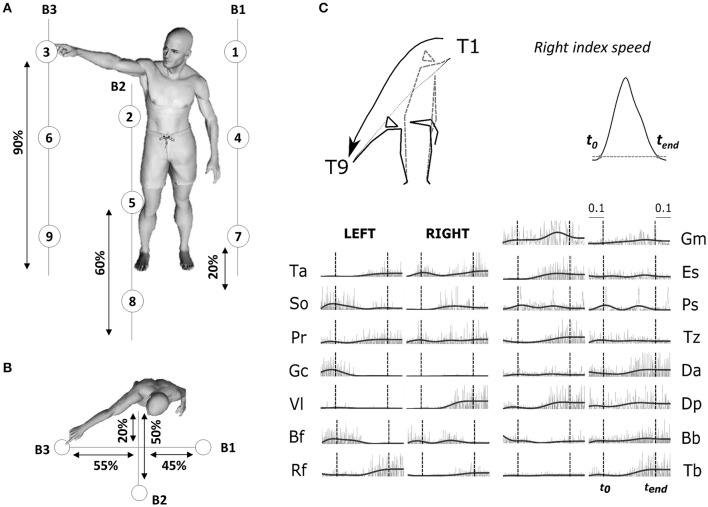
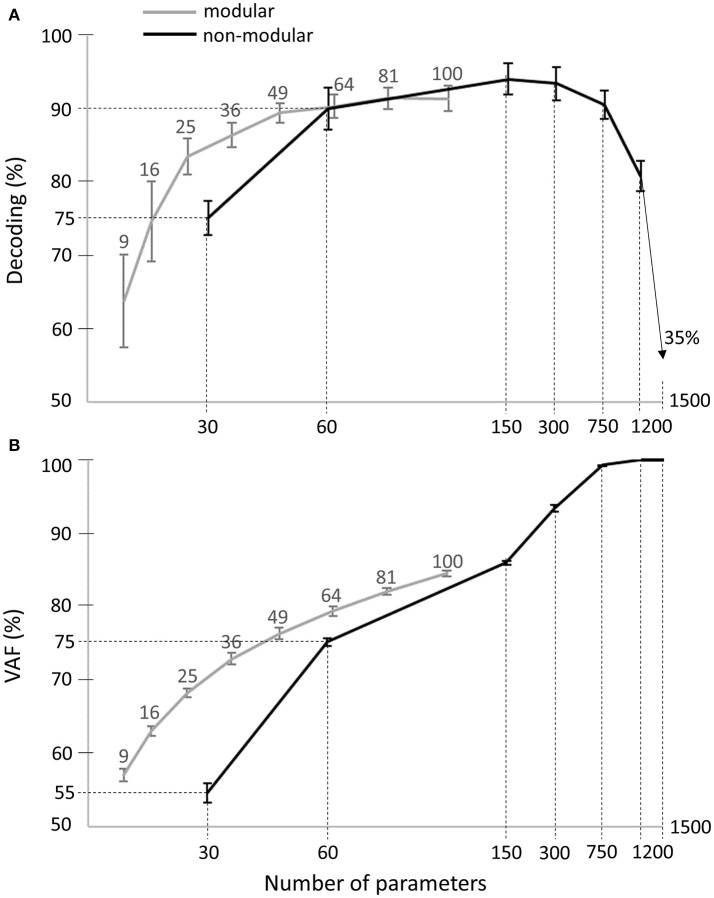
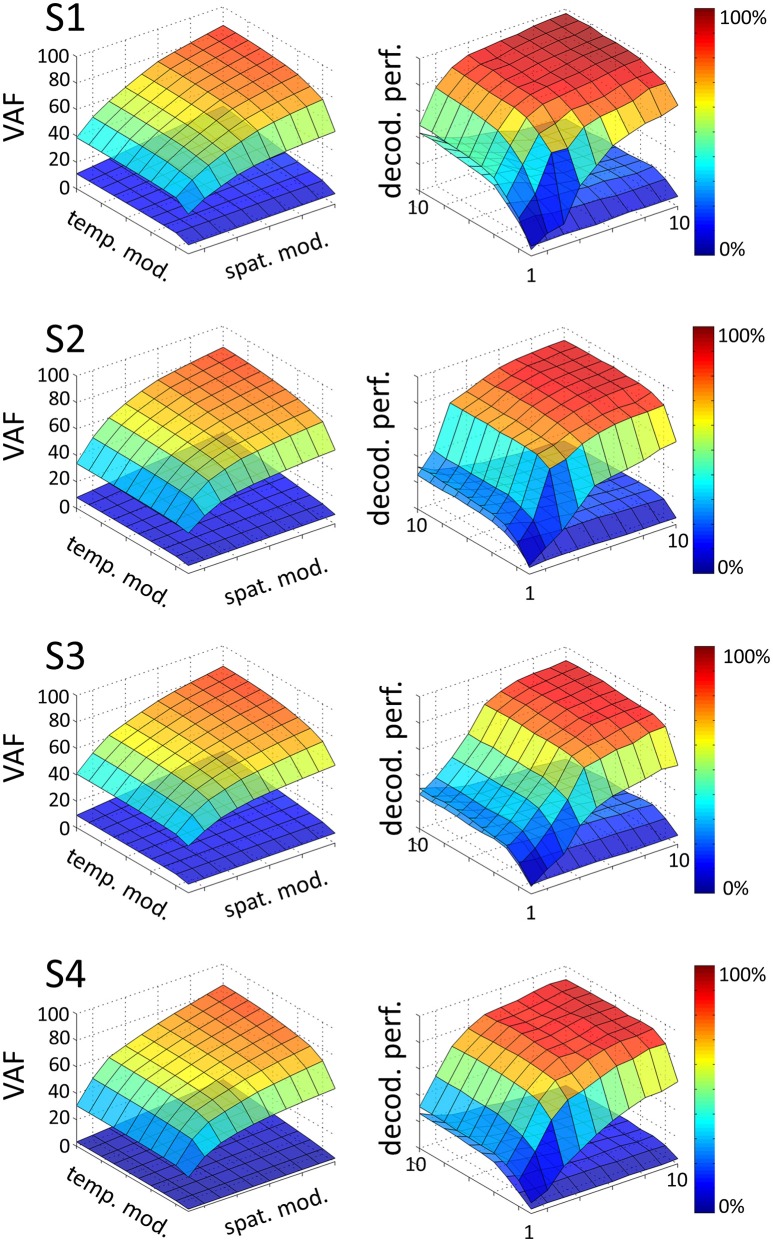
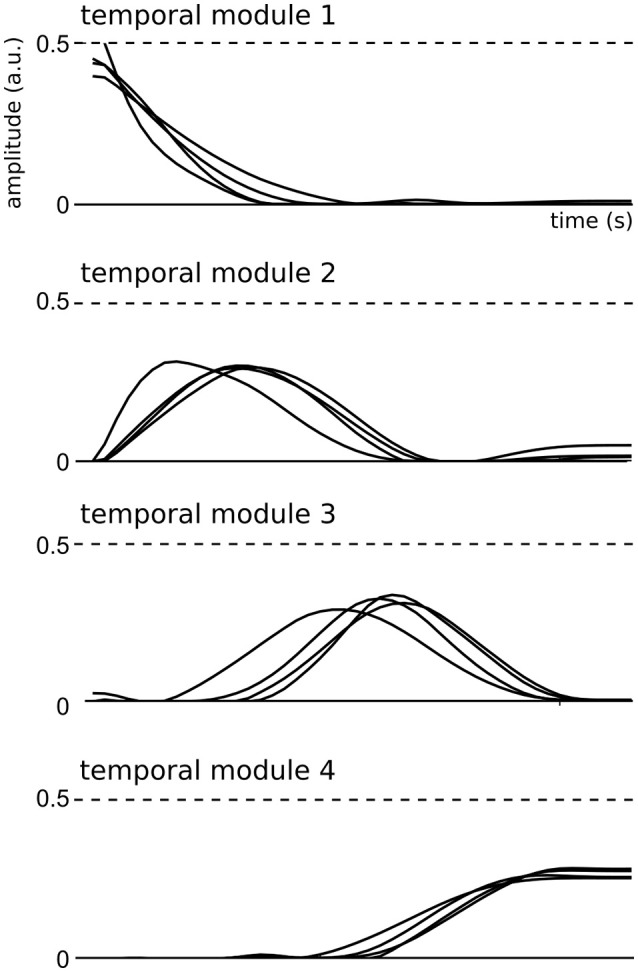
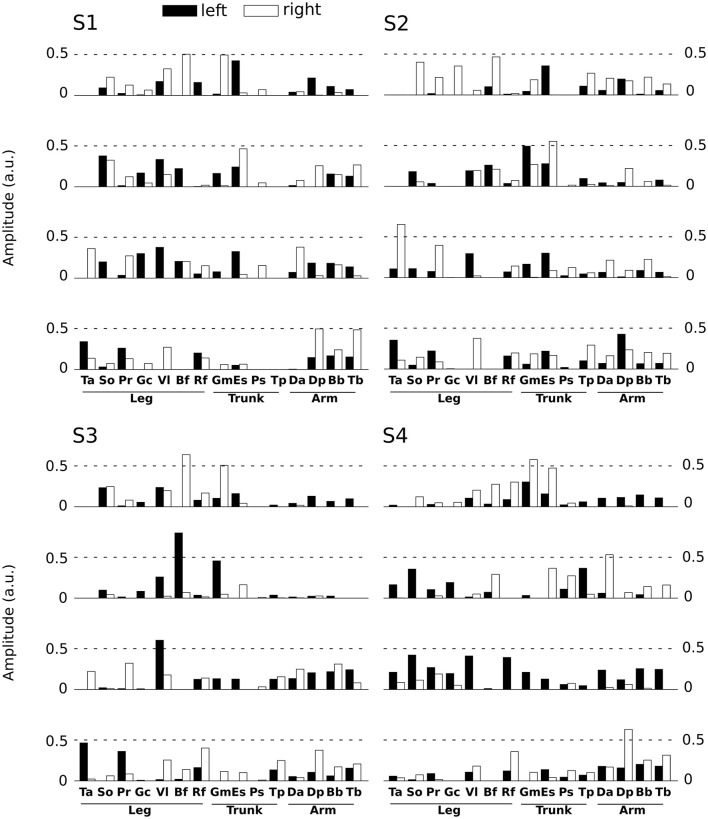
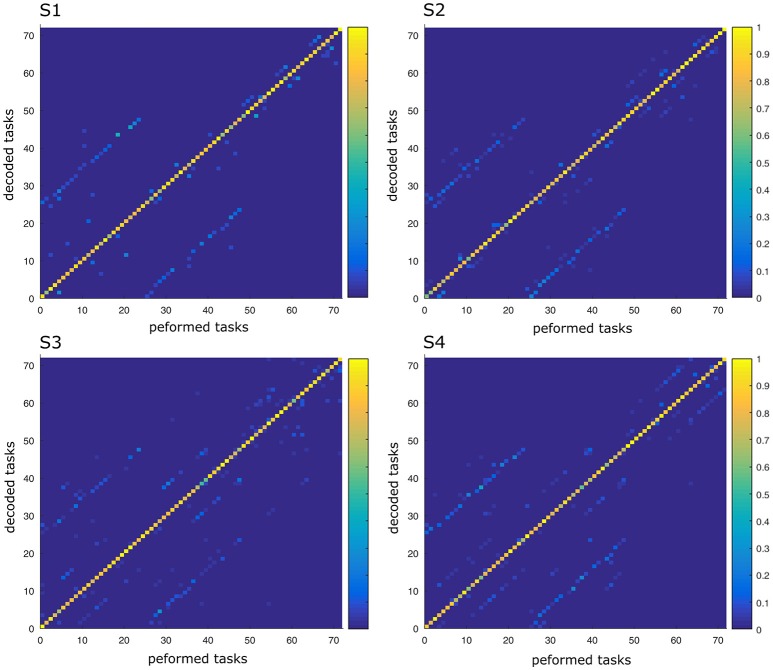
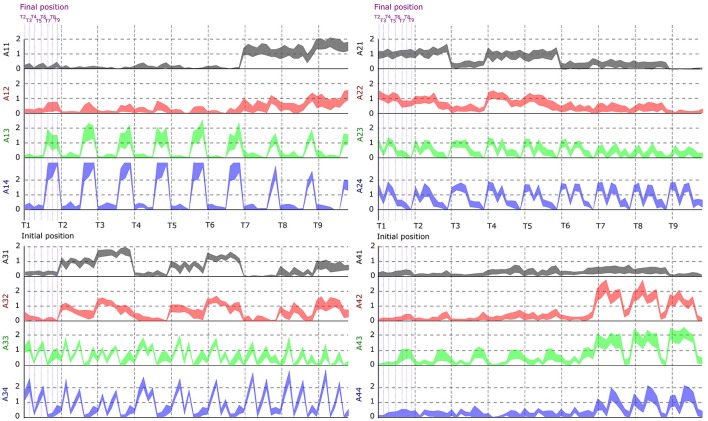
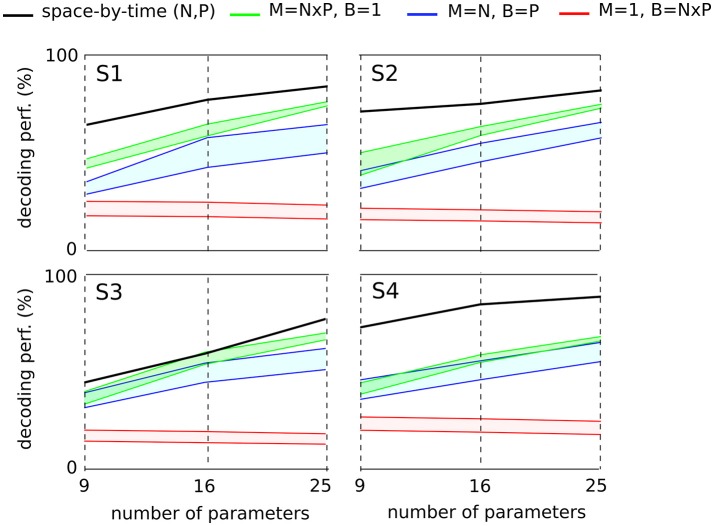
The modular control hypothesis suggests that motor commands are built from precoded modules whose specific combined recruitment can allow the performance of virtually any motor task. Despite considerable experimental support, this hypothesis remains tentative as classical findings of reduced dimensionality in muscle activity may also result from other constraints (biomechanical couplings, data averaging or low dimensionality of motor tasks). Here we assessed the effectiveness of modularity in describing muscle activity in a comprehensive experiment comprising 72 distinct point-to-point whole-body movements during which the activity of 30 muscles was recorded. To identify invariant modules of a temporal and spatial nature, we used a space-by-time decomposition of muscle activity that has been shown to encompass classical modularity models. To examine the decompositions, we focused not only on the amount of variance they explained but also on whether the task performed on each trial could be decoded from the single-trial activations of modules. For the sake of comparison, we confronted these scores to the scores obtained from alternative non-modular descriptions of the muscle data. We found that the space-by-time decomposition was effective in terms of data approximation and task discrimination at comparable reduction of dimensionality. These findings show that few spatial and temporal modules give a compact yet approximate representation of muscle patterns carrying nearly all task-relevant information for a variety of whole-body reaching movements.
模块化控制假说认为,运动指令是由预编码模块构建而成的,这些模块的特定组合募集能够使几乎任何运动任务得以执行。尽管有大量实验支持,但该假说仍具有试探性,因为肌肉活动维度降低的经典发现也可能源于其他限制因素(生物力学耦合、数据平均或运动任务的低维度性)。在此,我们在一项全面的实验中评估了模块化在描述肌肉活动方面的有效性,该实验包含72种不同的点对点全身运动,期间记录了30块肌肉的活动。为了识别具有时间和空间性质的不变模块,我们使用了肌肉活动的时空分解方法,该方法已被证明涵盖了经典的模块化模型。为了检验这些分解结果,我们不仅关注它们所解释的方差量,还关注每次试验执行的任务是否可以从模块的单次试验激活中解码出来。为了进行比较,我们将这些分数与从肌肉数据的替代性非模块化描述中获得的分数进行了对比。我们发现,在维度相当降低的情况下,时空分解在数据近似和任务区分方面是有效的。这些发现表明,很少的时空模块就能对肌肉模式给出紧凑但近似的表示,这些肌肉模式携带了几乎所有与各种全身伸展运动相关的任务信息。