School of Biomedical Sciences, University of Leeds, Leeds, United Kingdom.
Elife. 2024 Feb 26;12:RP87651. doi: 10.7554/eLife.87651.
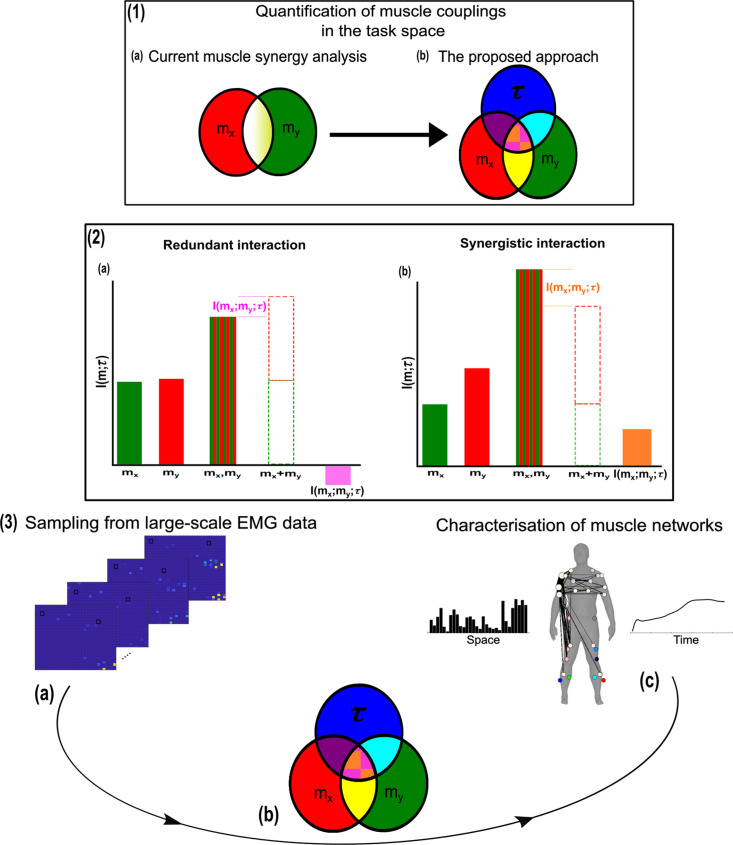
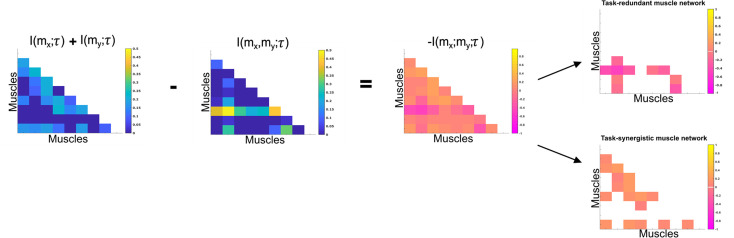
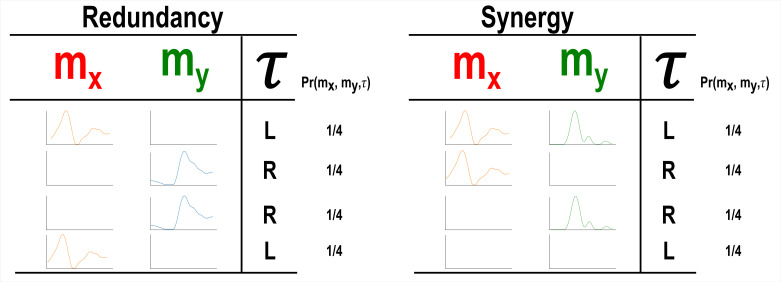
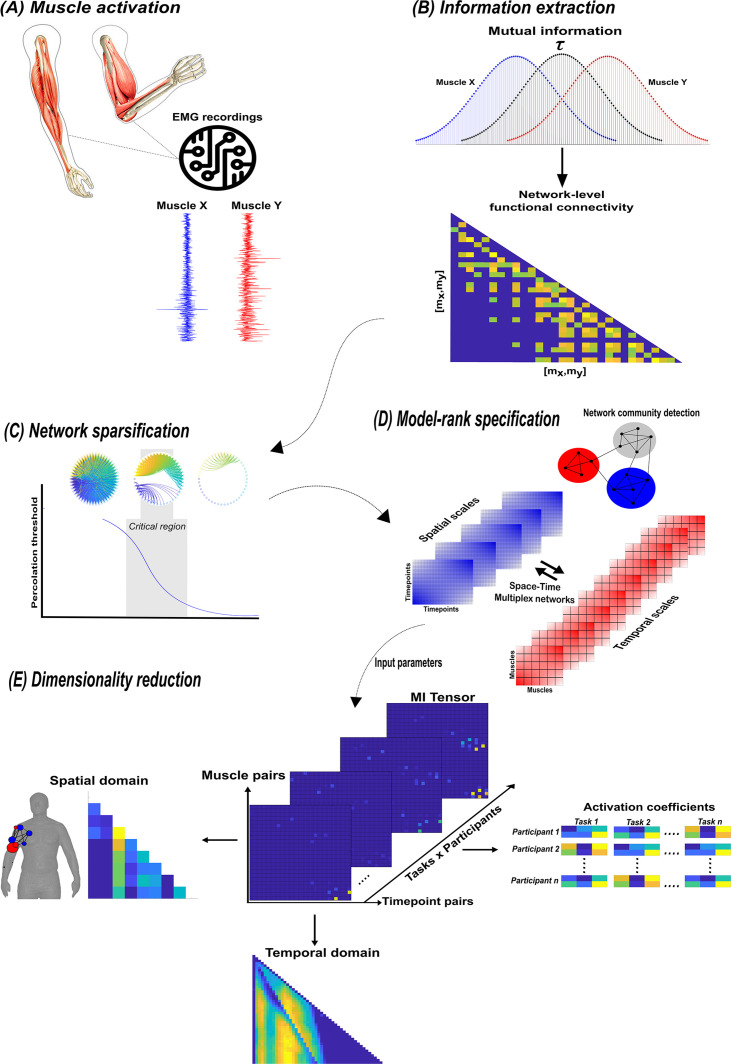
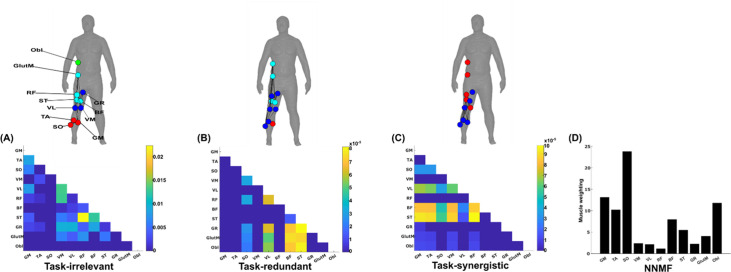
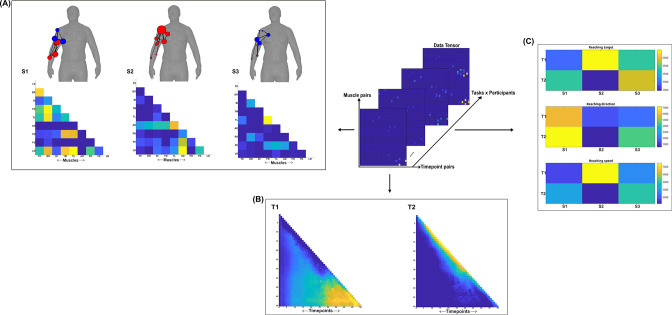
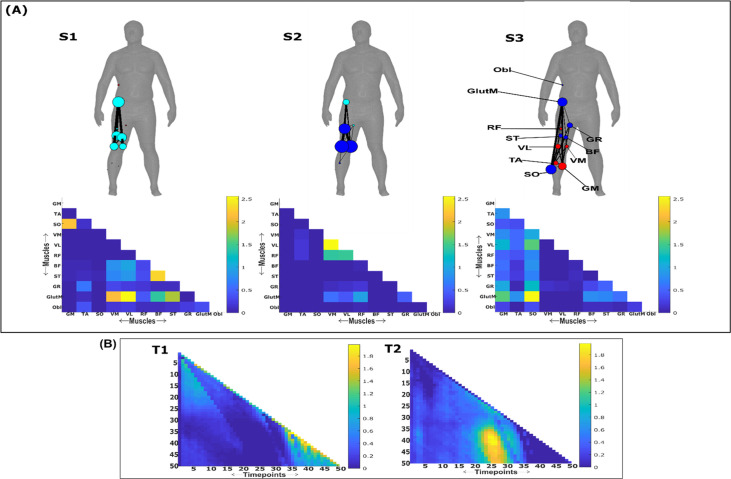
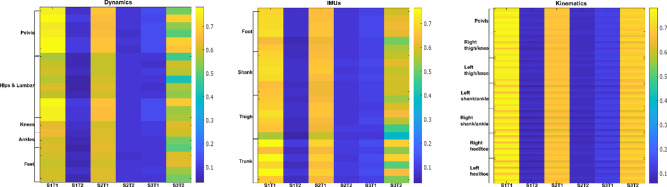
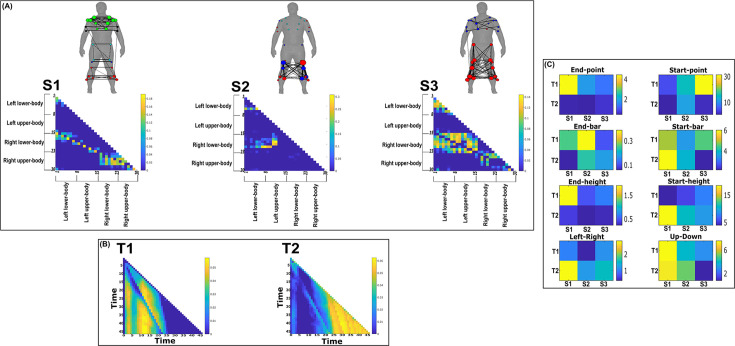
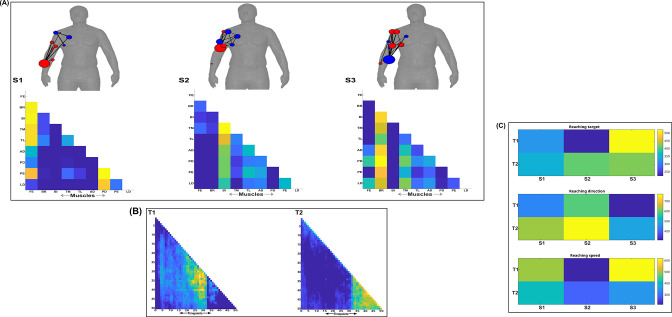
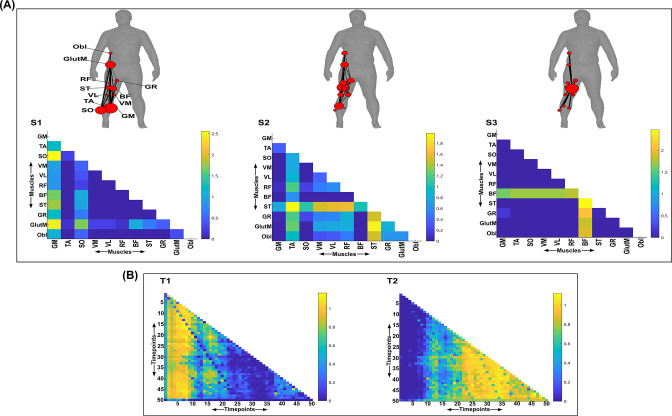
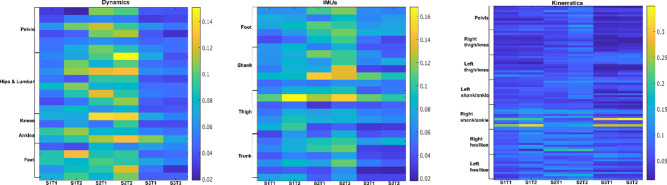
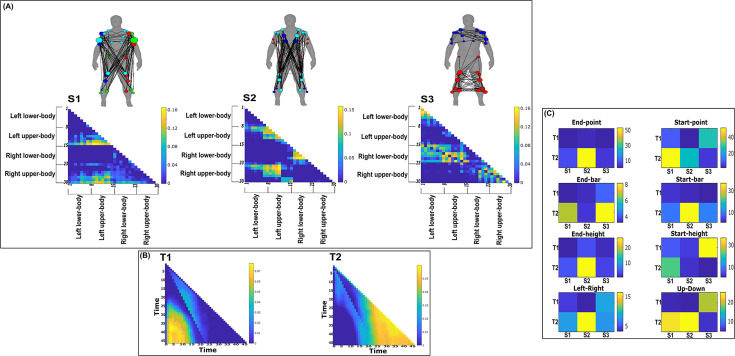
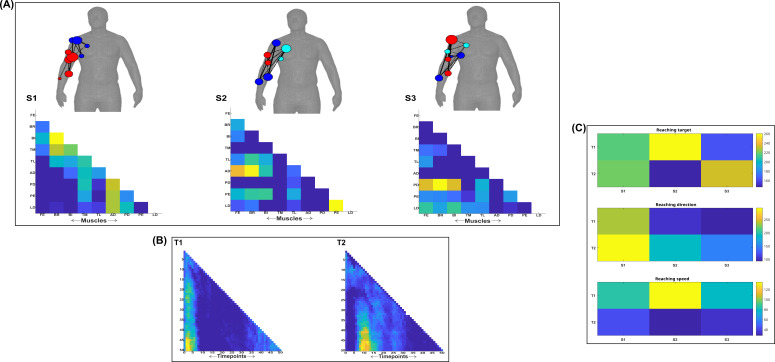
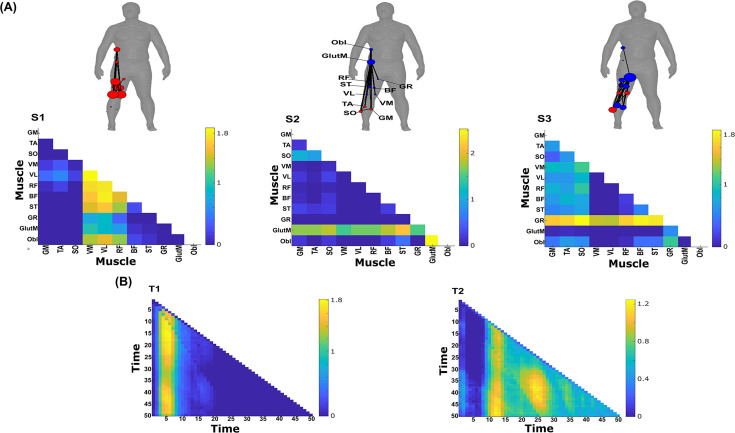
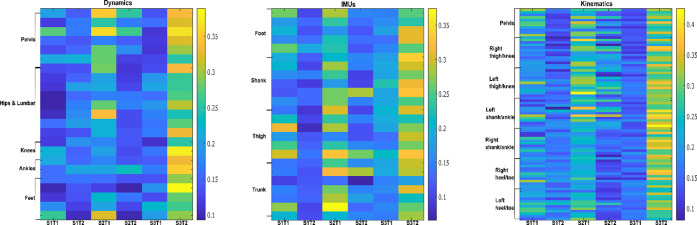
The muscle synergy is a guiding concept in motor control research that relies on the general notion of muscles '' towards task performance. However, although the synergy concept has provided valuable insights into motor coordination, muscle interactions have not been fully characterised with respect to task performance. Here, we address this research gap by proposing a novel perspective to the muscle synergy that assigns specific functional roles to muscle couplings by characterising their task-relevance. Our novel perspective provides nuance to the muscle synergy concept, demonstrating how muscular interactions can '' in different ways: (1) irrespective of the task at hand but also (2) redundantly or (3) complementarily towards common task-goals. To establish this perspective, we leverage information- and network-theory and dimensionality reduction methods to include discrete and continuous task parameters directly during muscle synergy extraction. Specifically, we introduce co-information as a measure of the task-relevance of muscle interactions and use it to categorise such interactions as task-irrelevant (present across tasks), redundant (shared task information), or synergistic (different task information). To demonstrate these types of interactions in real data, we firstly apply the framework in a simple way, revealing its added functional and physiological relevance with respect to current approaches. We then apply the framework to large-scale datasets and extract generalizable and scale-invariant representations consisting of subnetworks of synchronised muscle couplings and distinct temporal patterns. The representations effectively capture the functional interplay between task end-goals and biomechanical affordances and the concurrent processing of functionally similar and complementary task information. The proposed framework unifies the capabilities of current approaches in capturing distinct motor features while providing novel insights and research opportunities through a nuanced perspective to the muscle synergy.
肌肉协同作用是运动控制研究中的一个指导概念,它依赖于肌肉“朝着任务表现”的一般概念。然而,尽管协同作用的概念为运动协调提供了有价值的见解,但肌肉相互作用在任务表现方面并没有得到充分的描述。在这里,我们通过提出一种新的视角来解决这个研究差距,这种视角通过将肌肉耦合的特定功能角色分配给特征任务相关性来描述肌肉协同作用。我们的新视角为肌肉协同作用的概念提供了细微差别,展示了肌肉相互作用如何以不同的方式“朝着共同的任务目标”协同作用:(1)不考虑手头的任务,(2)冗余或(3)互补。为了建立这种视角,我们利用信息和网络理论以及降维方法,在提取肌肉协同作用时直接包括离散和连续的任务参数。具体来说,我们引入共信息作为肌肉相互作用任务相关性的度量,并将其用于将这些相互作用分类为任务无关(存在于所有任务中)、冗余(共享任务信息)或协同(不同任务信息)。为了在真实数据中展示这些类型的相互作用,我们首先以简单的方式应用该框架,揭示其相对于当前方法的附加功能和生理学相关性。然后,我们将该框架应用于大规模数据集,并提取由同步肌肉耦合的子网和不同的时间模式组成的可推广和尺度不变的表示。这些表示有效地捕捉了任务终结目标和生物力学可能性之间的功能相互作用以及功能相似和互补任务信息的并发处理。所提出的框架统一了当前方法在捕捉不同运动特征方面的能力,同时通过对肌肉协同作用的细微视角提供新的见解和研究机会。