ACS Nano. 2018 Jun 26;12(6):5130-5140. doi: 10.1021/acsnano.8b00222. Epub 2018 Apr 24.
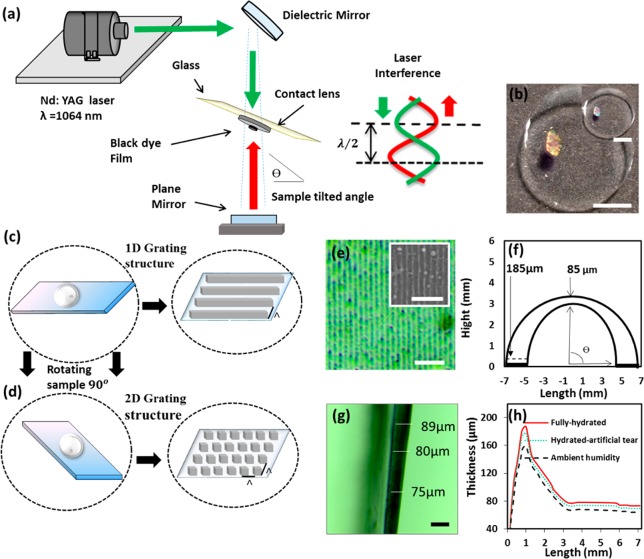
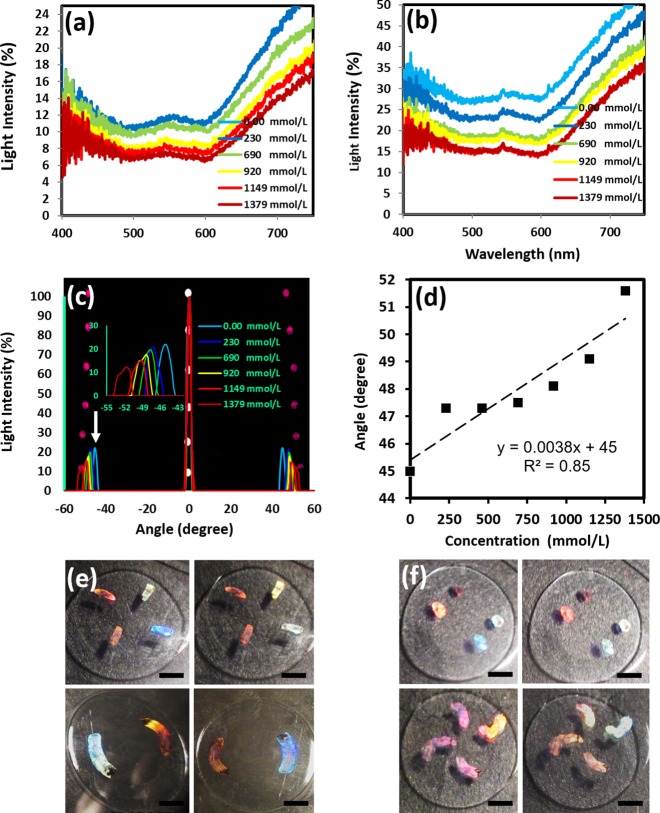
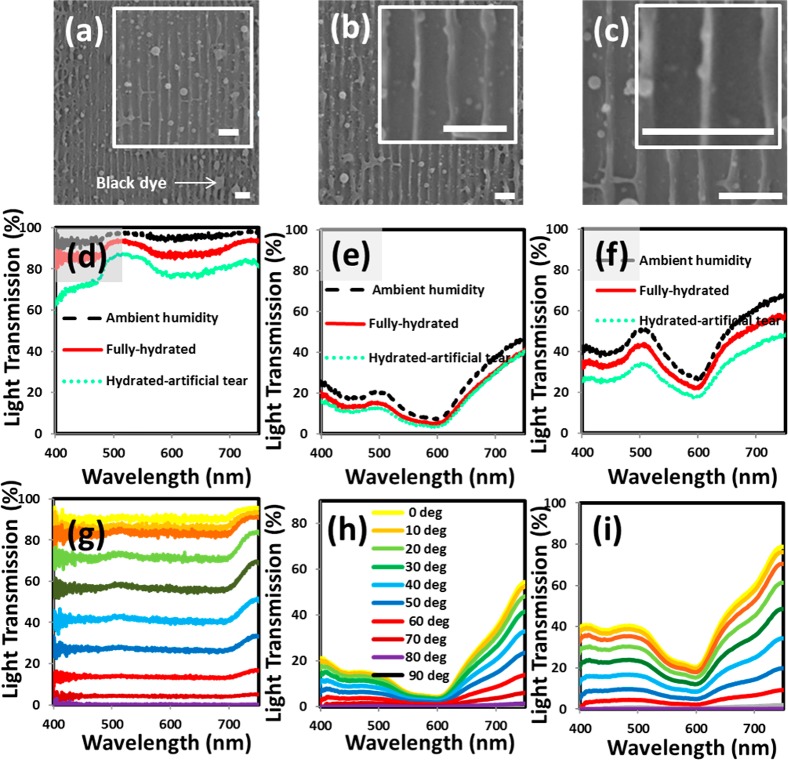
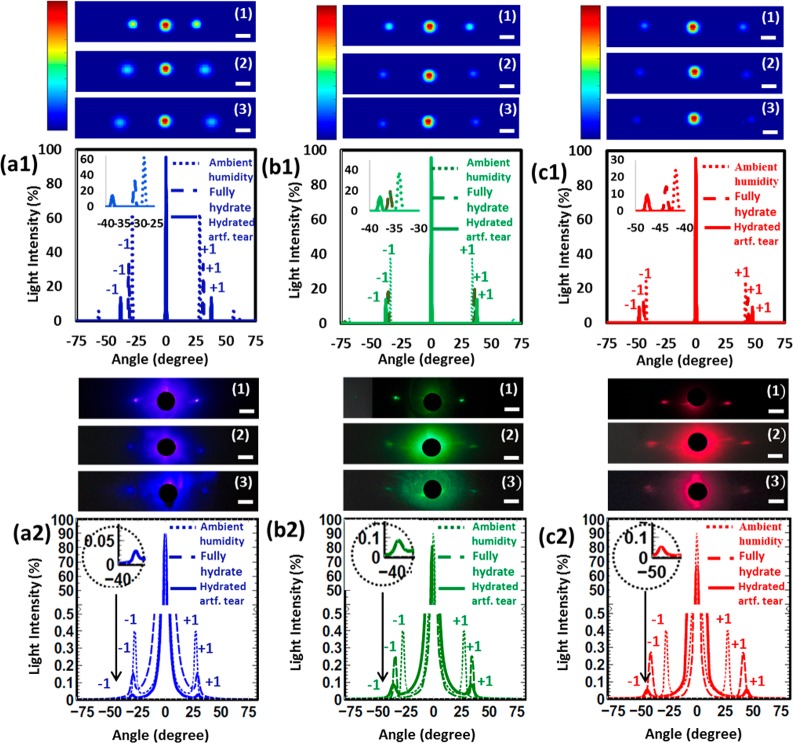
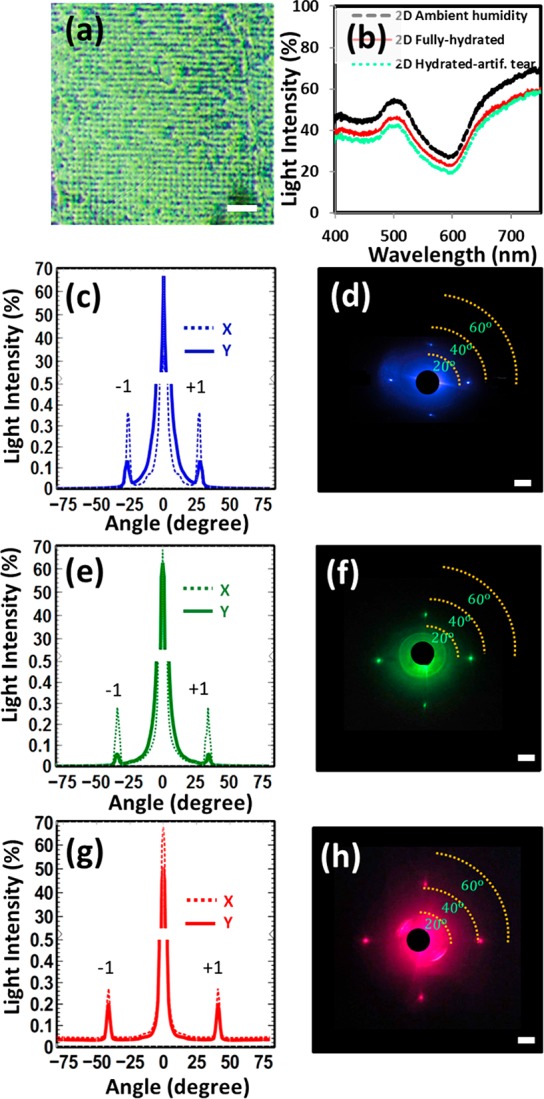
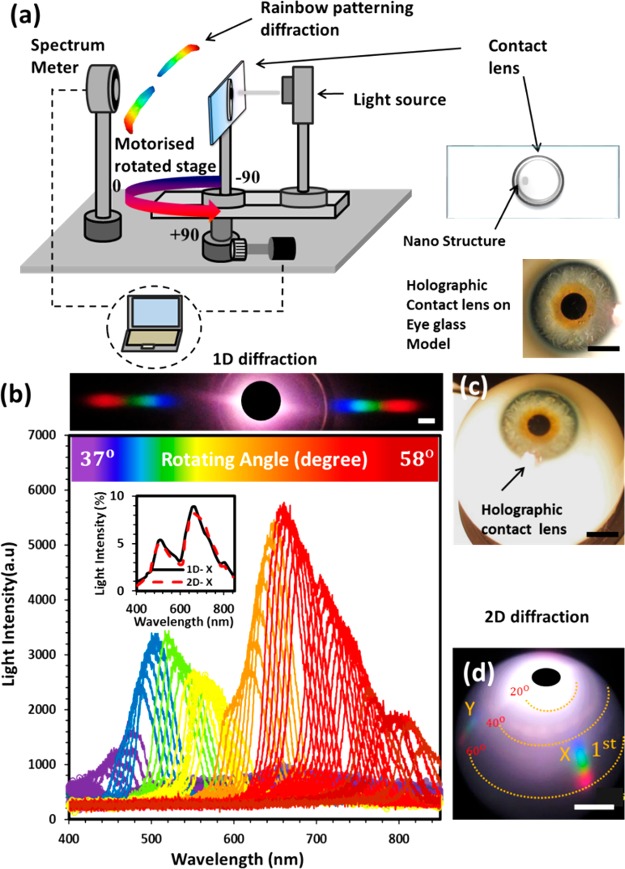
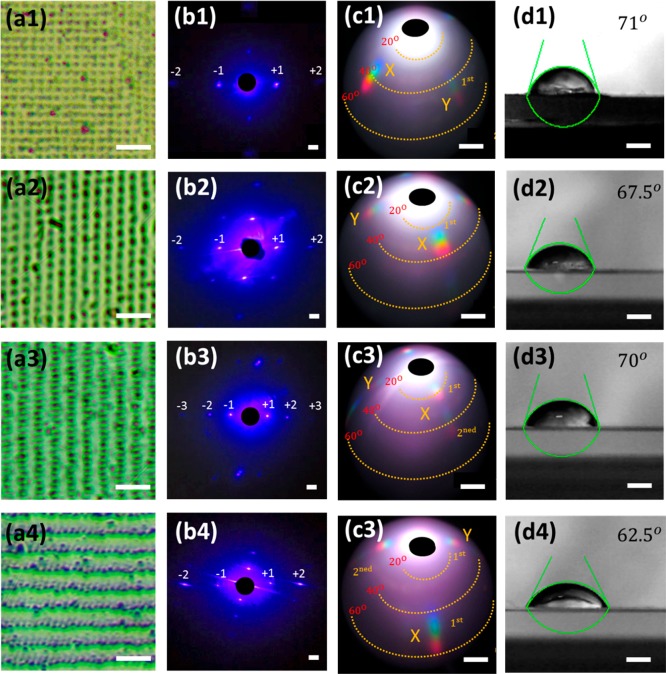
Contact lenses are ubiquitous biomedical devices used for vision correction and cosmetic purposes. Their application as quantitative analytical devices is highly promising for point-of-care diagnostics. However, it is a challenge to integrate nanoscale features into commercial contact lenses for application in low-cost biosensors. A neodymium-doped yttrium aluminum garnet (Nd:YAG) laser (1064 nm, 3 ns pulse, 240 mJ) in holographic interference patterning mode was utilized to produce optical nanostructures over the surface of a hydrogel contact lens. One-dimensional (925 nm) and two-dimensional (925 nm × 925 nm) nanostructures were produced on contact lenses and analyzed by spectroscopy and angle-resolve measurements. The holographic properties of these nanostructures were tested in ambient moisture, fully hydrated, and artificial tear conditions. The measurements showed a rapid tuning of optical diffraction from these nanostructures from 41 to 48°. The nanostructures were patterned near the edges of the contact lens to avoid any interference and obstruction to the human vision. The formation of 2D nanostructures on lenses increased the diffraction efficiency by more than 10%. The versatility of the holographic laser ablation method was demonstrated by producing four different 2D nanopattern geometries on contact lenses. Hydrophobicity of the contact lens was characterized by contact angle measurements, which increased from 59.0° at pristine condition to 62.5° at post-nanofabrication. The holographic nanostructures on the contact lens were used to sense the concentration of Na ions. Artificial tear solution was used to simulate the conditions in dry eye syndrome, and nanostructures on the contact lenses were used to detect the electrolyte concentration changes (±47 mmol L). Nanopatterns on a contact lens may be used to sense other ocular diseases in early stages at point-of-care settings.
接触镜是一种无处不在的生物医学设备,用于视力矫正和美容目的。将其应用于定量分析设备,在即时诊断方面具有很大的应用前景。然而,将纳米级特征集成到商业接触镜中以应用于低成本生物传感器仍然是一个挑战。采用全息干涉图案形成模式的掺钕钇铝石榴石(Nd:YAG)激光(1064nm,3ns 脉冲,240mJ)在水凝胶接触镜表面上产生光学纳米结构。在接触镜上制作了一维(925nm)和二维(925nm×925nm)纳米结构,并通过光谱和角分辨测量对其进行了分析。这些纳米结构的全息特性在环境湿度、完全水合和人工泪液条件下进行了测试。测量结果表明,这些纳米结构的光衍射可以从 41°快速调谐到 48°。为了避免对人眼产生任何干扰和阻碍,纳米结构是在接触镜边缘附近进行图案化的。在透镜上形成二维纳米结构将衍射效率提高了 10%以上。通过在接触透镜上制作四种不同的 2D 纳米图案几何形状,证明了全息激光烧蚀方法的多功能性。通过接触角测量对接触镜的疏水性进行了表征,在原始状态下接触角为 59.0°,在纳米制造后接触角增加到 62.5°。接触镜上的全息纳米结构用于感测 Na 离子的浓度。人工泪液溶液用于模拟干眼症的条件,并用接触镜上的纳米结构检测电解质浓度变化(±47mmolL)。接触镜上的纳米图案可用于在即时护理环境中早期感测其他眼部疾病。