Schmid Sarah M, Suchodolski Jan S, Price Josh M, Tolbert M K
Department of Small Animal Clinical Sciences, College of Veterinary Medicine, The University of Tennessee, Knoxville, TN, United States.
Gastrointestinal Laboratory, Department of Small Animal Clinical Sciences, College of Veterinary Medicine and Biomedical Sciences, Texas A&M University, College Station, TX, United States.
Front Vet Sci. 2018 Apr 16;5:79. doi: 10.3389/fvets.2018.00079. eCollection 2018.
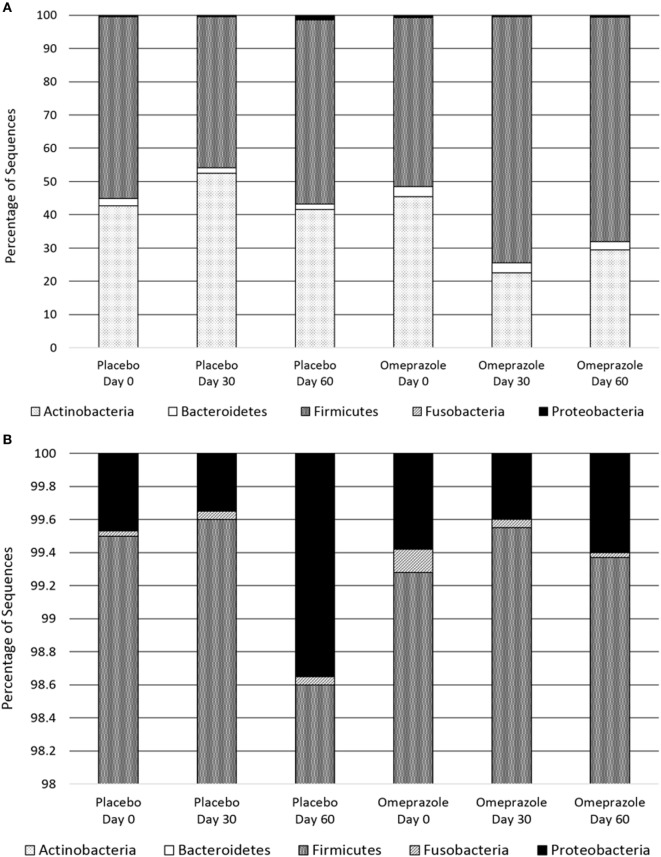
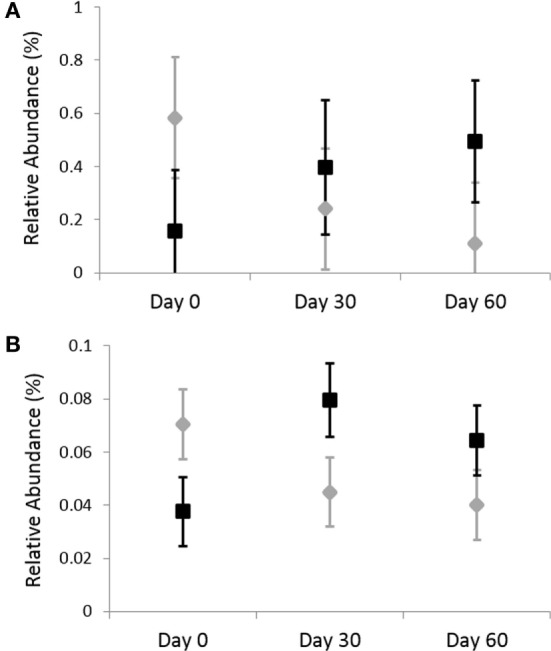
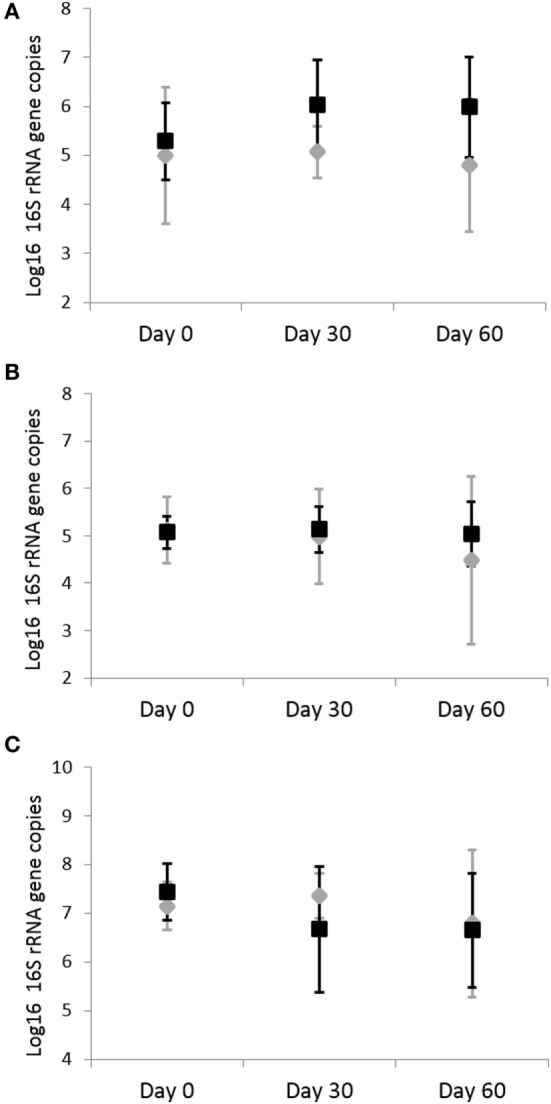
Although they have historically been thought of as safe medications, proton pump inhibitors such as omeprazole have been associated with an increased risk of enteric, particularly , infections in people. In cats, omeprazole is often the first choice acid suppressant prescribed for the treatment of upper gastrointestinal (GI) ulceration and bleeding. Despite this, no studies to date have explored the effect of omeprazole on the feline fecal microbiome and metabolome. Therefore, the purpose of this pilot study was to evaluate the effect of prolonged omeprazole administration on the fecal microbiome and metabolome in healthy cats to identify targets for analysis in a larger subset of cats with GI disease. A within-subjects, before and after, pilot study was performed whereby six healthy adult cats received 60 days of placebo (250 mg lactose PO q 12 h) followed by 5 mg (0.83-1.6 mg/kg PO q 12 h) omeprazole. On days 0, 30, and 60 of placebo and omeprazole therapy, the fecal microbiome and metabolome were characterized utilizing 16S ribosomal RNA sequencing by Illumina and untargeted mass spectrometry-based methods, respectively. Omeprazole administration resulted in no significant changes in the global microbiome structure or richness. However, transient changes were noted in select bacterial groups with omeprazole administration resulting in an increased sequence percentage of , and spp. and a decreased sequence percentage of spp. Significance was lost for all of these bacterial groups after adjustment for multiple comparisons. The fecal concentration of -acetylserine and aminomalonate decreased with omeprazole therapy, but significance was lost after adjustment for multiple comparisons. The results of this pilot study conclude that omeprazole has a mild and transient impact on the fecal microbiome and metabolome when orally administered to healthy cats for 60 days. Based on the findings of this pilot study, evaluation of the effect of omeprazole specifically on , and spp. is warranted in cats with primary GI disease.
尽管质子泵抑制剂如奥美拉唑在历史上一直被认为是安全的药物,但它们与人体肠道感染风险增加有关,尤其是在人群中。在猫中,奥美拉唑通常是治疗上消化道(GI)溃疡和出血时首选的抑酸药物。尽管如此,迄今为止尚无研究探讨奥美拉唑对猫粪便微生物组和代谢组的影响。因此,本初步研究的目的是评估长期服用奥美拉唑对健康猫粪便微生物组和代谢组的影响,以便在更大的胃肠道疾病猫亚组中确定分析靶点。进行了一项受试者自身前后对照的初步研究,六只健康成年猫先接受60天的安慰剂(250毫克乳糖,口服,每12小时一次),然后接受5毫克(0.83 - 1.6毫克/千克,口服,每12小时一次)的奥美拉唑。在安慰剂和奥美拉唑治疗的第0天、第30天和第60天,分别采用Illumina的16S核糖体RNA测序和基于非靶向质谱的方法对粪便微生物组和代谢组进行表征。服用奥美拉唑后,整体微生物组结构或丰富度没有显著变化。然而,在服用奥美拉唑后,某些细菌组出现了短暂变化,导致 、 和 菌属的序列百分比增加,而 菌属的序列百分比降低。在进行多重比较校正后,所有这些细菌组的差异均无统计学意义。奥美拉唑治疗后,粪便中 - 乙酰丝氨酸和氨基丙二酸的浓度降低,但在进行多重比较校正后差异无统计学意义。本初步研究结果表明,对健康猫口服奥美拉唑60天对其粪便微生物组和代谢组有轻微且短暂的影响。基于本初步研究的结果,有必要评估奥美拉唑对原发性胃肠道疾病猫中 、 和 菌属的具体影响。