Department of Agricultural, Food and Nutritional Science, University of Alberta, Edmonton, Alberta, T6G 2P5, Canada.
Lacombe Research and Development Centre, Agriculture and Agri-Food Canada, Lacombe, Alberta, T4L 1W1, Canada.
Sci Rep. 2018 May 8;8(1):7303. doi: 10.1038/s41598-018-25605-3.
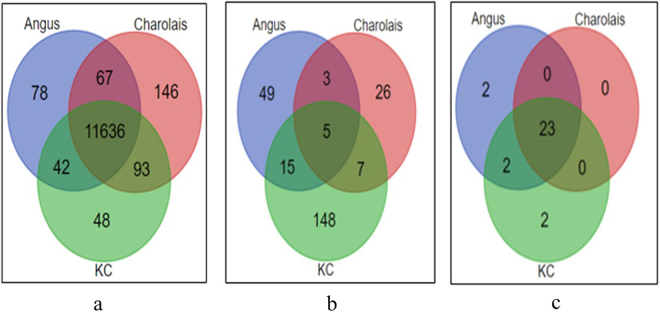
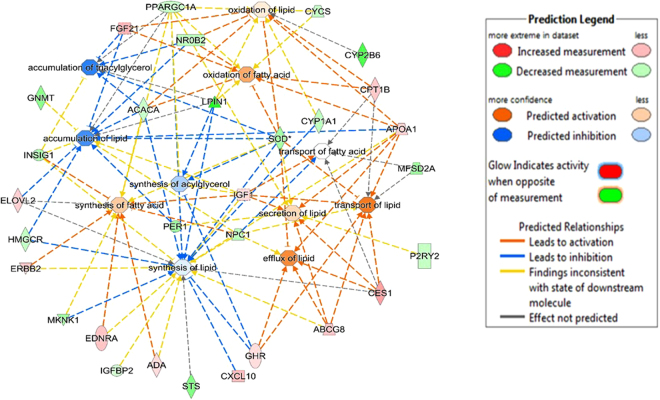
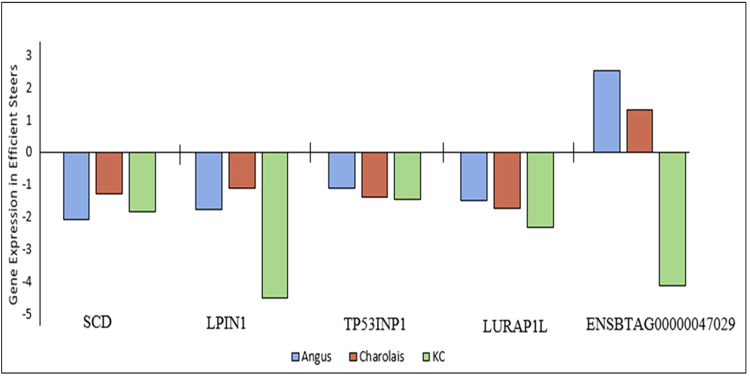
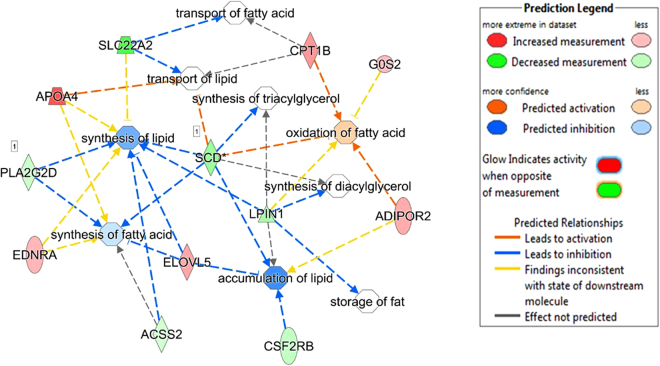
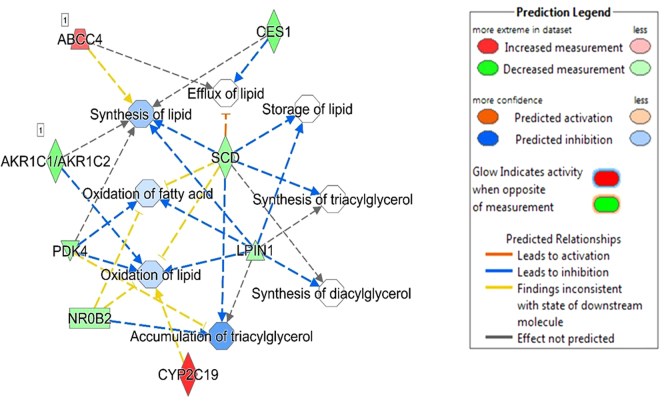
The genetic mechanisms controlling residual feed intake (RFI) in beef cattle are still largely unknown. Here we performed whole transcriptome analyses to identify differentially expressed (DE) genes and their functional roles in liver tissues between six extreme high and six extreme low RFI steers from three beef breed populations including Angus, Charolais, and Kinsella Composite (KC). On average, the next generation sequencing yielded 34 million single-end reads per sample, of which 87% were uniquely mapped to the bovine reference genome. At false discovery rate (FDR) < 0.05 and fold change (FC) > 2, 72, 41, and 175 DE genes were identified in Angus, Charolais, and KC, respectively. Most of the DE genes were breed-specific, while five genes including TP53INP1, LURAP1L, SCD, LPIN1, and ENSBTAG00000047029 were common across the three breeds, with TP53INP1, LURAP1L, SCD, and LPIN1 being downregulated in low RFI steers of all three breeds. The DE genes are mainly involved in lipid, amino acid and carbohydrate metabolism, energy production, molecular transport, small molecule biochemistry, cellular development, and cell death and survival. Furthermore, our differential gene expression results suggest reduced hepatic lipid synthesis and accumulation processes in more feed efficient beef cattle of all three studied breeds.
控制肉牛残余采食量(RFI)的遗传机制在很大程度上仍然未知。在这里,我们进行了全转录组分析,以鉴定来自三个牛肉品种群体(安格斯、夏洛莱和金赛拉复合品种)的六个极端高 RFI 和六个极端低 RFI 牛的肝脏组织中的差异表达(DE)基因及其功能作用。平均而言,每个样本的下一代测序产生了 3400 万个单端读数,其中 87%唯一映射到牛参考基因组。在错误发现率(FDR)<0.05 和倍数变化(FC)>2 时,安格斯、夏洛莱和 KC 分别鉴定出 72、41 和 175 个 DE 基因。大多数 DE 基因是特定于品种的,而包括 TP53INP1、LURAP1L、SCD、LPIN1 和 ENSBTAG00000047029 在内的五个基因在三个品种中都很常见,TP53INP1、LURAP1L、SCD 和 LPIN1 在所有三个品种的低 RFI 牛中都下调。DE 基因主要参与脂质、氨基酸和碳水化合物代谢、能量产生、分子运输、小分子生物化学、细胞发育以及细胞死亡和存活。此外,我们的差异基因表达结果表明,在所有三个研究品种中,具有更高饲料效率的肉牛的肝脏脂质合成和积累过程减少。