Department of Electrical Engineering, Capital University of Science and Technology, Islamabad 44000, Pakistan.
Department of Computer Systems Engineering, University of Engineering and Technology, Peshawar 25000, Pakistan.
Sensors (Basel). 2018 May 12;18(5):1529. doi: 10.3390/s18051529.
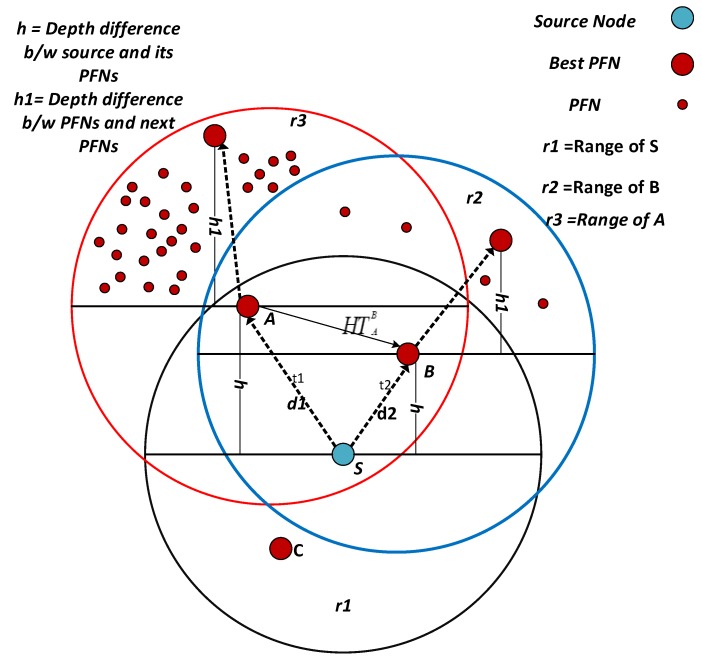
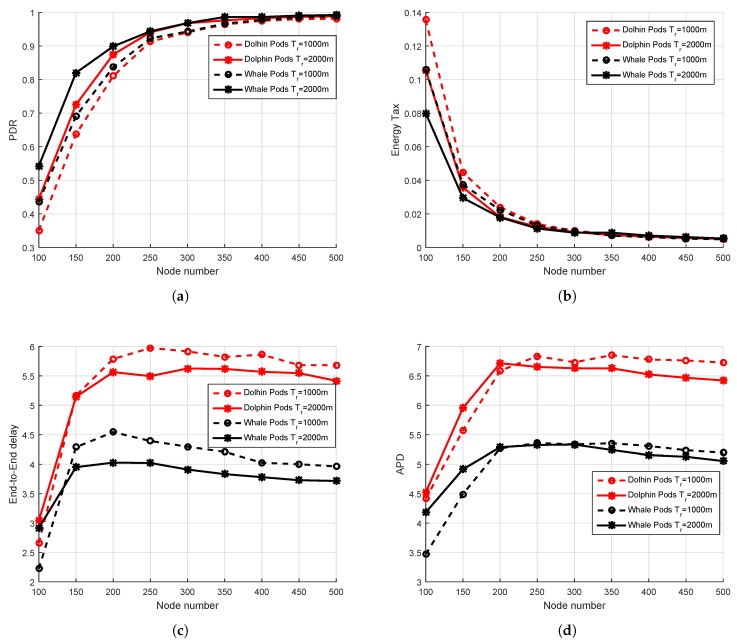
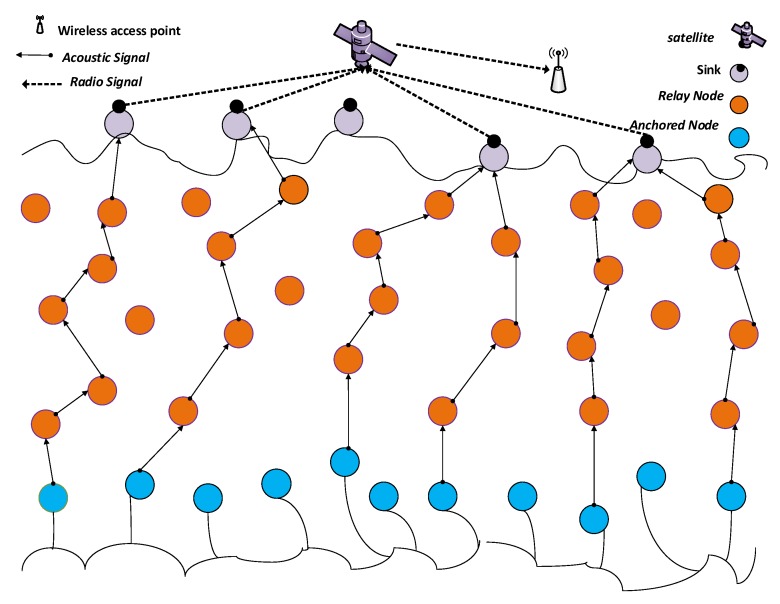
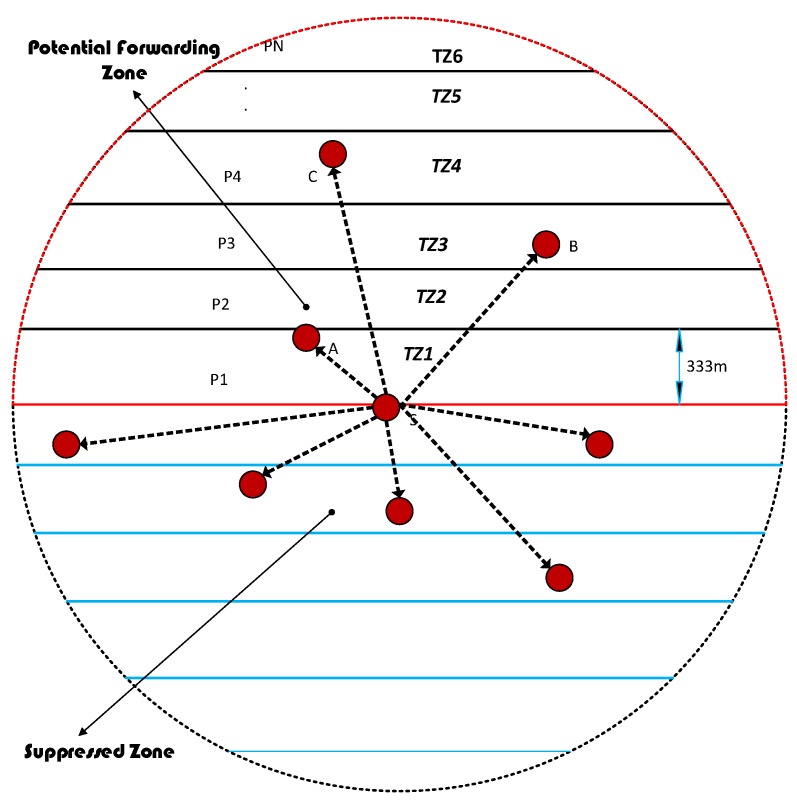
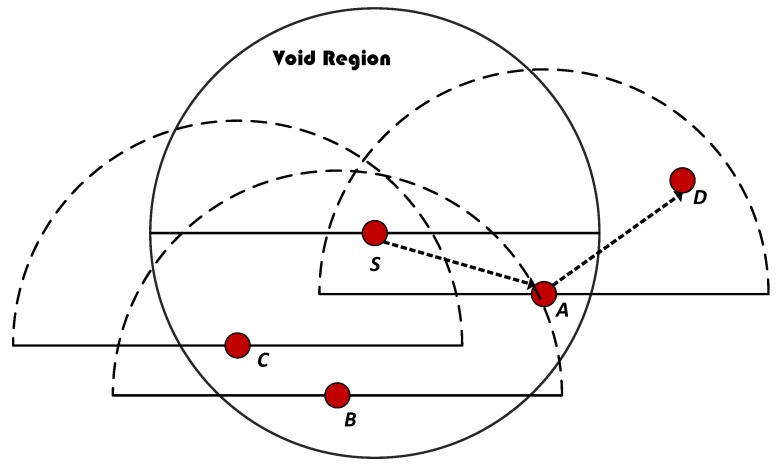
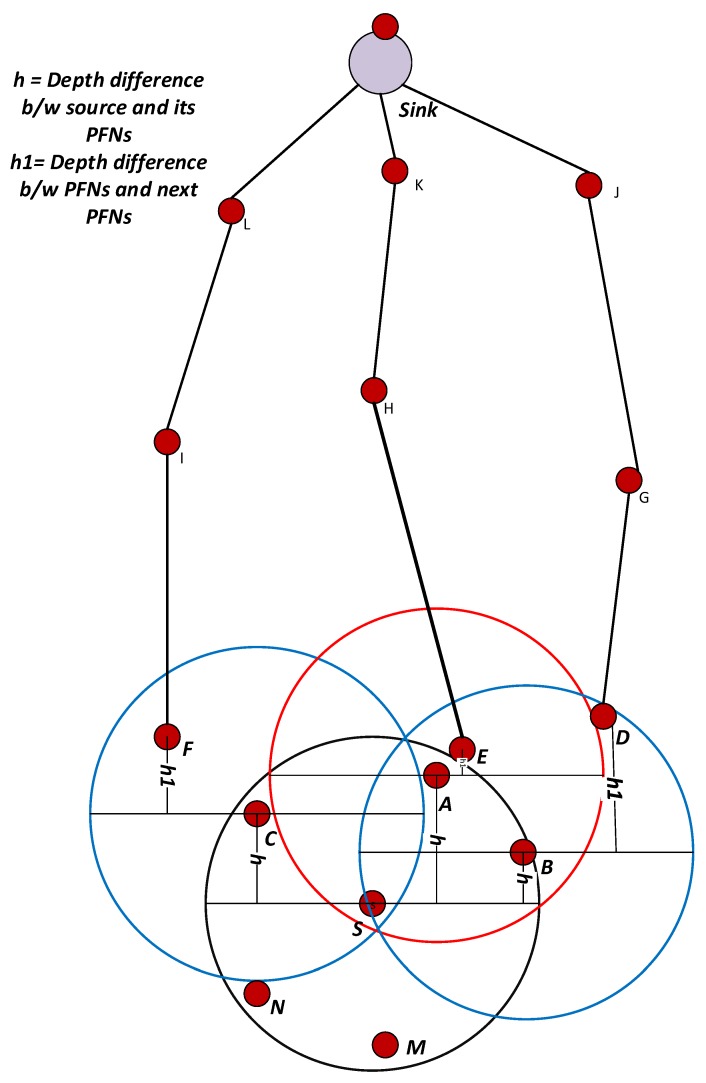
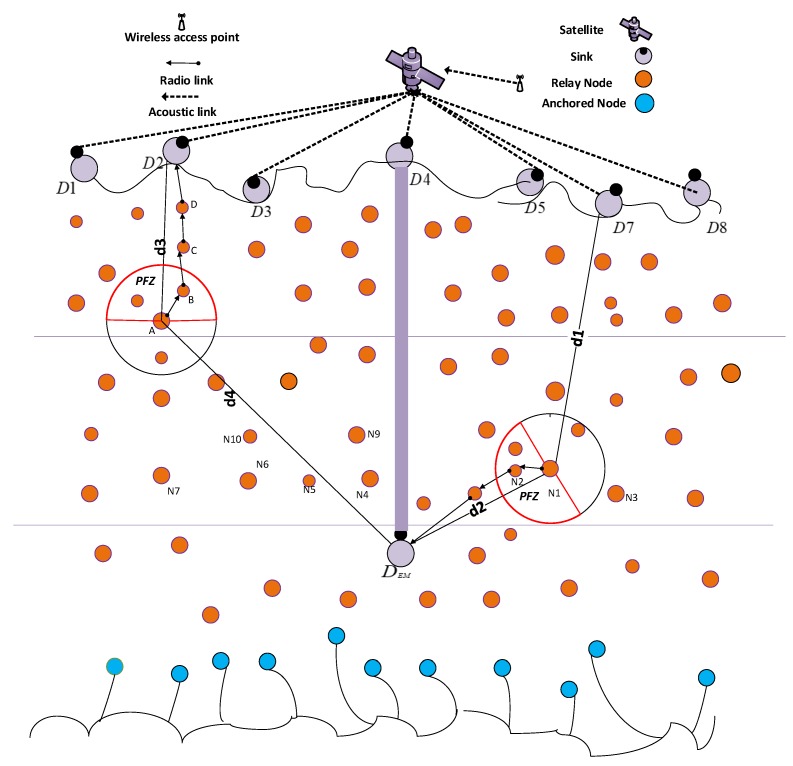
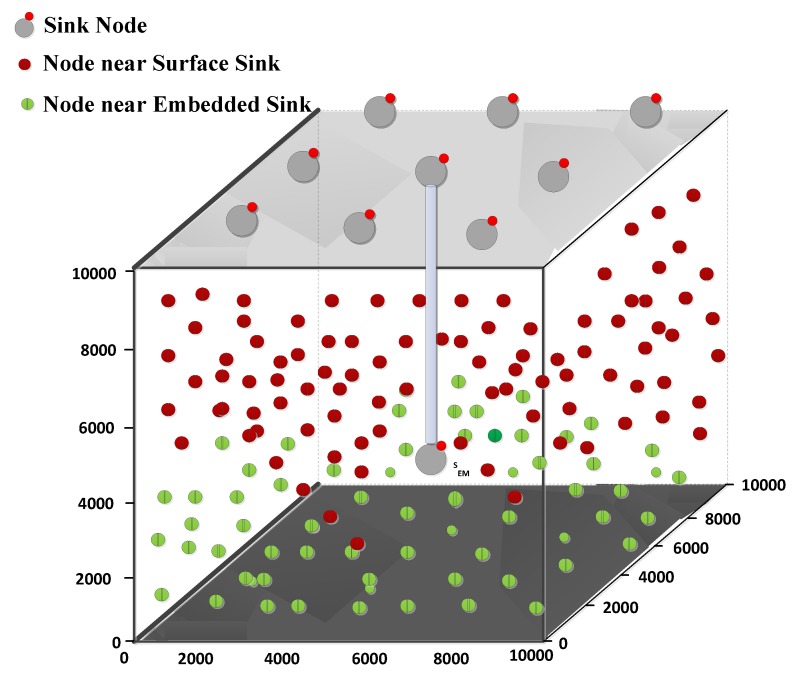
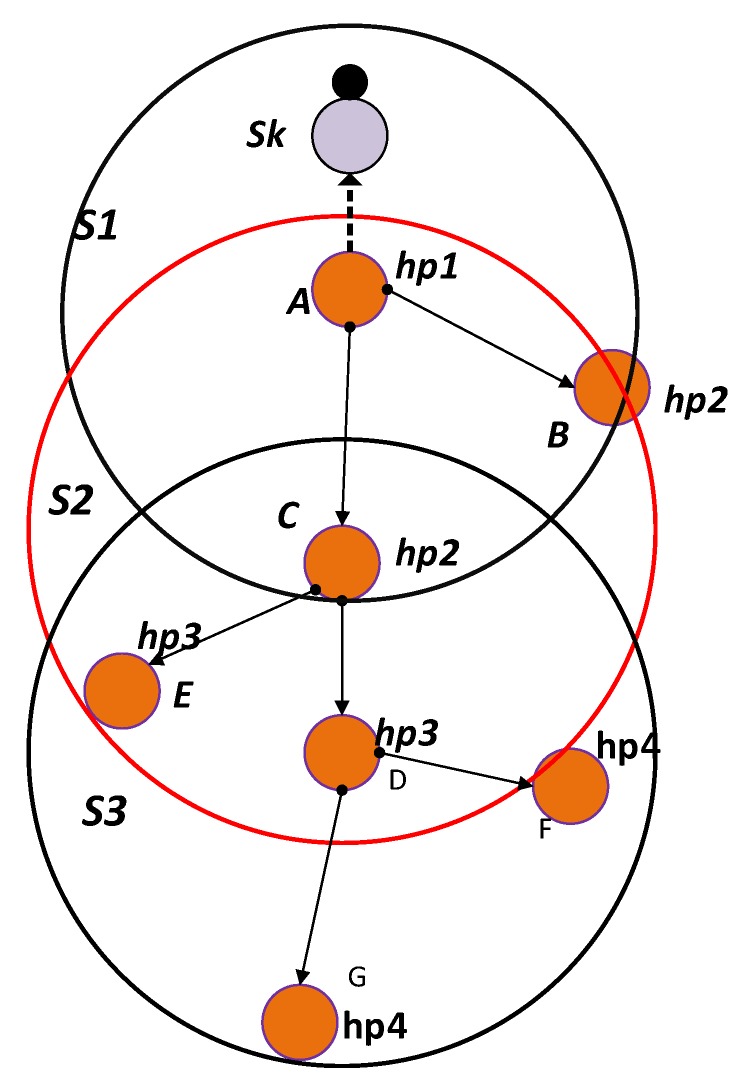
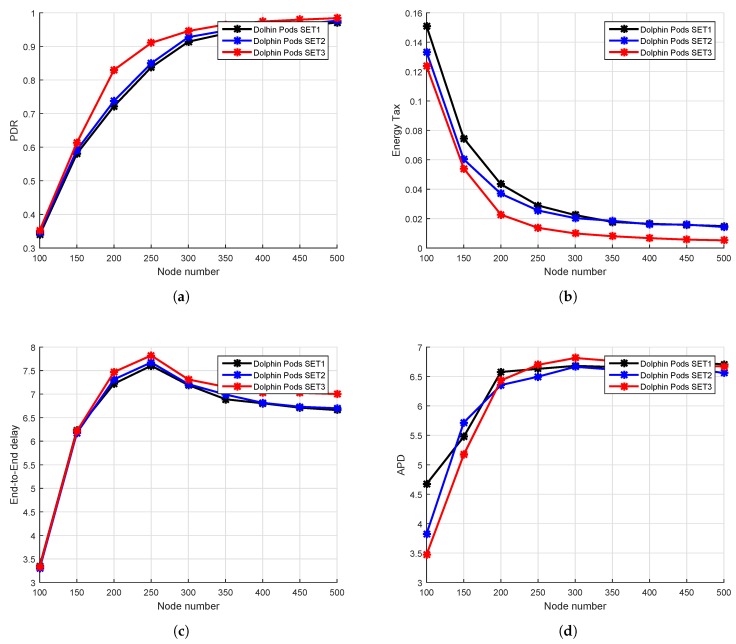
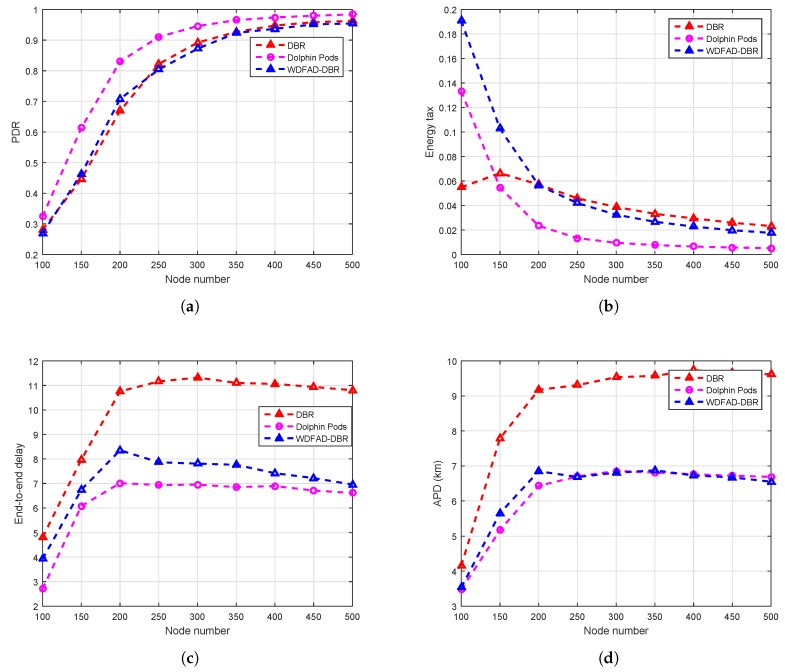
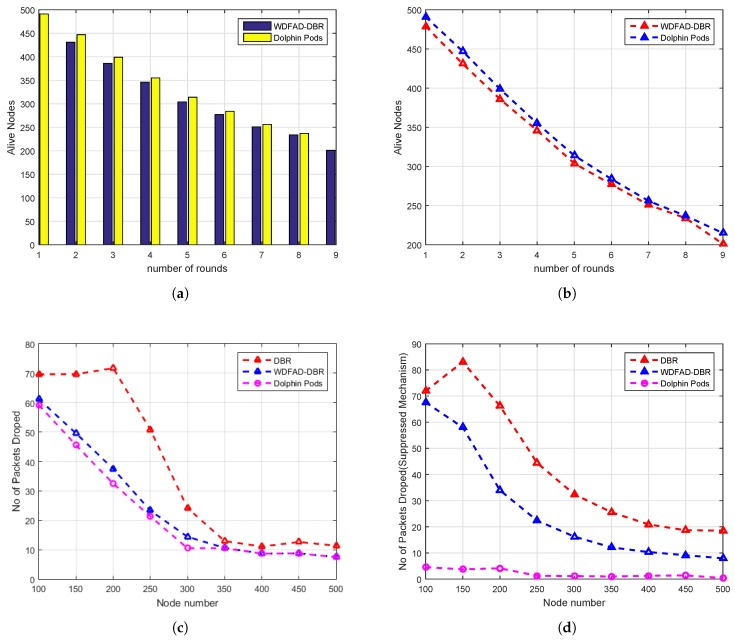
Underwater Wireless Sensor Networks (UWSNs) have intrinsic challenges that include long propagation delays, high mobility of sensor nodes due to water currents, Doppler spread, delay variance, multipath, attenuation and geometric spreading. The existing Weighting Depth and Forwarding Area Division Depth Based Routing (WDFAD-DBR) protocol considers the weighting depth of the two hops in order to select the next Potential Forwarding Node (PFN). To improve the performance of WDFAD-DBR, we propose DOlphin and Whale Pod Routing protocol (DOW-PR). In this scheme, we divide the transmission range into a number of transmission power levels and at the same time select the next PFNs from forwarding and suppressed zones. In contrast to WDFAD-DBR, our scheme not only considers the packet upward advancement, but also takes into account the number of suppressed nodes and number of PFNs at the first and second hops. Consequently, reasonable energy reduction is observed while receiving and transmitting packets. Moreover, our scheme also considers the hops count of the PFNs from the sink. In the absence of PFNs, the proposed scheme will select the node from the suppressed region for broadcasting and thus ensures minimum loss of data. Besides this, we also propose another routing scheme (whale pod) in which multiple sinks are placed at water surface, but one sink is embedded inside the water and is physically connected with the surface sink through high bandwidth connection. Simulation results show that the proposed scheme has high Packet Delivery Ratio (PDR), low energy tax, reduced Accumulated Propagation Distance (APD) and increased the network lifetime.
水下无线传感器网络 (UWSNs) 具有内在的挑战,包括长传播延迟、由于水流导致的传感器节点的高移动性、多普勒扩展、延迟方差、多径、衰减和几何扩展。现有的基于加权深度和转发区域划分深度的路由 (WDFAD-DBR) 协议考虑了两跳的加权深度,以便选择下一个潜在的转发节点 (PFN)。为了提高 WDFAD-DBR 的性能,我们提出了海豚和鲸鱼群路由协议 (DOW-PR)。在这个方案中,我们将传输范围划分为多个传输功率级别,同时从转发区和抑制区选择下一个 PFN。与 WDFAD-DBR 不同,我们的方案不仅考虑了数据包的向上推进,还考虑了第一跳和第二跳的抑制节点数量和 PFN 数量。因此,在接收和发送数据包时观察到合理的能量减少。此外,我们的方案还考虑了从接收器到 PFN 的跳数。在没有 PFN 的情况下,所提出的方案将从抑制区域中选择节点进行广播,从而确保数据的最小丢失。除此之外,我们还提出了另一种路由方案(鲸鱼群),其中多个接收器放置在水面上,但一个接收器嵌入在水中,并通过高带宽连接与水面接收器物理连接。仿真结果表明,所提出的方案具有高分组投递率 (PDR)、低能量税、减少的累积传播距离 (APD) 和增加的网络寿命。